The Continental Grip in Pickleball
Quick Answer: The continental grip in pickleball puts the base knuckle of the index finger on bevel 2 of the handle, the bevel just right of the top flat for a right-hander, so the V between thumb and index finger sits on top. The paddle face stays neutral, which makes it the default hold for dinks, volleys, blocks, and fast kitchen exchanges.
Pickleball has three named grips, and which one to start with is answered in the guide to which grip to use in pickleball. This article stays on one: the hold Pickleheads, The Dink, and PickleballMAX all point new players toward first, and the one Pickleball.com says most pros rely on when the ball gets fast.
How Do You Find the Continental Grip on a Pickleball Paddle?
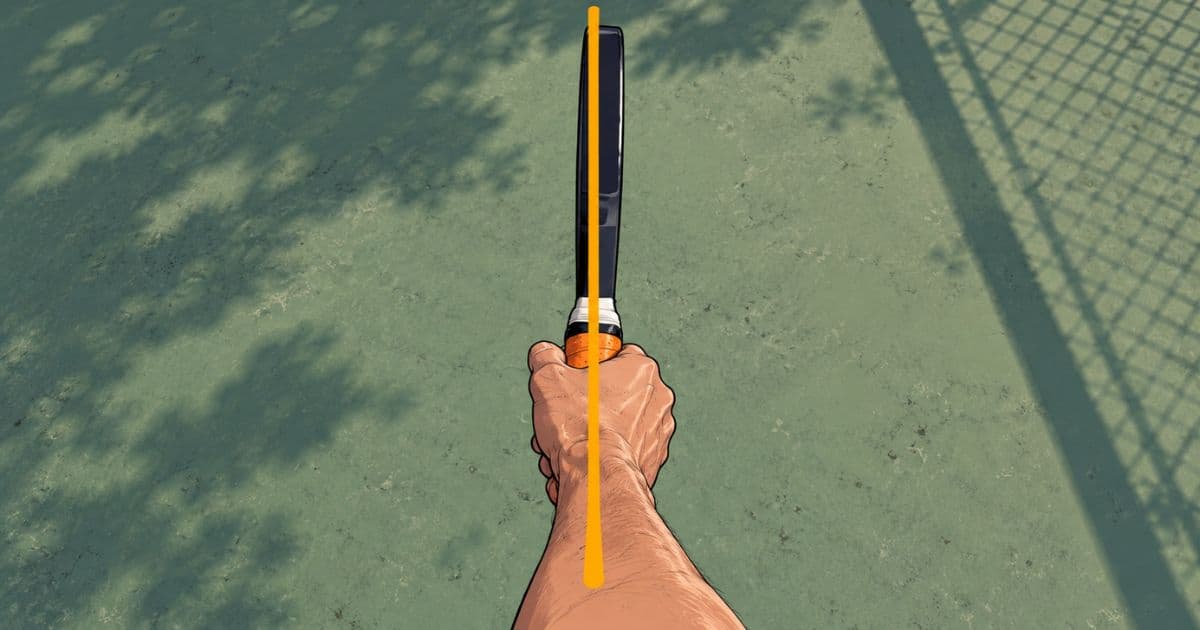
A pickleball handle is an octagon. Hold the paddle edge-on with the handle pointing at the chest. The flat on top is bevel 1; the next surface clockwise for a right-hander is bevel 2. Pickletip’s grip guide, written by coach Sid Parfait, gives the reference point plainly: “Place the base knuckle of your index finger and the heel of your hand on bevel 2.” Pickleheads describes the same landmark as the index knuckle “just to the right side of the flat bevel on the top of the handle,” which creates “a V between your thumb and index finger, directly on top of the handle.” A left-hander uses the bevel just left of the top flat.
Two shortcuts get close without counting bevels. The hammer: PickleballMAX instructor Todd Jungling describes holding the paddle “the same way you would if you were hammering in a nail.” The handshake: stand the paddle up like a sign, reach out as if greeting someone, and close the fingers. Both are approximations; the bevel check confirms the result. On built-up handles where the bevels blur, the guide to overgrips versus replacement grips covers restoring a handle shape the hand can read.
Why Is the Continental Grip the Default at the Kitchen Line?
Neutrality. With the knuckle on bevel 2, the paddle face sits near vertical, a few degrees open, on both forehand and backhand without any hand rotation.
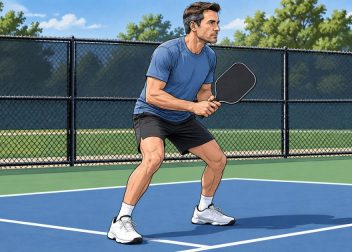
In a hands battle at the non-volley zone line, a ball arrives at the chest, the reply comes back at the hip, the next one is at the shoulder. Ryan Collins at The Pickleball Gang states the problem directly: “You do not have time to switch from a forehand grip to a backhand grip.” The continental removes the switch: forehand block, backhand block, and body-shot punch all come from the same hold. Pickleball.com’s grip guide says most pros use the continental “because of the ability to make quick transitions.”
PrimeTime Pickleball’s grip comparison lists dinks, drops, blocks, and resets as continental shots, with drives and topspin attacks reserved for the eastern. A player who holds the continental through a rally never resets the hand between a forehand dink and a backhand dink, so the face stays predictable, the foundation of the control described in the guide to keeping the ball low in pickleball. The hold also opens the face a few degrees, which suits slice drops and resets. The Dink’s grip breakdown, featuring pro and coach Mari Humberg, names kitchen volleys, transition zone shots, and baseline slice drops as continental territory.
When Should You Leave the Continental Grip?
The neutral, slightly open face becomes a limitation when the goal is topspin or forehand pace. The Dink’s guide states it flatly: “It’s tough to generate topspin with a continental grip.” Jungling notes the continental “is not quite as strong as getting the palm of your hand behind the paddle,” and switches grips for pace and topspin on drives from deep in the court.
The situations that call for a change:
- A forehand drive from the baseline or transition zone, where the eastern puts the palm behind the paddle.
- A topspin serve or heavy topspin return, where a closed face at contact is the whole point.
- A high ball at the kitchen to roll rather than punch. Helios Pickleball frames this as being “in an offensive position expecting a high or wide ball you can attack with a forehand drive or topspin shot.”
The switch itself is small. Parfait describes it as a knuckle shift rather than a whole-hand rotation, using the thumb as a pivot so the heel of the hand slides one bevel over to bevel 3. The return trip matters more: after a drive, the hand must be back on bevel 2 before the next ball arrives at the body.
Humberg adds a caution: she changes grips often herself, which she attributes to two decades of tennis, and does not recommend that for newer players. Her advice to them is to pick one grip and let muscle memory do the work. For the sources above, that first grip is the continental, with the eastern drive added later. The backhand side has its own options, laid out in the guide to the pickleball backhand grip.
What Are the Most Common Continental Grip Mistakes?
Popping dinks up. Collins identifies the cause: “The Continental grip naturally opens the paddle face.” A dink hit with a lazy wrist floats. Close the face a few degrees at contact and meet the ball out in front, at or below knee height.
Drifting toward the eastern. Over a long session the hand can creep toward bevel 3, where Jungling notes the palm gets behind the paddle for more power, and the next fast backhand block goes into the net off a closed face. Between points, glance at the index knuckle and confirm bevel 2.
Choking the handle. Pickleheads cites a recommended pressure of 3 to 4 out of 10. Parfait’s pressure guide at Pickletip breaks it down by shot: 2 to 3 for dinks, 4 to 6 for volleys and blocks, 7 to 8 for drives and overheads. His warning: “The moment your knuckles turn white, your wrist shuts down, your timing stiffens, and your soft game disappears.”
Treating it as a ceiling. Jungling and The Dink both note that pace and topspin come from the eastern, so a player who never adds it has fewer ways to attack opponents who reset well. The pickleball techniques built on the continental include the drive, roll volley, and topspin serve.
Drills That Lock In the Continental Grip
Wall volleys. Stand close to a wall and volley continuously, forehand and backhand, without changing grip. Collins recommends starting close and backing up, alternating eastern groundstrokes with continental volleys so the switch gets repetitions too.
The finger shimmy. Parfait’s no-ball drill: cycle between continental and eastern for one minute, thumb and index finger as anchors, the other three fingers handling the rotation. Progress to three minutes with eyes closed so the hand learns bevel 2 by feel.
Slow-then-go feeds. A partner at the kitchen mixes soft dinks with high attackable balls. Soft ball, stay continental and reset. High ball, shift to eastern, roll it, shift back. Parfait’s version has the player call the grip aloud, five sets of 12 balls. This drill bridges neutral defense and the patterns in the guide to aggressive dinking.
Frequently Asked Questions
Which bevel is the continental grip in pickleball? Bevel 2. With the paddle edge-on and the top flat counted as bevel 1, a right-hander places the index base knuckle on the next bevel clockwise. A left-hander uses the bevel counterclockwise from the top flat.
Is the continental grip the same as the hammer grip? Functionally, yes. Hammering a nail with the paddle edge lands the hand on or very close to bevel 2.
Can you serve with a continental grip? Yes. A flat or sliced serve works from the continental because the face is neutral to slightly open. A heavy topspin serve is harder because the face is slightly open at contact, so players who want serve topspin shift toward the eastern for that shot.
Why do my dinks pop up with a continental grip? The grip opens the paddle face a few degrees, and a stiff wrist or late contact sends the ball high. Close the face slightly, hit out in front at or below knee height, and drop grip pressure.
Should beginners start with the continental grip? Pickleheads, The Dink, and PickleballMAX all direct new players to it because it covers forehand and backhand without a switch. The full comparison of all three grips is in the guide to which grip to use in pickleball.
How does the continental grip differ from the eastern grip? One bevel. The eastern moves the index knuckle to bevel 3, putting the palm behind the paddle on the forehand and closing the face, which adds forehand power and topspin at the cost of a more open backhand face.
How do I switch from continental to eastern during a rally? Shift the knuckle, not the whole hand, using the thumb as a pivot. PrimeTime Pickleball describes an alternative: the off hand at the top of the handle turns the paddle while the dominant grip loosens.
Do pros use the continental grip? Pickleball.com’s grip guide states that most pros use the continental because of the ability to make quick transitions. Mari Humberg says she changes grips frequently herself, so a continental base still leaves room for other grips.
A grip that looks right in a mirror and a grip that holds up in a hands battle at 9-9 are two different things, and closing that gap goes faster with a coach watching the hand for the knuckle drifting to bevel 3, the pressure creeping up during dink rallies, and the late contact that turns a neutral face into a pop-up. The Pickler Junction directory of pickleball coaches lists instructors by location.
Written by the Pickler Junction Team.