Overgrip vs Replacement Grip on a Pickleball Paddle
Quick Answer: A replacement grip strips off the factory grip and becomes the new base layer on the handle. An overgrip wraps on top of whatever grip is already there. Replacement grips are thicker and last months. Overgrips are thin, inexpensive, and meant to be swapped every few weeks. Most players run both together.
A pickleball paddle grip is the wrap around the handle, and the two types differ in one basic way: one is the foundation, the other is the surface your hand actually touches. Knowing which one solves which problem saves you from buying the wrong fix.
The difference
A replacement grip is the base layer. It replaces the factory grip that came on the paddle rather than covering it. You peel off the old one first, then wrap the new one directly onto the bare handle. It is thicker than an overgrip, often cushioned or perforated, and it changes the handle’s diameter more noticeably. It is built to hold up for months, not weeks.
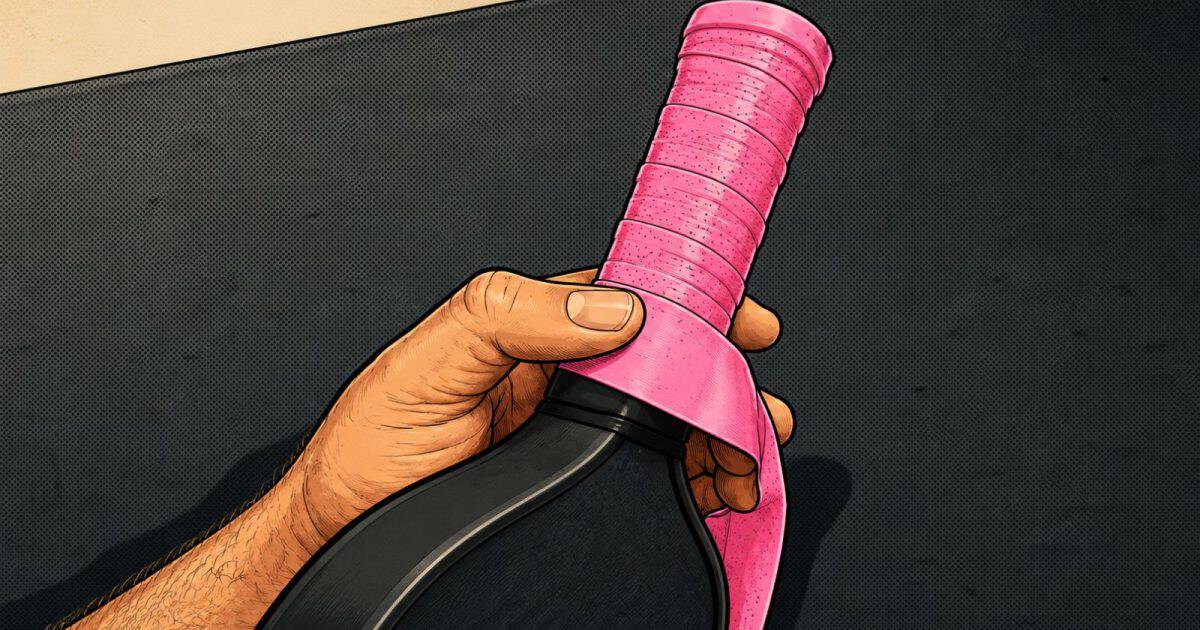
An overgrip goes on top of what is already there, whether that is the factory grip or a replacement grip. It barely changes the handle’s diameter, and it is meant to be peeled off and replaced on a short cycle. Cost follows the same pattern: overgrips run a fraction of what replacement grips do. The grip tape guide breaks down actual thickness and pricing for each type if you want the specifics.
The names describe exactly what they do. A replacement grip replaces something. An overgrip goes over something. Keeping that distinction straight makes every other decision in this guide easier.
Which one you need
Start with what is actually wrong with the grip you have right now.
- Handle feels too thin. A replacement grip adds real diameter. An overgrip adds only a little, so use one only if the handle is already close to right.
- Handle feels too thick. Peel the current grip off and wrap on a thinner replacement grip. Adding an overgrip here only makes the problem worse.
- Grip turns slick when you sweat. An overgrip solves this cheaply. A tacky one restores the feel, and you swap it again once it stops gripping back.
- Grip is worn, shiny, or coming unwrapped. The base has failed, so a replacement grip is the fix. Wrapping an overgrip over a failing base just stacks a new layer on top of one that is already gone.
- You want a little more weight in the handle. A replacement grip is the way to do it, since grips vary in weight and swapping one shifts the paddle’s balance point. That shift also changes how the paddle feels through the swing. See what is paddle swing weight and adding weight to a pickleball paddle for the fuller picture.
How often to change them
Different answers for the two layers, which is really the whole point of running both.
An overgrip is a consumable. A player on the court several times a week can expect to change one every two to four weeks. Someone playing once a week might get a couple of months out of the same wrap. The signal that it is done is simple: once it stops feeling tacky under your palm, it has stopped doing its job.
A replacement grip lasts much longer. Most players go many months between changes, and the real trigger is visible wear, not a schedule: the surface goes hard, starts unwrapping at the edges, or turns shiny where the hand contacts it most.
The economics explain why most players run both layers instead of picking one. Replacing a cheap overgrip on a regular schedule costs far less than replacing a full grip that often, and since the hand only touches the top layer, there is no reason to wear out the base layer any faster than it needs to.
Why grip size matters
More than most players think, and it is one of the cheapest changes you can make to how a paddle feels.
A handle that is too small forces you to squeeze harder just to hold on. That tightens the forearm and slows hand speed in fast exchanges at the kitchen. A handle that is too large limits wrist mobility, which shows up on dinks, resets, and speed-ups, where a small, quick wrist movement matters more than a big swing.
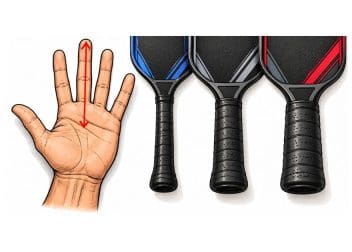
A simple check: hold the paddle in your normal grip and see whether your index finger fits into the gap between your fingertips and the base of your thumb. Snug is right. If your fingertips are digging into your palm, the handle is too small for you, and building it up with an overgrip or a thicker replacement grip is worth trying before assuming the paddle is wrong for you.
Players who buy a new paddle and dislike it right away are often reacting to grip size rather than to the paddle itself. That is worth ruling out first. See do pickleball paddles have a break-in period for a related case where the paddle gets blamed for something that is not actually about the paddle.
How to put one on
Overgrips go on quickly. Replacement grips take a bit more care, since you are rebuilding the base the hand relies on for every shot.
- Start at the butt of the handle, not the top, and work your way upward.
- Peel the adhesive backing as you go rather than stripping it all off at once, so the tape does not stick to itself.
- Overlap each wrap by about an eighth of an inch. Consistent overlap is what makes the finished grip feel even under the hand.
- Keep tension steady the whole way up. A loose section shows up as a lump you will feel on every shot afterward.
- Finish with the finishing tape included in the package, wrapped over the top edge so it does not unravel.
A crooked or lumpy grip is not just a cosmetic problem. Uneven build-up creates a ridge under the fingers, and that ridge changes how the handle feels on every single shot until it gets fixed.
FAQ
What is the difference between an overgrip and a replacement grip? A replacement grip replaces the factory grip and becomes the base layer, and it is thicker. An overgrip wraps on top of whatever grip is already there, is thin, and is meant to be swapped often.
Can you put an overgrip over the factory grip? Yes. That is the most common setup, and you can also put an overgrip over a replacement grip once one is installed.
How often should I change my overgrip? Change it once it stops feeling tacky. For a player on the court several times a week, that is typically every two to four weeks.
Do I need to remove the old grip before adding an overgrip? No. An overgrip is designed to wrap over what is already on the handle. Only a replacement grip requires peeling the old one off first.
Will an overgrip make my handle too thick? It adds very little. If the handle already feels large, use a thinner replacement grip instead and skip the overgrip.
Does grip type affect spin or power? Only indirectly. A grip you can hold without squeezing lets you swing more freely, and that shows up most in hand speed during fast exchanges at the kitchen, not in the shot itself.
Which one is cheaper? Overgrips, by a wide margin, which is exactly why they are the layer built to be replaced on a regular schedule instead of the layer underneath it.
Does changing my grip affect paddle legality for tournament play? No, as long as the paddle itself stays an approved model. Under the 2026 USA Pickleball rulebook, Rule 3.D.6 lists addition or replacement of grip wrap and replacement of a manufacturer’s interchangeable grip as allowed alterations, and Rule 18.A only requires that players use an approved paddle underneath those changes.
If you are working out what your handle actually needs, the Pickleball Gear & Accessories directory lists paddle and gear specialists who carry both grip types and can help with sizing in person.
Written by the Pickler Junction Team.