The Most Common Pickleball Mistakes and How to Fix Them
Quick Answer: Six mistakes account for most lost recreational points: staying back instead of advancing, attacking low balls instead of resetting them, playing balls that were headed out, standing at a different depth than your partner, swinging too long, and reaching with the paddle instead of moving your feet. None require a new skill. They are decisions you can change today.
The useful thing about this list is that it stays short and repeats itself. Players are not making dozens of different errors. They are making the same four or five, over and over.
The biggest positional mistake
Staying back when you could be moving forward.
The team at the kitchen line hits downward. The team behind the baseline hits upward. That difference decides many recreational points before either side hits a clean winner, and it is why doubles strategy centers on closing the distance to the net.
Beginners drift back toward the baseline because there is more time there, and more time feels safer. That safety is misleading. From the baseline you are hitting upward into two players who are hitting downward at you, and extra reaction time does not make up for that.
The fix: after your return of serve, walk in. After your team’s third shot lands soft, walk in. Stop moving when your opponent strikes the ball, split step, then continue forward. The guide to where to stand in pickleball doubles covers these positions in full.
The biggest shot-selection mistake
Attacking a ball you contacted below the height of the net.
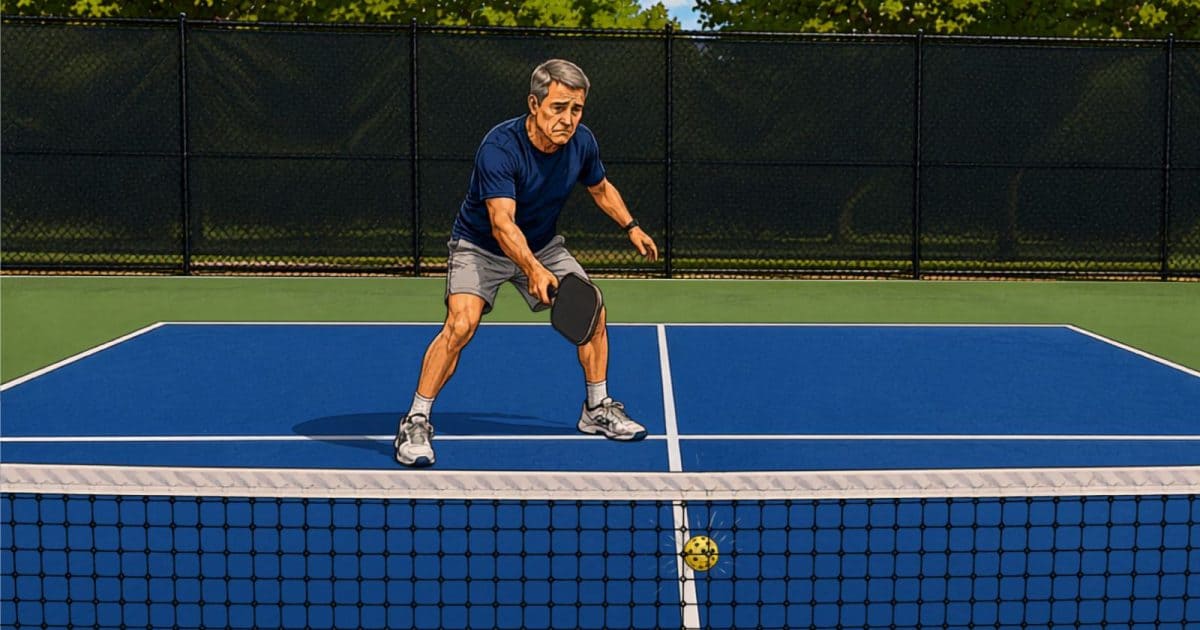
This one error costs more points than most technical faults combined. A ball met above net height can be driven downward with margin for error. A ball met below net height cannot: hitting it hard means lifting it, and a lifted ball at pace is an easy target for the other team.
The mistake feels productive while you are making it. Hitting hard is satisfying and the ball travels fast, which can hide the fact that the point usually ends against the player who took the swing.
The fix: let contact height decide the shot, not how open the court looks. Below the net, hit soft. Above the net, attack. The guide to pickleball shot selection lays out the full decision grid.
The mistakes that cost free points
Playing out balls, missing serves, and missing returns.
These three give away points with no rally attached, which makes them straightforward to fix once you notice the pattern.
- Playing balls that were going out. Beginners tend to play everything. A ball landing past the baseline is a free point if you leave it and a lost rally if you rescue it. Letting a ball go is a skill on its own, and it takes deliberate practice to trust your eyes.
- Missing the serve. The serve starts the point rather than winning it. A serve into the net hands over a point for nothing, so trading control for a little extra pace is rarely worth it.
- Missing the return. A return that lands deep and safe helps your team more than one that is clever but risky. Depth pins the serving team back and buys your side time to move to the net.
There is a fourth mistake in the same family: standing so close to the kitchen line that a routine low ball turns into a fault. Backing up two steps solves it.
What partners get wrong
They stop moving as a pair, and they stop talking.
One player at the kitchen line and one at the baseline opens a diagonal lane through the middle of the court, one that does not take much accuracy to exploit. It usually happens by accident: one partner advances behind a good shot and the other does not follow.
The communication gap produces its own signature error, the middle ball that lands untouched between two players who both expected the other to take it. That is hesitation, not poor positioning.
The fix: move together like you are joined by a rope, and use four words during rallies: mine, yours, out, and switch. The guide to moving with your partner in pickleball covers the movement patterns.
The technical habits worth breaking
Too much swing, an open paddle face, and reaching instead of stepping.
Too much swing. Pickleball rewards a short motion. A full backswing arrives late at the kitchen line and turns a ball that needed a block into a pop-up. Soft shots should look like a push rather than a full stroke.
An open paddle face. This is a common cause of the ball floating up when it was meant to stay low. Setting the face square, or slightly closed, before the ball arrives fixes more of these errors than a change of grip. The guide to keeping the ball low in pickleball covers the other causes of pop-ups.
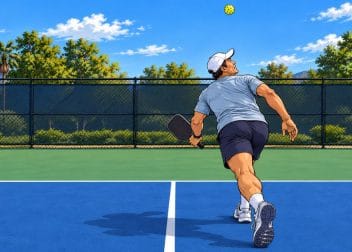
Reaching instead of moving. Many technical faults at the kitchen line are footwork faults in disguise. Dropping the paddle head to a low ball while standing upright forces the face open; bending the knees keeps it square instead. Consistent footwork also keeps rallies free of the awkward, off-balance contact that shows up on lists of the most common pickleball injuries.
What intermediate players get wrong
Impatience, and playing only against people they already beat.
Around the 3.0 level, hard hitting can still win points because opponents miss it back. Above that level, both teams reach the kitchen line and stay there, attackable balls become rare, and the ability to hit a controlled, unspectacular ball becomes what separates skill levels. Learning to hit that ball costs points in the short term and is part of what makes the next level reachable.
The second mistake is a scheduling one rather than a technical one. Playing repeatedly against players at or below your own level builds comfort without building skill, and it is a common way a player plateaus. The honest look at whether pickleball is hard to learn covers what the improvement timeline looks like, and the guide to pickleball tips for beginners covers what to prioritize first.
FAQ
What is the most common mistake in pickleball? Staying back instead of advancing to the kitchen line. The team at the line hits downward and the team behind the baseline hits upward, and that difference decides many recreational points.
Why do you keep losing points when you hit hard? Usually because you are attacking balls contacted below net height. Hitting those hard means lifting them, and a lifted ball at pace is an easy target for the other team.
Should you really let balls go out? Yes, and beginners rarely do it. A ball landing past the baseline is a free point if you leave it alone.
What doubles formation is easy for opponents to attack? One player up at the kitchen line and one back at the baseline. It opens a diagonal lane through the middle that does not take much accuracy to exploit.
Why do balls land between you and your partner? Hesitation rather than positioning. Both players expect the other to take it, which is why calling “mine” and “yours” matters more than it sounds like it should.
How do you stop popping the ball up? Set the paddle face square or slightly closed before the ball arrives, contact the ball in front of your body, and bend your knees rather than dropping the paddle head.
What mistake do intermediate players make? Attacking marginal balls. Around the 3.0 level and above, both teams hold the kitchen line, and the willingness to hit a boring, controlled ball is what separates levels.
Do you need lessons to fix these mistakes? No, but lessons can compress the timeline. Most of this list is decisions rather than new skills, and decisions can change in a single session once you know which ones to change.
Want the errors pointed out as they happen? A coach found through the Pickler Junction coaches directory can spot a pattern in one game and build a practice plan around fixing it.
Written by the Pickler Junction Team.