What Pickleball Equipment Do Beginners Actually Need?
Quick Answer: Three things: a paddle, balls that match your surface, and court shoes with lateral support. Good versions of all three cost roughly 120 to 200 dollars total as of September 2026. A basic starter set runs 30 to 60 dollars. Everything else marketed as beginner gear is optional, and most public and club courts already supply the net.
The sport has a marketing problem for new players. Starter bundles imply you need a full kit before your first game. Participation is real: the Sports and Fitness Industry Association counted 24.3 million pickleball players in the United States in 2025, up from 4.2 million in 2020. Most of what gets sold to that growing group is optional. You need less than the bundles suggest.
What do you actually have to buy?
A paddle, balls, and shoes. In that order of visibility and reverse order of importance. Prices below reflect typical retail pricing.
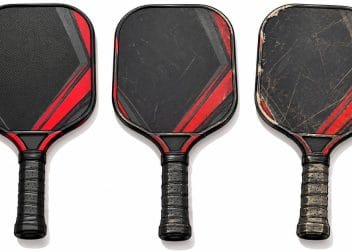
- A paddle. Thirty to 80 dollars is a reasonable first range, with 50 to 100 dollars the sweet spot for a paddle you will not outgrow in a month.
- Balls. A tube runs about 10 to 15 dollars. Outdoor and indoor balls are different and not interchangeable.
- Court shoes. Around 60 to 110 dollars for a proper pair. This is the purchase beginners skip, though it affects your game more than the paddle does.
Buy quality individual pieces and the full kit typically lands between 120 and 200 dollars. A basic all in one starter set with two paddles, balls, and a bag runs 30 to 60 dollars and is a fair choice if you are only trying the sport.
Why do shoes matter more than the paddle?
Because pickleball is a lateral sport, and running shoes are built to go forward.
Running shoes have soft, tall midsoles designed to absorb heel strike in a straight line. Step sideways in them and the foot can roll off the edge of that soft platform. Court shoes sit low and wide with reinforced sides for exactly this reason. A 60 dollar court shoe protects your ankles better than a pricier running shoe built for a different motion.
Starting in running shoes because you already own them is a common shortcut. They give little lateral support, and a rolled ankle from a hard push off the sideline ends more seasons than a slow paddle does.
The comparison of pickleball shoes versus tennis shoes and the guide to what shoes to wear cover the fit details.
How do you pick a first paddle?
Middle of the road on every spec, and do not overthink it.
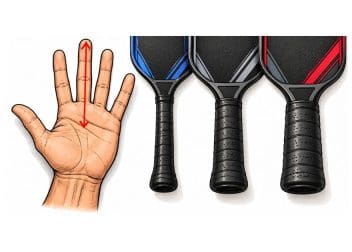
A midweight paddle around 7.8 to 8.3 ounces with a 16mm core and a standard shape suits most new players. Avoid the extremes. Very light paddles ask you to supply all the power, very heavy ones slow your hands at the net, and elongated shapes shrink the sweet spot you are still learning to find. Under Section 3 of the 2026 USA Pickleball rulebook, paddle size is also capped at 24 inches of combined length and width, though nearly every retail paddle already meets that limit.
What you should not do is buy a 250 dollar paddle in week one. You do not yet know whether you prefer control or power, and that preference is the entire point of an expensive paddle. One rule worth knowing ahead of time: under Section 18.A, a paddle used in sanctioned tournament play has to appear on the USA Pickleball Approved Paddle List. That does not matter for casual play at your local courts. The full guide to choosing a paddle walks through the rest.
Indoor or outdoor balls, and does it matter?
It matters, and mixing them up is the most common beginner mistake.
Every ball must have between 26 and 40 evenly spaced holes, weigh between .78 and .935 ounces, and measure 2.87 to 2.97 inches across, whether it is rated for indoor or outdoor play. The practical difference is hole size. Outdoor balls use smaller, more numerous holes so wind moves them less, and they tend to play harder and heavier. Indoor balls use larger holes, feel softer, and play slower. An outdoor ball on a gym floor is loud and lively, and an indoor ball outside is unplayable in a real breeze. Buy for where you play.
What can you safely skip at the start?
Most of it.
You do not need a portable net unless you are setting up somewhere with no existing court. The rulebook sets net height at 36 inches at the sideline posts and 34 inches at the center. You do not need a paddle cover, a ball machine, weighted training paddles, or a second paddle. A bag is convenient and not urgent. Court lines and tape only matter if you are creating a temporary court.
Trying a beginner clinic before buying anything is a reasonable first move. Group clinics typically run one to two hours and cost 20 to 50 dollars per person, and many loan paddles for the session. The guide to what to expect at a pickleball clinic for beginners covers what is usually included.
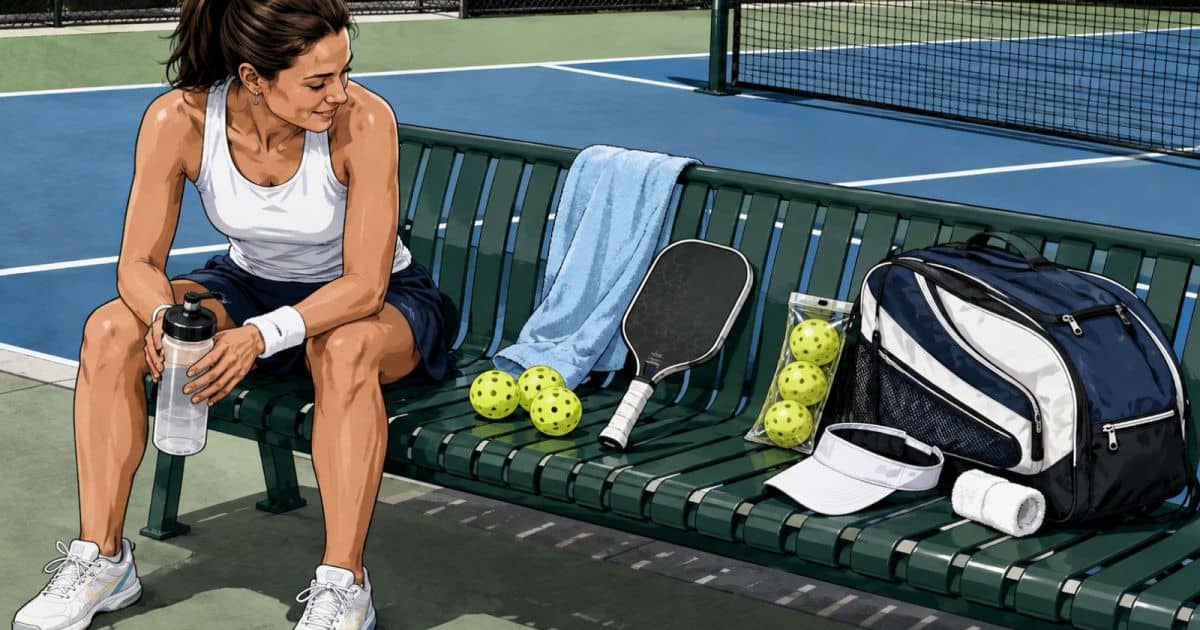
The two genuinely worthwhile extras are cheap. A water bottle, and a hat or sunglasses if you play outdoors in the middle of the day.
What about eye protection?
Optional, increasingly common, and worth real thought.
Nothing in the rulebook requires eyewear for recreational or sanctioned play, but the ball travels fast at the kitchen line and the distances are short. Plenty of experienced players wear protective eyewear as a matter of routine. The full breakdown is in do you need eye protection for pickleball.
Should you buy a starter set or individual pieces?
Set if you are experimenting, pieces if you already know you will keep playing.
The economics are simple. A 40 dollar bundle gets four people on a court this weekend. It will not give you a paddle you still want in six months. If you have played on borrowed equipment and enjoyed it, buy one decent paddle and proper shoes instead of the bundle.
Ongoing costs matter more than the gear itself. Municipal drop in play typically runs 2 to 6 dollars a session, private indoor facilities run 10 to 20 dollars, and private coaching runs 50 dollars or more per hour. The guide to pickleball tips for beginners covers what to work on once your gear is sorted.
Frequently asked questions
What equipment do you need to start playing pickleball? A paddle, balls suited to your surface, and court shoes. Most venues supply nets and lines, so beginners rarely need to buy either.
How much should a beginner spend on a paddle? Roughly 30 to 80 dollars, with 50 to 100 dollars buying one you will not outgrow quickly.
What is the total cost to get started? Around 120 to 200 dollars for good individual pieces, or 30 to 60 dollars for a basic set.
Can you wear running shoes? You can, but they are built for forward motion, not the side to side movement pickleball demands, so court shoes protect your ankles better.
Are indoor and outdoor balls really different? Yes. Both must have 26 to 40 holes, but outdoor balls use smaller holes and play harder, while indoor balls use larger holes and play softer.
Does your paddle need to be on an approved list? Only for sanctioned tournament play. Under Section 18.A, tournament paddles must appear on the USA Pickleball Approved Paddle List, and a mismatch discovered mid match can cost you the game.
Do you need your own net? Only if you are playing somewhere without one. Public courts, clubs, and gyms almost always provide a net built to the 36 inch sideline and 34 inch center height set by the rulebook.
How many balls should you buy? A tube of three to six is plenty to start. Outdoor balls crack eventually, so expect to replace them.
Spend on shoes, be moderate on the paddle, and buy the right balls for your court. To find pro shops and retailers near you, browse the pickleball gear and accessories directory.
Written by the Pickler Junction Team.