14mm vs 16mm Pickleball Paddles: Which Core Thickness?
Quick Answer: A 16mm core gives you control, a larger sweet spot and a softer feel, which suits players who live at the kitchen line. A 14mm core gives you more pop and a quicker response, which suits drivers and bangers. Most players who dink and reset a lot end up preferring 16mm.
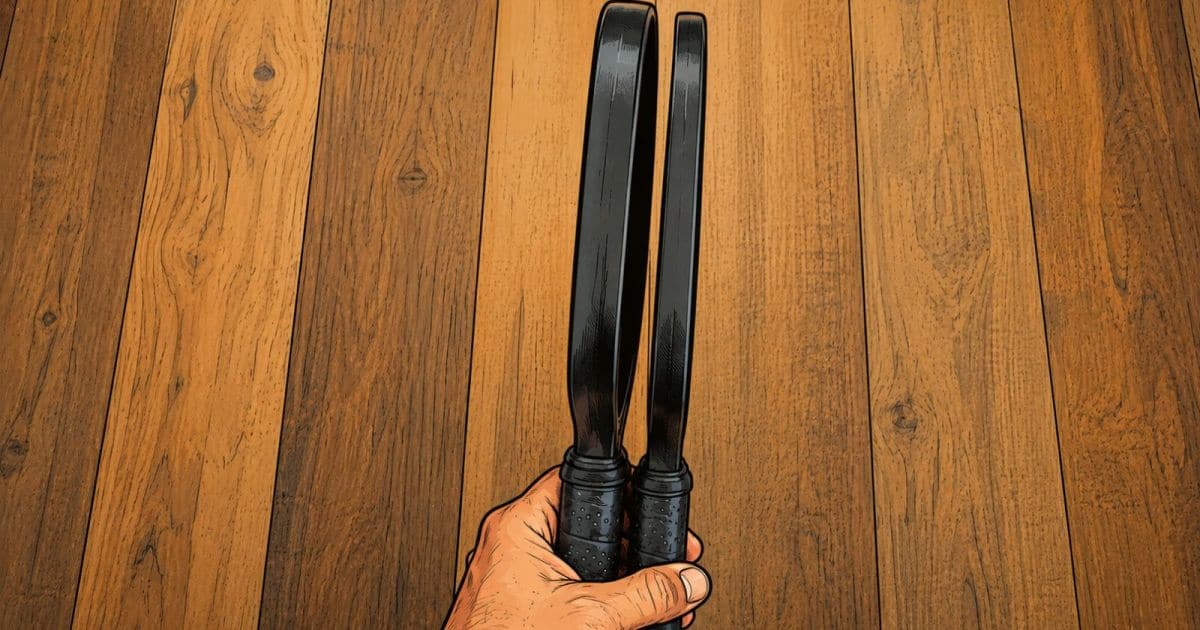
Core thickness is the measurement of the honeycomb core sandwiched between the paddle faces. It is quoted in millimeters and it is one of the two or three specs that genuinely change how a paddle plays.
What does core thickness actually do?
It determines how much of the ball’s energy the paddle keeps and how much it gives back.
A thinner 14mm core compresses more on contact and returns energy faster, so the ball comes off quicker. A thicker 16mm core absorbs more of that energy, so the ball leaves slower and with more of your own input deciding where it goes. That single difference cascades into everything else people describe as feel.
What are the trade offs, side by side?
They are close to mirror images of each other.
- Power. 14mm delivers more pop and a crisper, more explosive response. 16mm requires more of your own swing to generate the same pace.
- Control. 16mm absorbs pace, which is what makes dinks and resets sit down. 14mm gives less margin on soft shots.
- Sweet spot. 16mm cores generally produce a larger, more forgiving sweet spot. 14mm cores tend to have a smaller one.
- Vibration. 16mm feels cushioned and dampens more shock. 14mm feels firmer and transmits more of it to your hand and forearm.
- Defense. The thicker core makes blocking a hard drive easier, because the paddle does the absorbing instead of your wrist.
Which one should a beginner buy?
16mm, in most cases.
New players benefit most from forgiveness on off center hits and from a paddle that does not launch every reset over the baseline. The bigger sweet spot matters more at the start than pop does, because raw power is rarely what is missing from a beginner’s game. Consistency is.
The exception is a player coming from tennis who already swings hard and wants that pace preserved. Even then, many convert to 16mm within a season once they discover the game is decided at the net.
Who is 14mm actually for?
Players whose game is built on driving the ball and finishing fast.
If you win points with third shot drives, hard serves and quick hands at the net, the extra pop of a 14mm core rewards you. Singles players often prefer it too, because singles asks for more pace from the baseline than doubles does. The cost is a smaller margin on soft shots, which you accept because you are not playing many of them.
Does core thickness matter more than weight?
They matter differently, and you should not confuse them.
Weight determines how much mass is behind the ball and how quickly you can move the paddle. Core thickness determines how the paddle responds at contact. A heavy 16mm paddle and a light 14mm paddle can produce similar ball speed while feeling nothing alike. Our paddle weight chart and our guide to what weight a beginner should use handle that half of the equation.
What about 12mm, 19mm and 20mm?
They exist, and they extend the same logic further.
Thinner options around 12mm push toward maximum pop with the least forgiveness. Thicker options at 19mm and 20mm push toward maximum control and dwell time, with the trade being that you have to supply all your own power. Those extremes suit players who know exactly what they want. If you are still deciding, 14mm and 16mm cover the useful middle.
Can you change how a paddle plays without changing thickness?
To a degree, yes.
Adding weight at the edges changes stability and swing weight without touching the core. Our guide to lead tape placement covers where to put it. This can make a 14mm paddle feel more planted, but it will not make a thin core absorb pace like a thick one. Thickness is thickness.
A thin core that feels fast in the hand can quietly cost you resets, and the popped-up reset is easy to blame on technique when the core is doing it. That is the switch worth testing before rebuilding a stroke.
How do you decide without guessing?
Demo both, and judge on your worst shots rather than your best.
Anyone can hit a clean drive with either core. The revealing test is the reset from the transition zone and the block against a hard drive at your body. If those feel calmer with one paddle, that is your answer, whatever the spec sheet says. Our full guide to choosing a paddle walks through the rest of the decision.
Frequently asked questions
Is 14mm or 16mm better for beginners? Usually 16mm, because the larger sweet spot and softer feel are more forgiving while your consistency is still developing.
Does a 16mm paddle have less power? It returns less of the ball’s own energy, so you supply more of the pace yourself. Many players trade that willingly for control.
Which core is better for dinking? 16mm. The thicker core absorbs pace, which is exactly what a soft shot needs.
Does core thickness affect arm comfort? Thicker cores dampen more vibration, which tends to be easier on the arm. Persistent pain is a matter for a clinician, not a paddle swap.
Is thicker always more controlled? Broadly yes within the common range, but face material, shape and weight all contribute. Thickness is one variable, not the only one.
Can I tell the difference as a 3.0 player? The difference shows up immediately on resets and blocks, even when drives feel similar.
Do pros use 14mm or 16mm? Both are used at the top level, and the split tends to follow playing style rather than skill.
Pick the core that helps your soft game, because that is where games are decided. To find retailers and demo programs near you, browse our pickleball gear and accessories directory.
Written by the Pickler Junction Team.