
Pickleball Timeout Rules Explained
Quick Answer: Under Section 21.A of the 2026 USA Pickleball rulebook, each side gets two one-minute time-outs for a game to 11 or 15 points, and three for a game to 21 points. A time-out can only be requested between rallies, never after the serve is hit. A medical time-out is separate, capped at 15 minutes, and does not count against a team’s allowance.
Knowing the time-out rule is half the job. Knowing when to spend one is the other half, and it separates recreational play from tournament-ready play. The rule itself lives in Section 21 of the rulebook, Time-Outs and Breaks, alongside the between-game break and a handful of stoppages that are not time-outs at all.
How many timeouts you get
Under Section 21.A, each side gets two standard time-outs for a game to 11 or 15 points, and three for a game to 21 points. Either the singles player or either half of a doubles team can spend the allowance, and it resets at the start of every game in a match. A tournament’s own format sheet can set a different number, so check the event rules before assuming the default applies.
Each standard time-out runs a maximum of one minute under Section 21.A. The referee gives a 15-second warning before calling time in, then announces the score once players are ready to play or should be ready to play. A team that lingers past the warning is not given extra time, it simply loses what is left of its own break.
When you can call a timeout
A time-out can only be requested when the ball is dead, meaning between rallies, before the next serve, or between games. Under the rulebook, calling one after the serve has already been struck is a fault against the player who called it, not a stoppage that gets waved off.
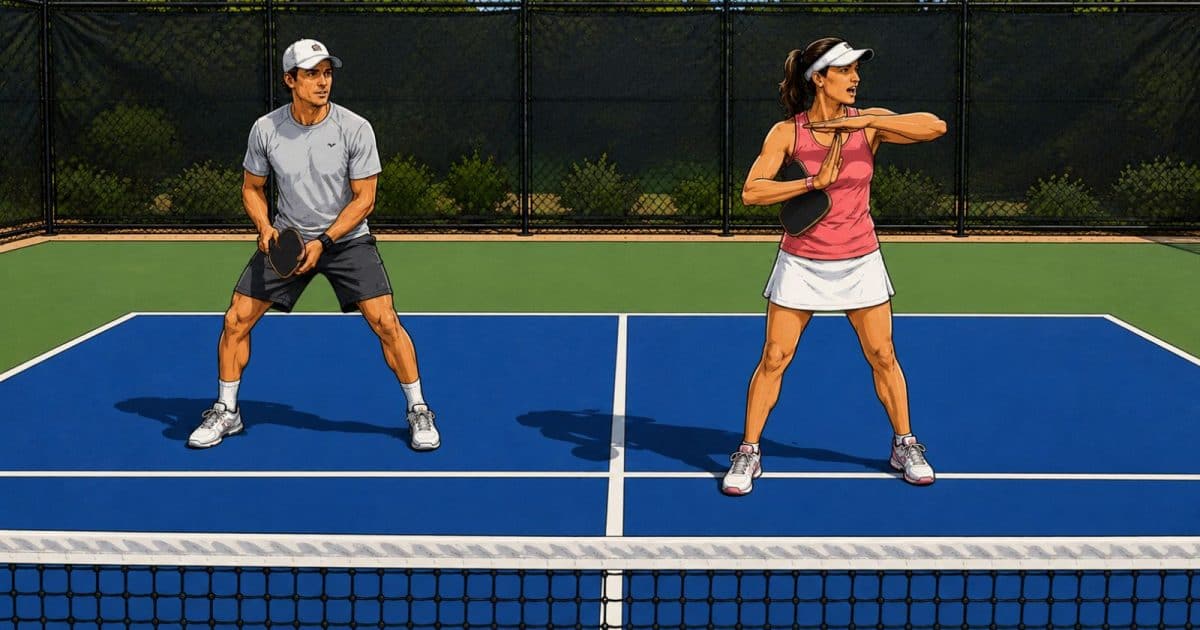
Any player can make the request, so in doubles either partner can call it. Making the request out loud or with a visible hand signal both count. The score, the server, and the serving order all stay exactly as they were before the interruption. A player who calls a time-out with none left is charged a technical foul under the rulebook in officiated play. In casual, non-officiated matches, the practical version of that rule is that the opposing side just says no.
The medical timeout
A medical time-out is a separate provision under Section 21.C, with its own clock and its own conditions, and it is not drawn from a team’s two or three standard time-outs. A medical time-out runs up to 15 minutes, and a player is limited to one per match. If a player can resume in less than 15 minutes, the unused portion is lost rather than banked for later.
A medical time-out called for a problem that turns out not to require medical attention can be reclassified as a standard time-out and drawn from that team’s allowance instead, so it is not a free pass to rest. Cramping is one of the situations sanctioning bodies treat inconsistently, so a tournament’s own posted rules govern how it is handled on site.
Bleeding is handled on its own track again. Under Section 21.D, if a player is bleeding or blood turns up on the court, play stops until the bleeding is controlled and the court is cleaned, and that stoppage is not charged as a time-out to either side.
When to use one
The most useful trigger is a run of three or four straight points against you. That is usually enough signal that something is working for the other side, and it comes early enough that the deficit is still recoverable. Waiting until the run reaches six or more points turns the time-out into damage control instead of prevention.
Two other legitimate uses are worth building into a game plan. Calling one before an opponent serves at game point interrupts their rhythm at the exact moment it matters most, which is a normal and fully legal tactic. Calling one when a doubles team’s communication has broken down, with balls dropping between partners, buys the thirty seconds of conversation that fixes it before the next rally.
What a time-out does not fix is fatigue. A minute is not a rest, and treating it like one wastes its tactical value. A team that spends the minute naming one specific adjustment, such as which opponent to target or whether to drop instead of drive, gets more out of the break than a team that spends it catching its breath. The full format for how these breaks fit into a bracket is covered in this guide to how pickleball tournaments work.
Other stoppages that are not timeouts
Yes, and knowing them keeps a team from spending a time-out it did not need to use. Between games of a match, Section 21.B allows up to two minutes to change ends, and that break is not charged to either side.
The referee can also call a stoppage under Section 21.D for reasons that have nothing to do with either team’s allowance: a potential medical situation, a player bleeding, or a foreign substance such as spilled water or debris on the court. Separately, Section 21.E lets the referee grant an equipment time-out of reasonable length when something needs fixing before play can continue safely, and that time is not drawn from a team’s standard total either.
A ball that is confirmed cracked or out of round can be swapped out under the rulebook without charging either side a time-out, once the referee makes that determination. Reviewing the full rulebook alongside the basic rules of pickleball is worth doing before a first sanctioned event, since several of these stoppages are easy to confuse with a time-out in the moment.
FAQ
How many timeouts do you get in pickleball? Under the rulebook, each side gets two standard time-outs per game to 11 or 15 points, and three per game to 21 points. A tournament’s format sheet can set a different allowance for that event.
How long is a pickleball timeout? A standard time-out under the rulebook runs a maximum of one minute, and the referee gives a 15-second warning before calling time in.
When can you call a timeout? Only when the ball is dead, meaning between rallies or before a serve. Under the rulebook, calling one after the serve has been struck is a fault, not simply a disregarded request.
Can my opponent call a timeout before my serve? Yes. A time-out can be called any time the ball is dead, including right before an opponent’s serve, and that is a standard, legal tactic rather than a violation.
Does a medical timeout count against my standard timeouts? No. Under Section 21.C, a medical time-out is separate from the standard allowance and is capped at 15 minutes per player per match.
What happens if I ask for a timeout I do not have? Under the rulebook, requesting a time-out with none remaining draws a technical foul in officiated play. In recreational play without an official, the opposing side simply declines the request.
Do timeouts change the score or serving order? No. Under the rulebook, the score, the server, and the serving order stay exactly as they were before a standard time-out.
Is the break between games a timeout? No. Under Section 21.B, the between-game break runs up to two minutes and is not charged to either team, separate from a player’s serving rules obligations covered in pickleball serving rules.
Playing a first sanctioned event is a good time to read the full time-out section rather than relying on secondhand explanations, since tournament directors are allowed to adjust the standard allowance. Pickler Junction’s coaches directory is a good next stop for a local coach who can walk through in-game tactics like time-out timing in person.
Written by the Pickler Junction Team.