Padel Ball vs Pickleball Ball: Why the Balls Are Completely Different
Quick Answer: A padel ball is a felt-covered rubber ball filled with pressurized air, built almost like a tennis ball but softer, according to the International Padel Federation. A pickleball is one solid piece of molded plastic with 26 to 40 holes and no internal pressure, per the USA Pickleball Equipment Standards Manual. The materials explain every other difference between the two.
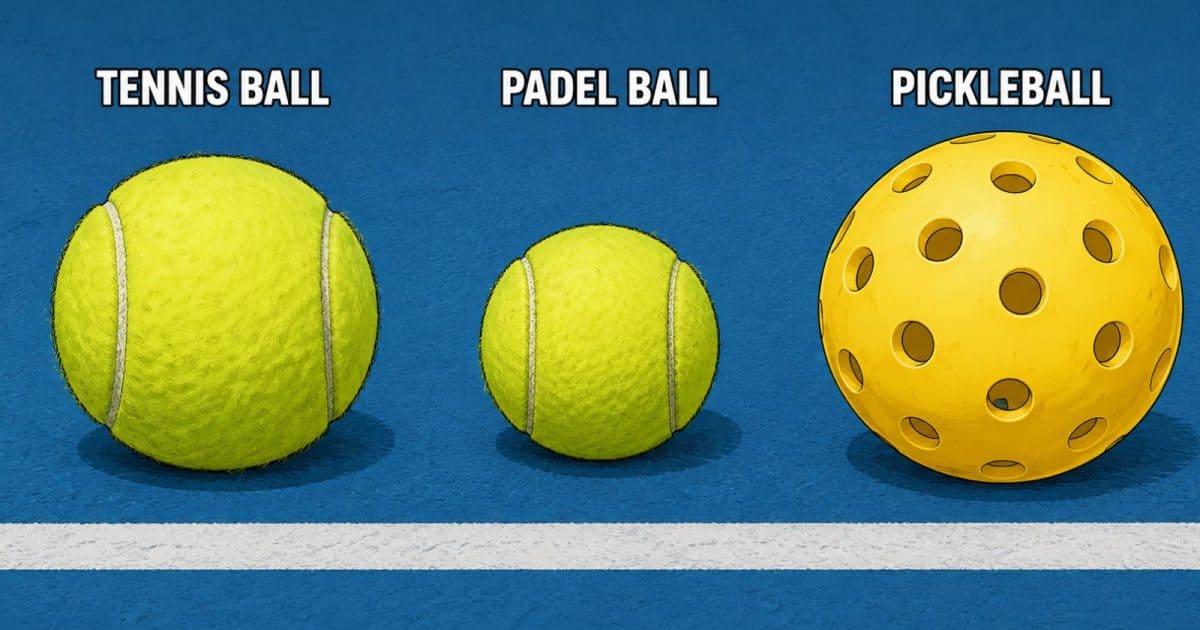
One ball is a close cousin of a tennis ball. The other is a wiffle-style ball built for a small court. That single difference in construction explains nearly every other gap between the two, including why padel courts use glass walls and pickleball courts never do.
What Is a Padel Ball Made Of?
A padel ball is built almost exactly like a tennis ball, with a hollow rubber core filled with pressurized air and a fuzzy felt cover glued to the outside.
Under the official Rules of Padel from the International Padel Federation, effective January 2026, a padel ball must measure 6.35 to 6.77 centimeters across and weigh between 56.0 and 59.4 grams. Internal pressure must sit between 4.6 and 5.2 kilograms per 2.54 square centimeters, and the ball must bounce 135 to 145 centimeters when dropped from 2.54 meters onto a hard surface.
That pressure sits a little below a standard tennis ball, which keeps the bounce lower and the pace slower. That matters on an enclosed court, where the ball regularly rebounds off glass walls, since a full-pressure tennis ball would carom around unpredictably. The felt cover helps too, giving the ball a consistent, grippy rebound off glass. See the comparison of the padel court versus the pickleball court for how the court itself shapes the game.
What Is a Pickleball Made Of?
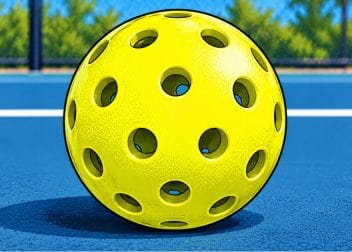
A pickleball is one single piece of molded plastic, with holes drilled or molded straight through it. There is no rubber core, no felt, and no pressurized air inside.
Under the 2026 USA Pickleball rulebook, Section 3.C, ball design must meet the specifications in the USA Pickleball Equipment Standards Manual. That manual puts the diameter at 2.87 to 2.97 inches, the weight at 0.78 to 0.935 ounces, and the bounce at 30 to 34 inches when the ball drops from 78 inches onto a granite surface plate. The ball must also carry between 26 and 40 circular holes.
Pickleballs come in two general types, and the differences matter enough that the full guide to indoor versus outdoor pickleballs exists for a reason. Outdoor balls typically use harder plastic with holes near the 40-hole maximum, which helps them hold a line in wind, according to PlayPickleball’s indoor versus outdoor comparison. Indoor balls typically use softer plastic near the 26-hole minimum, and feel lighter and grippier off the paddle face.
Either way, the ball carries zero internal pressure, and that single design choice drives almost everything else in this comparison.
Padel Ball vs Pickleball Ball: Side by Side
| Feature | Padel Ball | Pickleball |
|---|---|---|
| Material | Rubber core with a felt cover | Hard molded plastic |
| Construction | Two-part build, core plus felt, like tennis | One piece of plastic with holes |
| Pressure | 4.6 to 5.2 kg per 2.54 sq cm | None |
| Diameter | 6.35 to 6.77 cm | 7.29 to 7.54 cm |
| Weight | 56.0 to 59.4 grams | 22.1 to 26.5 grams |
| Bounce | 135 to 145 cm from a 2.54 m drop | 76.2 to 86.4 cm from a 198.1 cm drop |
| Lifespan | Loses bounce as pressure leaks out | Eventually cracks, especially in cold |
| Indoor vs outdoor | Same ball in every setting | Two types: harder outdoor, softer indoor |
Why Does the Bounce Feel So Different?
The bounce differs because one ball has springy pressurized air inside, and the other is rigid plastic. A padel ball compresses on impact and springs back, giving rallies a flowing, tennis-like rhythm. A pickleball barely compresses at all, so it comes off the court low and quick, then slows down fast, which is one reason pickleball can feel like table tennis on a big court.
Padel courts can use glass walls because a felt-covered, pressurized ball rebounds off them with enough life left to keep a point going. Bounce a pickleball off a wall and it loses energy fast, since rigid plastic gives back very little spring. If you want to keep your own shots low on a pickleball court, the guide on how to keep the ball low in pickleball breaks down the technique. See the padel versus pickleball breakdown of courts, rules, and scoring for more on the two sports.
How Long Does Each Ball Last?
They wear out in different ways. A padel ball fades gradually, since air leaks out of the pressurized core over time, even inside a sealed can. It gets softer and lower bouncing until it feels flat and gets swapped for a fresh one.
A pickleball does not go soft. It plays about the same for a long stretch, then one day a different sound shows up on contact, and a crack runs through the plastic. Cold weather speeds that up, since chilled plastic turns brittle. Expect to go through balls faster if you play outdoors in winter.
Does the Ball Change What You Swing at It?
Completely. A fuzzy, pressurized ball needs a stringless but padded racket built to absorb and redirect that rubbery energy, which is why padel uses that design. A hard plastic ball pairs best with a flat, solid face, so pickleball uses a paddle instead. The comparison of the padel racket versus the pickleball paddle walks through why each shape exists.
Frequently Asked Questions
Can you play pickleball with a padel ball? Not in any useful way. A padel ball bounces far higher than pickleball’s low, controlled game calls for, and the soft felt surface reacts oddly off a rigid paddle face.
Is a padel ball just a tennis ball? Very nearly. It shares the same construction, a pressurized rubber core under a felt cover, but the International Padel Federation holds it to a lower pressure range under the Rules of Padel, which suits an enclosed court with walls.
Why do pickleballs have holes? The holes let air pass through the ball, which slows its flight and keeps it manageable on a small court. Under the USA Pickleball rulebook, hole size and count also help tune how a ball handles wind.
How many holes does a pickleball have? Under the USA Pickleball rulebook’s equipment standards, every approved ball must have between 26 and 40 circular holes. Outdoor balls typically sit near the high end for wind resistance, while indoor balls sit closer to the low end.
Why do padel balls go flat over time? The pressurized air inside slowly leaks out through the rubber, even while the ball sits sealed in its can. Once enough pressure escapes, the bounce drops below the 135 to 145 centimeter range the Rules of Padel require for a new ball, and players retire it.
Why do pickleballs crack in cold weather? Cold makes plastic more brittle. A chilled pickleball absorbs the shock of paddle contact poorly, so hard hits can split it, and outdoor winter play wears through balls faster.
Do padel balls bounce higher than pickleballs? Yes, by a wide margin. Under the Rules of Padel, a new padel ball must bounce 135 to 145 centimeters from a 2.54 meter drop, while the USA Pickleball equipment standards call for only 76.2 to 86.4 centimeters from a 198.1 centimeter drop.
Can a pickleball hit your body during a rally? Yes, and under the USA Pickleball rulebook that generally costs the point for the player who got hit. The full breakdown lives in the guide on whether the ball can hit your body in pickleball.
If reading all this has you eyeing fresh balls, a new paddle, or anything else for your bag, browse the shops and brands listed in the pickleball gear and accessories directory at https://picklerjunction.com/single-category/pickleball-gear-accessories/?directory_type=general and see who is stocking what near you.
Written by the Pickler Junction Team.