Is Yoga Good for Pickleball Players?
Quick Answer: Yes. Yoga for pickleball targets exactly what the sport tightens and tests: hips shortened by lunging, shoulders wound up by overheads, single-leg balance, and composure under pressure. One or two sessions a week complements court time well. It replaces neither strength work nor warm-ups.
Yoga’s pitch to pickleball players is unusually specific. This sport creates a recognizable body, tight hips, cranky shoulders, wobbly single-leg moments, and yoga happens to be a system aimed at precisely those parts.
What does yoga actually fix for pickleball players?
Four things, each of which shows up on court within weeks.
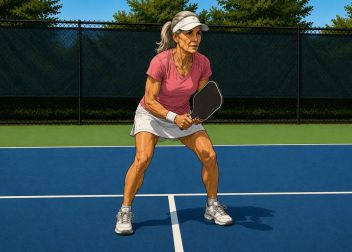
- Hip mobility. Lunging and low ready positions shorten hip flexors and stiffen rotation. Poses that open the hip’s front and rotate it through range restore the depth your kitchen-line lunge quietly lost.
- Shoulder and thoracic mobility. Overheads and serves need the upper back to extend and rotate. Most desk-owning adults have traded that motion away, and yoga’s chest-opening and spinal rotation work buys it back.
- Single-leg balance. Half of pickleball happens on one foot mid-stride. Balance poses train exactly that stabilization, slowly and safely, which matters double for older players, a connection our guide to pickleball and fall prevention makes from the court side.
- Breath and composure. Yoga’s breathing practice is a portable nerve-management tool, and 9-9 in game three is where you will find yourself using it.
None of this requires flexibility to start. Flexibility is the output, not the entry fee, and the stiffest player in the room gains the most.
What can yoga not do for your game?
Build strength fast, replace your warm-up, or train speed, and pretending otherwise wastes its real value.
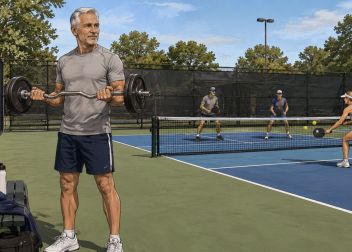
Yoga loads muscles with bodyweight held slowly, which builds useful stability and endurance in supporting muscle but not the leg and hip strength that protects knees under hard braking. That job still belongs to resistance work, and the case for it lives in our guide on whether pickleball players should lift weights. Yoga complements lifting beautifully; it substitutes for it poorly.
It is also the wrong tool immediately before play. Long static holds are for after sessions and separate days; pre-game preparation wants movement that warms rather than lengthens. And nothing about mat work trains explosiveness, direction change, or reaction, the quick qualities that live in drills and agility work.
The honest frame: yoga is maintenance and mobility infrastructure. It will not add pace to your drive this month. It will let you keep lunging comfortably at an age when your rivals have stopped, which is the longer game.
Which yoga styles and poses fit pickleball best?
Gentle to moderate flow styles and the hip-and-shoulder catalog, with intensity treated as unnecessary.
Style first: slow flow, hatha-style classes, and yin or restorative sessions serve players better than hot or acrobatic varieties. The goal is range and control, not sweat competition, and the recovery-day feel of gentler classes is exactly the point.
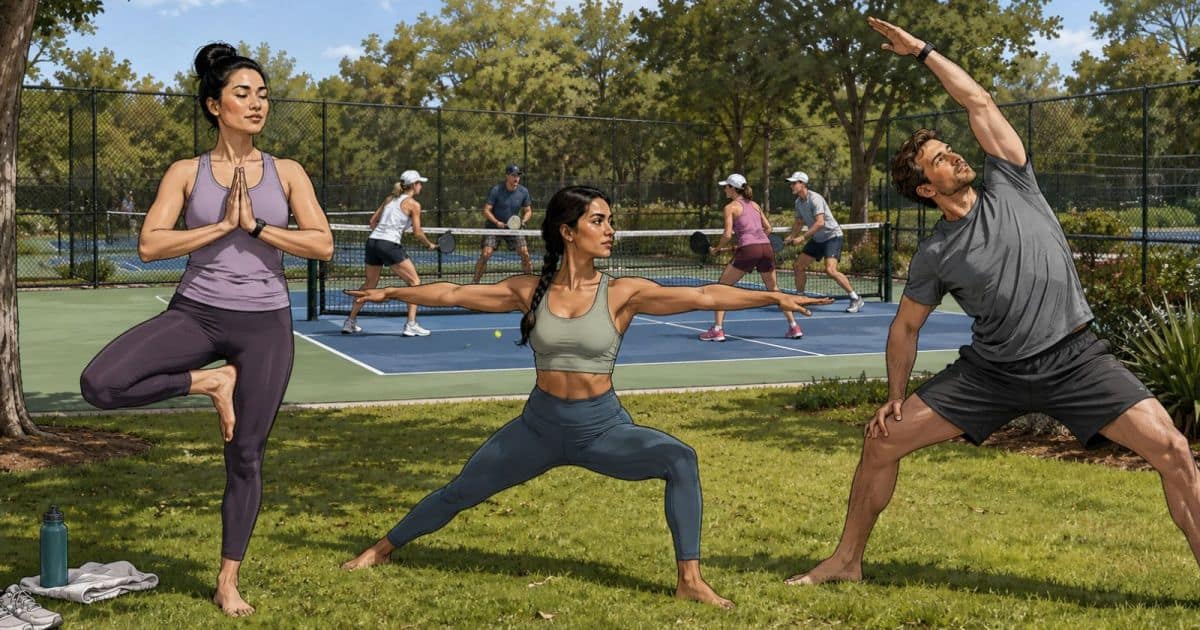
The pickleball-relevant pose families, by the problems they solve: low lunge and pigeon variations for the hips that lunging shortens. Figure-four shapes for the deep rotators that lateral movement stiffens. Gentle twists and chest openers for the serving shoulder’s supply chain. Tree and warrior three, near a wall as needed, for single-leg balance. Down dog and calf-focused shapes for the ankles and calves that quick steps punish. And a genuinely long hold or two for the parts that only release with patience.
As a starting point rather than a prescription, a home practice of roughly 15 to 20 minutes twice a week covers that list without a studio. Players who prefer teaching and company do fine in any beginner-friendly class by simply favoring these shapes when options appear.
How should yoga fit into a playing week?
As recovery and maintenance, scheduled against your court calendar rather than on top of it.
The slots that work: a session on the day after heavy play, when hips and shoulders are stiffest and most receptive. A short evening practice on playing days, hours after the games, where it doubles as an extended cooldown alongside the routine in our guide to the best stretches after playing pickleball. And nothing long or deep in the hour before matches, when your body wants dynamic warming instead.
Stacked against strength work, alternation is the clean pattern: two lifting days, two playing blocks, one or two short yoga sessions in the gaps. That reads like a lot of scheduling and, in practice, is about 40 minutes of mat time spread across a week.
The habit tends to stick for an unglamorous reason: the benefit shows up in ordinary movement rather than on the scoreboard. Reaching for a wide dink without the groin complaining, or getting shoes on without holding the fence, is the kind of change that arrives weeks before anything changes about the game itself.
FAQ
Is yoga good for pickleball players? Yes, particularly for hip and shoulder mobility, single-leg balance, and recovery. One or two gentle sessions a week is a strong complement to play.
Can yoga replace strength training for pickleball? No. Yoga builds mobility and stability; joint-protecting strength still comes from resistance work. The two pair well.
Should I do yoga before playing? Not long static sessions. Before play, use a dynamic warm-up; save real yoga for after sessions or separate days.
What kind of yoga is best for pickleball? Gentle or moderate flow, hatha, yin, or restorative styles. Range and control are the goals, not heat or difficulty.
Do I need to be flexible to start? No. Inflexibility is the reason to start, and every pose scales. The stiffest beginner improves fastest.
How often should a pickleball player do yoga? A reasonable starting point is once or twice a week, 15 to 30 minutes at a time. There is no established dose for pickleball specifically, so treat it as a suggestion and adjust to what your week allows.
Which poses help pickleball most? Low lunge and pigeon for hips, figure-four shapes for rotation, gentle twists and chest openers for shoulders, tree and warrior three for balance.
Does yoga help with pickleball nerves? The breathing practice does transfer. Slow exhale-focused breathing between points is a learnable skill, and yoga is where most players learn it.
Looking for the right teacher or class? The fitness professionals in our directory include mobility and yoga instructors who work with athletes, and many of the health and fitness centers in our listings run the gentle classes that fit a playing week.
Written by the Pickler Junction Team.
*This article is general information, not medical advice. Talk with your doctor about your own health before starting a new sport.