Stretching Exercises for Pickleball: The Complete Before and After Routine
Quick Answer: The right pickleball stretching routine has two parts. Warm up first, then use dynamic stretches like leg swings and arm circles before you play. After you play, hold static stretches such as calf and hamstring stretches for about 30 seconds each, according to the Mayo Clinic. Doing static stretches on cold muscles can raise injury risk and lower performance.
Stretching for pickleball works best in two stages, not one, and the order matters as much as the moves themselves. Warm up and move first. Stretch statically once you are done playing. Here is the complete routine and the reasoning behind each half.
What stretches should pickleball players do?
A complete pickleball stretching plan has two stages, and each stage uses a different kind of stretch for a different purpose.
The two-part framework:
- Warm up first, every time. The Mayo Clinic says stretching is not a warmup by itself. Spend 5 to 10 minutes on light walking, jogging, or easy movement before you stretch at all.
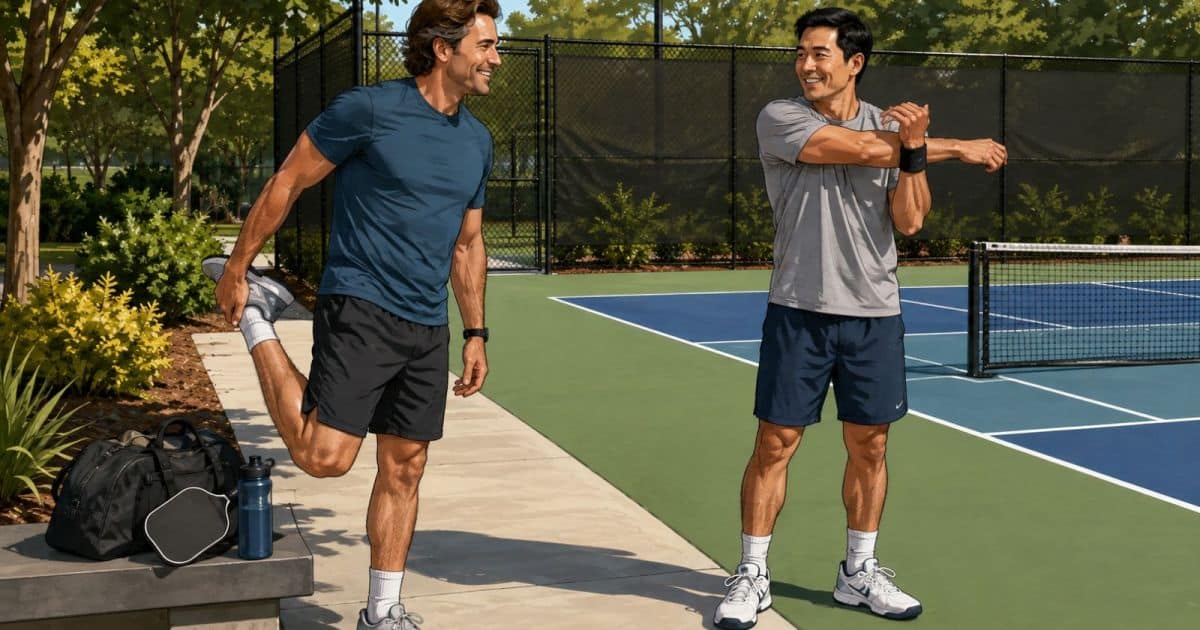
- Dynamic stretches before play. Once you are warm, use moving stretches that copy the sport, like leg swings and lunges, to prepare for quick lateral movement. See the guide on dynamic stretches for pickleball.
- Static stretches after play. Hold still stretches for the calves, hamstrings, and shoulders once you are done playing, while your muscles are already warm. See the guide on the best stretches after playing pickleball.
- Hold time matters. The Mayo Clinic recommends holding each static stretch for about 30 seconds, or up to 60 seconds for a tight area.
This order, movement first and stillness second, is the whole plan. Reversing it is the most common mistake players make.
What should you do before you play?
Warm up, then move through dynamic stretches. The pre-play half wakes up your body for the fast, side-to-side movement pickleball demands. Static holds do not belong here.
A sample pre-play routine:
- Light movement first, like a brisk walk or an easy jog, for 5 to 10 minutes, the warm-up window the Mayo Clinic recommends before any stretching.
- Leg swings, front-to-back and side-to-side, to loosen the hips.
- Arm circles and shoulder rolls, to prepare the shoulders for overhead and swinging motions.
- Walking lunges with a torso twist, for the legs and core together.
- Side shuffles, to rehearse the lateral footwork the sport requires.
Skip static holds during this part of the routine. The Mayo Clinic notes that stretching cold muscles, or holding a stretch right before an intense effort, can reduce performance rather than help it. For the full sequence, see the guide on the pickleball warm-up routine to prevent injury.
What should you do after you play?
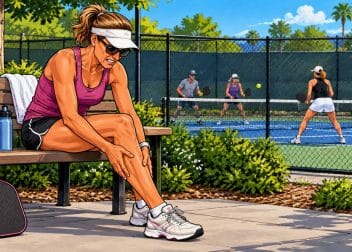
Hold static stretches once you are done playing. This is when your muscles are warmest, and the Mayo Clinic recommends static stretching once activity has already warmed the body.
A sample post-play routine:
- Calf stretch, against a wall or a step, held gently.
- Hamstring stretch, seated or standing, with a slow, easy hold.
- Quad stretch, standing and balanced against something steady.
- Shoulder and chest stretch, for the muscles used in every swing.
- Wrist and forearm stretch, for the joints that grip the paddle.
Hold each stretch for about 30 seconds, or up to 60 seconds in a tight spot, per the Mayo Clinic guidance above. Do not bounce. For the full cooldown, see the guide on the best stretches after playing pickleball. If soreness shows up the next day instead of during the stretch itself, the guide on feeling sore after pickleball covers what is normal and what is worth a closer look.
Frequently asked questions
What stretches should pickleball players do? A complete routine has two parts. Warm up first, then use dynamic stretches like leg swings and arm circles before you play. After you play, hold static stretches for the calves, hamstrings, shoulders, and wrists.
What are the best stretches for pickleball? Before play, dynamic moves like leg swings, arm circles, walking lunges, and side shuffles work well once you are warm. After play, static holds for the calves, hamstrings, quads, shoulders, and wrists support recovery.
Should you stretch before or after pickleball? Both, but differently. Warm up, then use dynamic stretches before you play. Save static, held stretches for after play, when your muscles are already warm, according to the Mayo Clinic.
How long should you hold a stretch for pickleball? The Mayo Clinic recommends holding each static stretch for about 30 seconds, or up to 60 seconds for a particularly tight muscle.
Can stretching before pickleball actually hurt your game? Stretching cold muscles, or holding a static stretch right before intense play, can reduce muscle performance rather than improve it, according to the Mayo Clinic. That is one reason dynamic movement, not static holds, belongs in the warm-up.
Why does the order of stretching matter? Because static stretching works best on warm muscles. The Mayo Clinic advises warming up with 5 to 10 minutes of light movement before stretching, and saving static holds for after activity.
Is stretching enough to prevent a pickleball injury? Stretching is one part of preparing your body to play, alongside a proper warm-up and supportive footwear. A specific ache, like a sore knee that does not settle down, is a question for a physician or physical therapist rather than a stretch alone.
How often should you stretch if you play pickleball regularly? The Mayo Clinic recommends stretching regularly, at least two to three times a week, even on days you do not play, to maintain flexibility over time.
The complete stretching routine is a simple bookend: warm up and move dynamically before you play, then hold static stretches once you are done. Pair it with a full warm-up, watch how your body recovers in the days after, and if a specific ache does not settle down, a provider in the physicians and therapists directory can take a closer look. This article is general information, not medical advice.
Written by the Pickler Junction Team.