How to Clean Your Pickleball Paddle (And How Often)
Quick Answer: To clean your pickleball paddle, wipe the face with a damp, lint-free microfiber cloth after every session, and add mild soap for a deeper clean. On raw carbon fiber faces, use a paddle eraser every few sessions to lift ball residue and restore texture. Skip acetone, solvents, and abrasive pads, and never soak the paddle in water.
Your paddle’s face is where spin and control live, and every session leaves behind a film of ball residue, sweat, and court dust. That film dulls the surface a little more each time you play. Cleaning takes about two minutes and is one of the simplest ways to keep a paddle performing close to how it did when new. Here is the full routine, including the question this article keeps coming back to: how often is actually enough.
How Do You Clean a Pickleball Paddle Face?
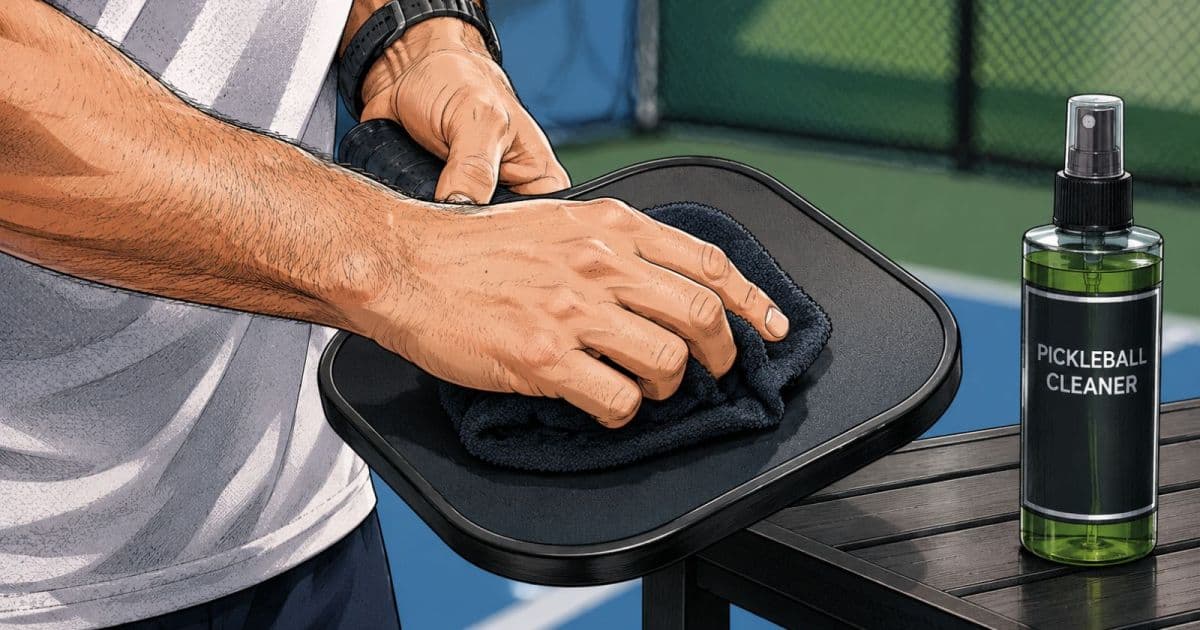
The everyday clean is simple. Dampen a lint-free microfiber cloth with plain water, wring it nearly dry, and wipe the face and edge guard. Sweat and dust come off with that alone. For a grimier face, add a drop of mild dish soap to the water, then wipe with a clean damp cloth and dry with a towel.
What matters more is what to leave in the cabinet. According to Selkirk’s guide to cleaning carbon fiber paddles, harsh chemicals, solvents, and abrasive sponges or brushes can degrade the surface and strip away texture. That texture, the grit on the face, is what generates spin, so cleaning should protect it, not sand it down. Skip acetone and anything marketed as a household degreaser.
If you are still deciding between a raw carbon face and a smoother composite one, the guide to how to choose a pickleball paddle covers that tradeoff before you settle into a cleaning routine.
What Is a Paddle Eraser and Do You Need One?
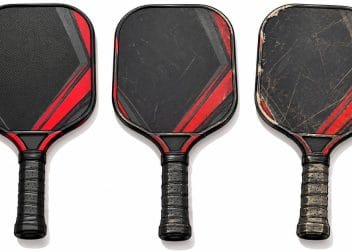
If your paddle has a raw carbon fiber face, a common material on today’s paddles, the answer is yes. Ball residue works into the carbon grit in a way a damp cloth cannot fully lift, and it shows up as shiny, smooth patches where spin used to be.
A paddle eraser, sold by brands including Franklin Sports as the Paddle Magic and by paddle makers such as CRBN and Onix, is a rubber cleaning block built for this. Franklin Sports’ product page says the eraser removes “ball residue, debris and other small imperfections” and, with a few swipes, helps “restore the surface grit.” Selkirk describes the same category of tool as a non-abrasive rubber compound that lifts grime without damaging the surface underneath.
To use one, rub the face in small circles until the dull spots turn back to matte, then brush off the shavings. That is the whole process. For smooth fiberglass or composite faces, the damp cloth from the section above is enough; erasers are a carbon-face tool.
How Often Should You Clean Your Pickleball Paddle?
Match the routine to how often you play. A paddle care guide from PickleballCentral.com lays out a simple cadence, and the honeycomb-core warning below comes from Selkirk’s official paddle care guide:
- After every session: wipe the face and edges with a damp microfiber cloth. Make it the habit that happens while a partner packs up.
- Monthly, or sooner if you play often: a deeper clean with mild soap and water, plus a paddle eraser pass on carbon faces if shiny spots have started to show.
- Annually, or whenever it turns slick: clean or replace the grip. Wipe the handle with a barely damp cloth, and swap the overgrip once it goes shiny; overgrips are consumables, not equipment.
- Never: soaking, rinsing under a tap, or running the paddle through a dishwasher. Selkirk’s paddle care guide notes that many paddle cores are honeycomb and that submerging a paddle risks trapping water inside, which makes the paddle harder to use well.
A microfiber cloth and an eraser kept in a side pocket make the whole routine shorter than the walk to the car.
Does Cleaning Actually Bring Back Spin?
On a residue-coated carbon face, yes, noticeably. What cleaning cannot do is rebuild grit that has physically worn away. Paddle texture wears down over months of play through ordinary friction, and no eraser restores material that is simply gone. Cleaning keeps a face performing at whatever its current texture allows; when a freshly erased face still will not grab the ball, that is the paddle’s age showing, not a hygiene problem. Regular cleaning mostly delays that point by weeks or months.
If a paddle also feels dead on power shots rather than short on spin, that is a different issue worth checking separately; see why does a pickleball paddle lose its pop for that side of paddle wear.
What About the Grip and Edge Guard?
The grip collects more grime than the face and usually gets cleaned less. Wipe the handle with a slightly damp cloth and dry it. If you sweat heavily, an occasional gentle wipe with a barely damp, mildly soapy cloth keeps the grip from turning slick. Replace the overgrip once it feels slippery rather than waiting for it to wear through; a fresh overgrip is inexpensive and changes the feel of the whole paddle.
The edge guard needs the same wipe as the face, plus a glance for cracks or lifting while you are there. A peeling edge guard caught early is a small dab of glue. Left alone, moisture and impact can work into the seam and contribute to paddle delamination, where the face begins separating from the core.
While in maintenance mode, it is also a good moment to check any lead or tungsten tape added to the frame. The guide to adding weight to a pickleball paddle covers keeping that setup secure.
FAQ
Can you use window cleaner on a pickleball paddle? Skip it. Selkirk’s cleaning guidance warns that household cleaners not made for delicate paddle surfaces can degrade the face. Plain water and mild soap do the same cleaning job without that risk.
Can you use wet wipes to clean a pickleball paddle? Plain water wipes are fine in a pinch. Skip wipes built for heavy-duty cleaning, since Selkirk’s guide warns that harsh chemicals and solvents can strip away paddle texture, and added cleaning agents on a wipe fall into that category.
Does water ruin pickleball paddles? A damp wipe, no. Soaking or submerging, yes. Selkirk’s official paddle care guide explains that many paddle cores are honeycomb construction, and water trapped inside makes a paddle harder to use well. Wipe wet, never wash wet.
How do you clean a carbon fiber pickleball paddle? A damp microfiber cloth handles the routine wipe. A paddle eraser, used every few sessions, lifts ball residue out of the carbon grit. Selkirk’s carbon fiber cleaning guide recommends this same combination as the core care routine for raw carbon faces.
How do you clean a pickleball paddle grip? A slightly damp cloth, dried afterward, keeps the handle from getting sticky. Replace the overgrip whenever it turns shiny or slick rather than waiting for it to fail.
Why does a paddle get shiny, smooth spots? That is compacted ball residue sitting on top of the carbon grit, and it is spin leaving the paddle. A paddle eraser, according to Franklin Sports’ Paddle Magic product page, is built to restore that surface grit. If erasing does not bring the shine back to matte, the texture underneath has worn away for good.
How long do pickleball paddles last? A well-made paddle typically lasts one to five years of regular play, according to PickleballCentral.com, depending on how often it is used, court conditions, and build quality. Cleaning stretches that timeline; nothing makes it indefinite.
A clean paddle is the free half of playing better; the right paddle underneath it is the other half. When a freshly erased face still will not respond, that points to a paddle nearing the end of its usable life rather than a missed cleaning step, and the beginner paddle weight guide is a solid starting point for shaping its replacement. The Pickler Junction gear directory lists retailers and pro shops that can help track one down.
Written by the Pickler Junction Team.