What Is Shake and Bake in Pickleball?
Quick Answer: Shake and bake is a doubles play in which one partner drives the third shot and the other looks to move forward and attack a weak reply. It is commonly used when the return gives the driving team a ball they can attack.
What Is Shake and Bake in Pickleball?
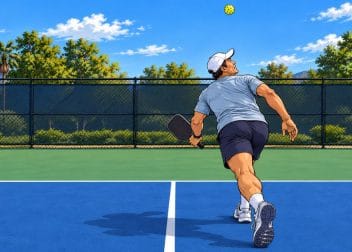
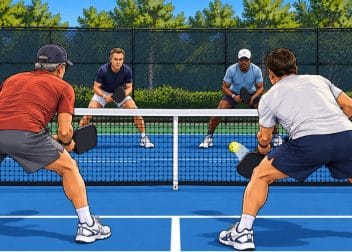
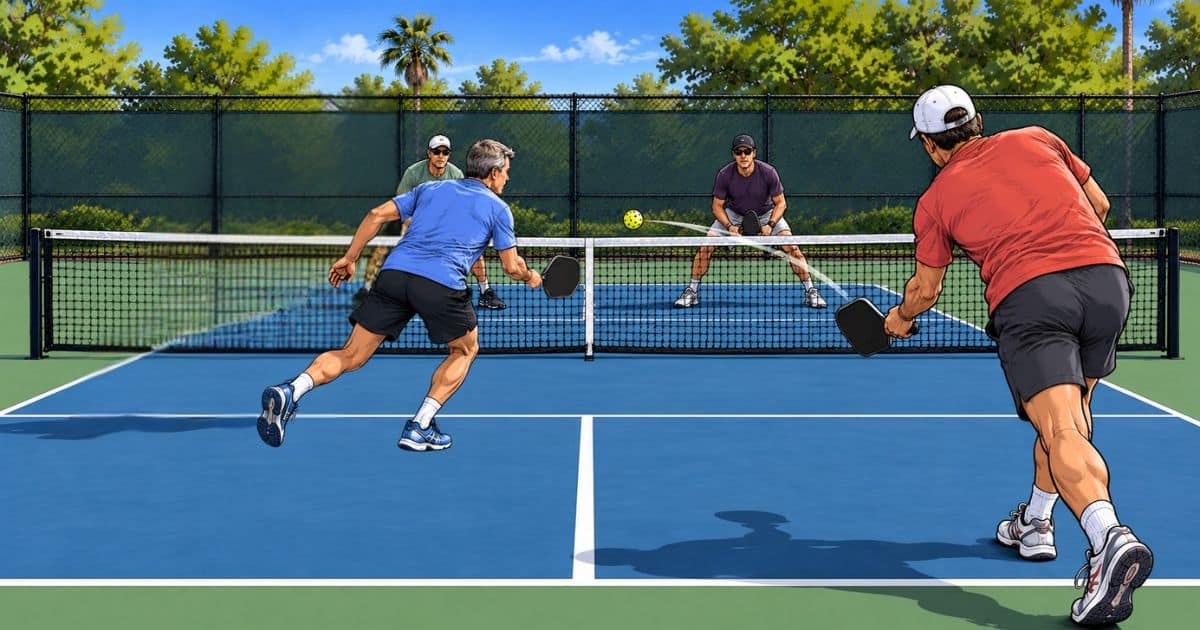
Shake and bake is a two-person pattern built around the third shot in a doubles point. One partner hits a firm, driven third shot instead of a soft drop, and the other partner, instead of waiting to see what happens, moves forward toward the net at the same time. If the drive forces a weak, popped-up block from the return team, the partner who crashed the net is already in position to put it away with a volley. The name describes the sequence: shake the ball loose with the drive, then bake the point closed at the net.
The pattern goes by other names too. Some coaches and commentators call the same idea the drive and crash, and the guide to hitting a third shot drive covers the swing mechanics that make the drive half of the play work. Shake and bake is not a separate shot on its own. It is a decision to pair a drive with an aggressive net rush by the partner, run together on purpose rather than left to chance.
What Are the Two Roles in a Shake and Bake?
Every shake and bake needs one player driving and one player crashing, and the roles depend on where the ball actually goes. After the serve, the two-bounce rule under Section 10.A of the 2026 USA Pickleball rulebook requires the serve and the return of serve to each bounce once before either side volleys, so the third shot always comes off a bounce rather than out of the air. Whoever ends up facing that bounce, often the server since a return is commonly aimed back at whoever just served, is the player who drives. That is the “shake.”
The other partner takes the attacking role. In a standard doubles setup, the player who did not serve is usually already closer to the non-volley zone line, since the server begins behind the baseline. When the shake and bake is called for, that partner either holds the net position and gets ready to pounce, or, if both partners started back, sprints forward the moment the drive leaves the paddle. The guide to poaching in pickleball covers the related skill of stepping into a partner’s side of the court to finish a point, which is close to what the crashing partner is doing here on their own half.
When Does Shake and Bake Work?
Shake and bake works well against a return that gives the drive something to attack. A high, floating, or short return sets up a firm drive with an easy path to the opponents’ feet or the middle seam, and a rushed or defensive return often produces that kind of ball. Opponents who block a hard drive high, rather than dropping their paddle face to absorb the pace, are also good targets, since a high block is the pop-up the crashing partner is waiting to attack.
The play depends on the return team’s habits over a game as much as any single opponent. A team that consistently drives instead of drops on the third shot, paired with a committed run to the net, tends to draw high blocks more often through repetition. The comparison of the third shot drive against the third shot drop walks through the read on when a drive beats a drop, and that same read applies to deciding whether the moment calls for a shake and bake.
How Do Partners Signal a Shake and Bake?
Because both partners have to move at the same instant, most teams call the play before the point starts rather than reacting mid-rally. A common method is a hand signal given behind the back by the server or the player who will crash, out of sight of the returners, right before the serve. The guide to hand signals in doubles covers the signals teams use for this and other planned plays, including stacking and poaching calls.
A verbal call works too, as long as it does not tip off the returners, and some teams simply agree before a match that any hard, driven third shot is the cue to crash, no separate signal needed. Whatever the method, the point of calling it in advance is timing. The crashing partner needs to start moving as the drive leaves the paddle, not after watching to see if it worked, and that kind of split-second start is hard to coordinate without agreeing on it first.
What Are the Risks of Running a Shake and Bake?
The main risk is that the drive does not produce a pop-up. If the return team blocks the ball short and low instead of high, or resets it into the kitchen, the attacking team may face a difficult next ball and may need to adjust its spacing rather than continue forward automatically. A drive that sails long or into the net turns the whole play into an unforced error before the crash even matters.
The other common risk is a lob. A returner who sees the partner crashing can lift the ball over that player’s head toward the open baseline, and because the crashing partner is moving forward at speed, chasing down a lob is difficult. The guide to moving with a partner in pickleball covers the court coverage habits that help a team recover when a plan like this gets countered.
How Do You Defend Against a Shake and Bake?
Defending a shake and bake starts with the return itself. A low, deep return that lands near the baseline takes away the easy high block, since the driving player has to generate their own pace rather than redirect an easy, floating ball. Keeping the paddle face down and absorbing pace on the block, rather than blocking flat or high, also cuts down on the pop-ups that make the play work in the first place.
Watching the attacking partner is the other half of the defense. If that player moves forward aggressively after the drive, a well-executed lob may be available if there is enough space and the ball allows it. The non-volley zone line matters here too. Under Section 3.A.4.c, the non-volley zone extends 7 feet back from the net, and a crashing player who arrives at that line but has not yet set their feet is often still recovering balance when the next ball comes, which is exactly when a well placed dink or a body shot can win the exchange. The broader guide to doubles strategy in pickleball covers more return and positioning options for handling aggressive net play like this.
Frequently Asked Questions
Is shake and bake the same thing as drive and crash? Yes. Both names describe the same pattern, a driven third shot paired with a partner crashing the net to attack the return. Different coaches and commentators simply use different names for it.
Who hits the drive in a shake and bake, the server or the partner? Whoever the ball comes to on the third shot hits the drive. That is commonly the server, since returns are often aimed back at whoever served, though a return that goes to the other side of the court puts the drive in that partner’s hands instead.
Can a shake and bake work in singles? No. The play depends on one partner driving while the other crashes the net, which requires a doubles team. Singles has no second player to run the crash.
Is a shake and bake legal under the current rules? Yes. Nothing about the play involves a rule violation. The third shot in a shake and bake still has to follow the two-bounce rule under Section 10.A, the same as any other third shot, and the crashing partner still has to stay out of the non-volley zone until the ball has bounced or they are outside the line.
What is a good return against a shake and bake? A low, deep return near the baseline takes away the easy pop-up a driving player is looking for, since it forces them to generate their own pace rather than redirect a high, floating ball.
Does a shake and bake always end with a volley winner? No. Many shake and bake attempts end with the drive going long, the return team resetting the ball low, or a lob over the crashing partner. The play creates an opportunity, not a guaranteed point.
How do teams practice the shake and bake together? Most teams drill the drive and the crash separately first, then add them together with a partner feeding returns from different heights, so the crashing partner learns to read a high block as the cue to keep closing rather than slowing down.
Does a shake and bake work better against certain teams? Some opponents tend to block hard drives high rather than absorbing the pace, which creates more of the pop-ups a shake and bake is designed to attack, so a team’s tendencies over a game matter as much as any single point.
Running a shake and bake well takes a partner who trusts the timing of the crash and the pace to drive it, and working through that timing with a coach from the pickleball coaches directory can speed up learning the play as a pair rather than two players guessing at each other’s movement.
Written by the Pickler Junction Team.