What Is an Ace in Pickleball?
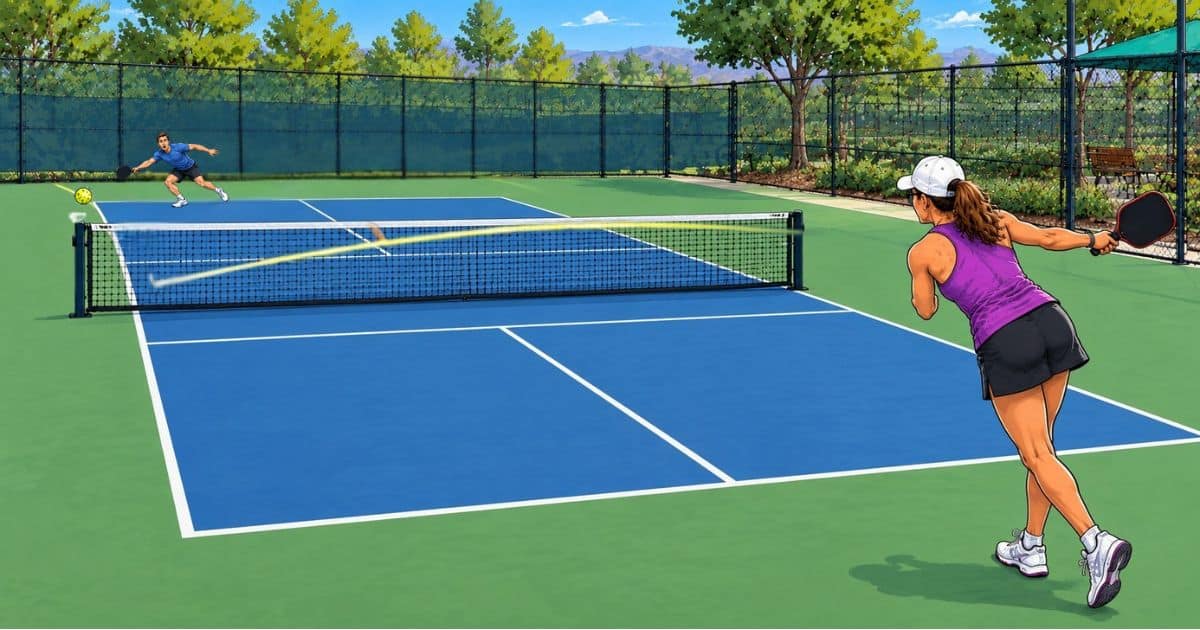
Quick Answer: An ace in pickleball is a legal serve the receiver cannot return, winning the point outright. The 2026 USA Pickleball rulebook does not define or score it separately. Aces are rarer than in tennis because a volley serve needs an upward arc from no higher than the waist, pre-spin is banned, and every serve must bounce before it is returned.
Every point starts with a serve, and once in a while that serve ends the point by itself. That is a pickleball ace. The rules governing the serve make aces far less common than in tennis, and the same rules shape how a server can realistically go after one.
What Counts as an Ace in Pickleball?
Pickleball.com defines an ace as “a serve that the receiving team cannot successfully return, resulting in an immediate point.” UTR Sports uses nearly identical wording.
Two conditions must be true. First, the serve has to be legal. Under the 2026 USA Pickleball rulebook, the served ball must clear the opponent’s non-volley zone, with or without touching the net, and land in the diagonally opposite service court (2026 rule 7.E). A serve that lands in the non-volley zone or on its line is out (2026 rules 7.E.2 and 8.C). Second, the receiver has to fail to return it, whether by never touching it, netting it, or sending it out.
The 2026 rulebook contains no definition of “ace” and no special scoring for one. It is a single point like any other. The word is not a rulebook term, so definitions differ: a tennis ace is a serve the returner never touches, while the Pickleball.com and UTR Sports definitions cover any serve the receiving side cannot successfully return, touched or not.
There is also no let on the serve. Under the 2026 rulebook, when the ball contacts the net or the rope or cable at the top of the net, it remains in play (2026 rule 13.A). A serve that clips the tape and dies in the service court is a legal unreturnable serve, not a replay.
Why Are Aces Rarer in Pickleball Than in Tennis?
Three rules in the 2026 USA Pickleball rulebook work against the ace.
The serve is underhand. For a volley serve under the 2026 rulebook, the paddle must move in a clear upward arc, the paddle head must clearly not be above the wrist joint, and the ball must clearly be no higher than the waist at contact (2026 rules 7.C.1, 7.C.2, and 7.C.3). A tennis server strikes overhead and drives the ball downward; a pickleball server strikes below the waist with an upward motion, which caps speed and angle. Pickleball Science published a geometry-based estimate that a flat pickleball serve tops out near 40 mph before spin is considered. Wikipedia’s list of fastest recorded tennis serves puts the record at Sam Groth’s 163.7 mph at a Challenger event in 2012.
The return must bounce. The two-bounce rule in the 2026 rulebook states that the serve and the return of serve must each bounce before being returned (2026 rule 10.A). A returner behind the baseline gets a clean look at the ball off the bounce.
Pre-spinning the ball is banned. Before 2023, some players spun the ball during the release so it kicked sideways after bouncing, first with Zane Navratil’s two-handed chainsaw serve, prohibited at the end of 2021, and then with the one-handed pre-spin serve. USA Pickleball banned pre-spin effective January 1, 2023. Pickleheads reported USA Pickleball’s reasoning, which included the position that serves should begin play rather than score points and that pre-spun serves were “particularly devastating” for amateur players. The 2026 rulebook carries the ban forward: the server must not manipulate the ball to add spin before hitting the serve, except that the ball may roll off the paddle face by gravity (2026 rule 7.B.2). The release must use one hand or the paddle only and must be visible to the receiver (2026 rules 7.B.1 and 7.B.3). Spin applied by the paddle at contact remains legal. The history is in the guide to what a chainsaw serve is.
The result is a serve that arrives slower, higher, and more readable than in tennis. As Pickleball.com puts it, the serve’s job “is usually to create a weak third shot opportunity, not necessarily to hit outright aces every time.”
How Do Pros Still Hit Aces?
Professional aces come from placement and disguise rather than raw pace. At 2025 JOOLA Pickleball Legends Tour events in Asia, Pickleball.com recorded Ben Johns’s fastest serve at 68.35 mph, Tyson McGuffin’s at 64.62 mph, and Zoey Wang’s at 59.03 mph. Those figures exceed the flat-serve estimate because heavy topspin lets the ball travel faster and still dip into the court.
Pickleball.com’s guidance on hitting more aces points to three tools beyond speed:
- Depth. A serve landing within a few feet of the baseline forces the returner to hit from behind the line. Pickleball.com names depth as the first target and points to McGuffin, Johns, and Federico Staksrud as servers who “use placement and spin effectively without relying solely on power.”
- Body targeting. A serve at the receiver’s paddle-side hip jams the swing and often produces a netted return.
- Variation. After several deep serves, a short, low serve that barely clears the non-volley zone can catch a receiver who has drifted back. A Southampton Press serving column noted that “many times, the surprise of the short serve gets an ace.”
Legal topspin and sidespin tie those together, and the technique is covered in the guide to how to spin a pickleball serve.
How Do You Serve for an Ace Without Faulting?
Going for an ace and faulting are close neighbors. The 2026 rulebook lists four service faults against the server (2026 rules 7.E.1 through 7.E.4): landing outside the correct service court, landing in the non-volley zone, hitting a permanent object, or hitting the server or partner. A fifth, 7.E.5 of the 2026 rulebook, charges the receiving side when the serve hits the receiver or partner before landing. A few habits keep the attempt legal:
- Pick one target. A serve trying to be both deep and wide usually lands long or wide.
- Leave margin over the net. Topspin buys clearance because the ball dips after its peak, keeping it clear of a non-volley zone fault under 2026 rule 7.E.2.
- Keep the motion legal. Players who cannot swing hard inside the volley serve limits of 2026 rule 7.C can use the drop serve, which carries no upward-arc or paddle-height requirement under 2026 rule 7.D, though the ball must fall from a natural height and must not be propelled (2026 rules 7.D.1 and 7.D.2).
- Do not chase it every point. There is no second serve, so the percentage play is a deep, heavy serve that sets up the third shot, with the ace as a bonus.
Drills for building pace and depth are in the guide to how to improve your pickleball serve, and the full legal checklist is in the guide to pickleball serving rules.
How Do You Defend Against an Ace?
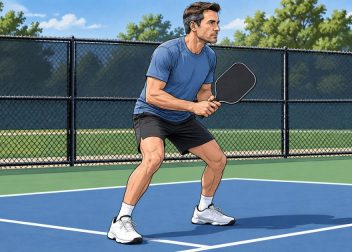
The returner has more time than in tennis, so positioning is the first defense against an ace.
- Start behind the baseline. Because the serve must bounce under 2026 rule 10.A, a step behind the line turns a deep serve into a routine return.
- Watch the release. Under 2026 rule 7.B.3 the release must be visible, and the drop height and paddle angle usually signal topspin or sidespin.
- Return with margin. A return clearing the net by three or four feet and landing past the non-volley zone takes the ace off the table.
- Neutralize the spin. Meeting the ball at the top of the bounce reduces the kick, and the footwork is in the guide to how to return a spin serve.
Frequently Asked Questions
Is an ace worth more than one point in pickleball? No. Under the 2026 USA Pickleball rulebook, every rally the serving side wins is worth one point, and the rulebook does not define or score an ace separately.
Does the receiver have to touch the ball for it to count as an ace? The 2026 rulebook does not address this because “ace” is not a rulebook term. In tennis an ace is untouched; the Pickleball.com and UTR Sports definitions count any serve the receiver cannot successfully return, so a touched but unreturned serve qualifies under those definitions.
Can a serve that hits the net be an ace? Yes. Under 2026 rule 13.A the ball remains in play when it contacts the net or the top rope or cable, and there is no let on the serve. If it lands in the correct service court and goes unreturned, the point counts.
Is it an ace if the serve lands on the non-volley zone line? No. Under 2026 rule 8.C a served ball landing on the non-volley zone line is out, and under 2026 rule 7.E.2 a serve landing in the non-volley zone is a fault against the server.
Why can’t pickleball servers hit overhead like tennis players? The 2026 rulebook requires a volley serve to have a clear upward arc, the paddle head below the wrist, and contact no higher than the waist (2026 rules 7.C.1 through 7.C.3).
Is a spin serve still legal in 2026? Spin applied by the paddle at contact is legal. Under 2026 rule 7.B.2 the server may not manipulate the ball to add spin before contact, which is the pre-spin ban first adopted for 2023.
Can the receiver volley the serve to stop an ace? No. Under 2026 rule 10.A.1, when the receiver does not allow the serve to bounce before hitting it, it is a fault against the receiver.
How fast are professional pickleball serves? At 2025 JOOLA Pickleball Legends Tour events in Asia, Pickleball.com recorded Ben Johns at 68.35 mph, Tyson McGuffin at 64.62 mph, and Zoey Wang at 59.03 mph.
Chasing aces is a small part of serving well, but understanding what produces one sharpens the whole serve. A qualified instructor can check a service motion against the 2026 rulebook in one session, and the directory of pickleball coaches lists instructors by city.
Written by the Pickler Junction Team.