What Is the Two-Bounce Rule in Pickleball?
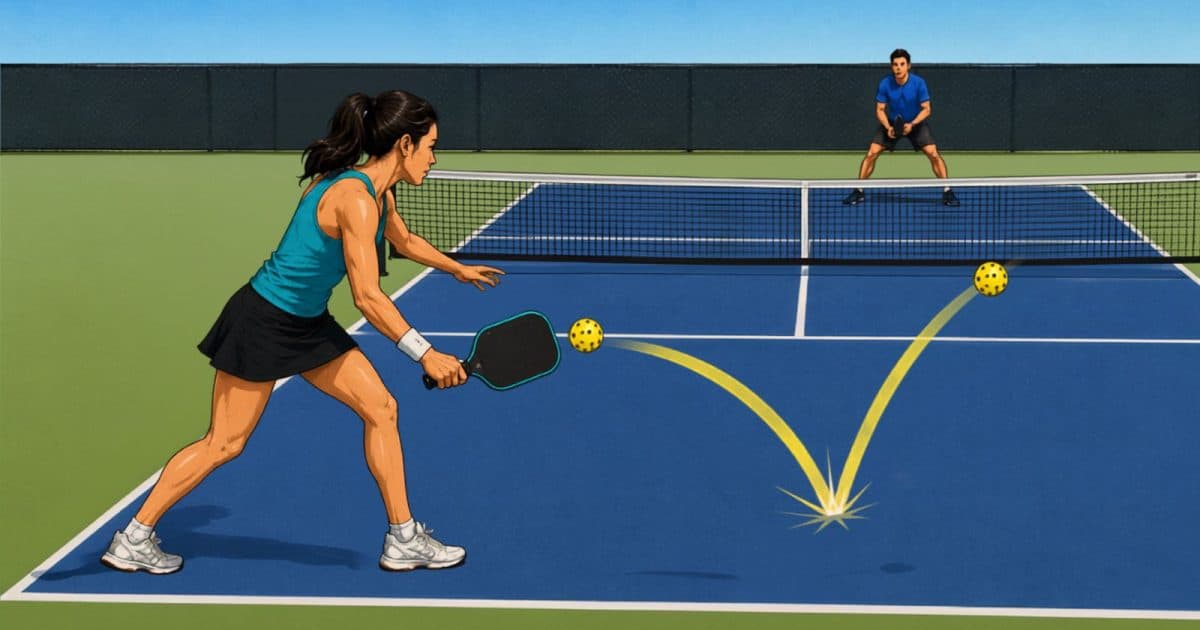
Quick Answer: The two-bounce rule requires the serve to bounce once before the receiver hits it, and the return to bounce once before the serving side hits it. Only after both bounces may anyone volley. Rule 10.A of the 2026 USA Pickleball rulebook sets this exact sequence, and it is the reason pickleball plays like a patient, net-forward game instead of compressed tennis.
The two-bounce rule is the single piece of structure that makes pickleball its own sport. The long dinking exchanges and the crowded kitchen line that define the game both exist downstream of it.
How does the two-bounce rule actually work?
Count the first two shots of any rally and the rule explains itself.
- The serve must land in the correct service court and bounce once. The receiver cannot volley it.
- The return must bounce once before anyone on the serving side touches it.
- After both of those bounces happen, the ball is live for volleys anywhere play is legal on the court.
Rule 10.A of the rulebook states that the serve and the return of serve must each bounce before being returned. That single line sets up the rest of the rally.
Some longtime players and clubs still use an older nickname for this exact requirement. A companion guide covers that older term and confirms the mechanics never changed even as the name did.
The common mix-up is thinking the ball must bounce twice on the same side. It does not. Each side gets exactly one mandatory bounce, and a ball that bounces twice on one side has already ended the rally.
Serve timing is a separate matter, governed by its own 10-second rule. Once the serve lands, the two-bounce sequence takes over regardless of how quickly it was served.
Why does the rule exist?
The rule exists to remove the serving side’s advantage. Without a forced bounce, a server could sprint toward the net and arrive before the receiver even swings, trapping the returning side at the baseline point after point.
The forced bounce buys the returner time to hit the ball and move forward. It also hands the serving side a problem: both players stay near the baseline for one extra shot while their opponents advance. That gap is why the third shot drop became a shot worth practicing on purpose, covered in a guide to hitting the third shot drop.
The effect lands hardest on players coming from tennis. A serve-and-volley pattern that works on a tennis court is illegal here under Rule 10.A of the rulebook, and unlearning that habit is a rite of passage for crossover players.
What are the common two-bounce mistakes?
Three mistakes cause most two-bounce faults, and they cluster among newer players and racquet-sport crossovers.
The first is the serving side volleying the return before it bounces. That is a fault the instant the paddle touches the ball. The second is the receiver volleying the serve, which is rarer but happens when a serve floats high and looks attackable.
The third is subtler: hesitating on a return that is clearly sailing out. The rule requires a bounce, not that every ball gets played. A ball that lands out stays out, whether or not a paddle touches it first.
The fix is mechanical. The serving side’s partner takes one deliberate step back right after the serve. That small habit removes the temptation to volley the return early.
Does the two-bounce rule apply to singles?
Yes, identically. Singles removes two bodies from the court but changes nothing about the sequence. The serve bounces, the return bounces, and only then can either player volley.
The rulebook applies Rule 10.A the same way to doubles, singles, and mini-singles. Wheelchair play carries the one built-in exception: Section 14 lets a wheelchair player’s shot bounce twice, with the first bounce landing inside the court, before a return is required.
Nothing about the court changes either way. The court stays 20 feet by 44 feet under Section 3 of the rulebook, the non-volley zone stays 7 feet deep on each side, and the two-bounce sequence governs the opening of every rally played on it.
How does the rule interact with the kitchen?
The two-bounce rule and the non-volley zone rule are separate rules that combine to shape the first four shots of a point.
The two-bounce rule controls when volleying becomes legal at all. Section 11 of the rulebook’s non-volley zone rule controls where volleying is legal once it starts. A player can satisfy the two-bounce sequence perfectly and still fault by volleying with a foot in the kitchen, or by carrying momentum into the zone right after contact, a fault covered in a guide to the momentum rule. Standing in the kitchen without volleying is a separate question, covered in a guide to stepping in the kitchen.
Read together, the two rules explain the sport’s opening choreography: serve deep, return deep and advance, drop the third shot, then meet at the kitchen line. Every level of play above beginner runs that pattern, and the two-bounce rule is what keeps that pattern in place. The wider set of fundamentals lives in a guide to the five basic rules of pickleball.
FAQ
What is the two-bounce rule in pickleball? Under Rule 10.A of the rulebook, the serve must bounce before the receiver hits it, and the return must bounce before the serving side hits it. Volleys become legal only after both bounces happen.
Is the two-bounce rule known by another name? Yes. Some players and clubs use an older nickname for the same requirement, but the mechanics described in the rulebook stay the same regardless of which name gets used.
Does the ball have to bounce twice on the same side? No. Each side gets exactly one mandatory bounce under the rulebook, and a ball that bounces twice on the same side has already ended the rally.
Why does pickleball have a two-bounce rule? Rule 10.A of the rulebook stops the serving side from rushing the net behind the serve, which would make the serve overwhelming and the return nearly unplayable.
Does the two-bounce rule apply in singles? Yes. The rulebook applies Rule 10.A to singles exactly as it applies to doubles, and the sequence does not change with the number of players on court.
Does the rule change for wheelchair players? Yes, slightly. Section 14 of the rulebook lets a wheelchair player’s shot bounce twice, as long as the first bounce lands inside the court, before it must be returned.
What happens if a player volleys the return early? It is a fault under Rule 10.A of the rulebook, and the rally is lost. This is a common two-bounce error in recreational play.
When can players finally volley? From the third shot onward, once both mandatory bounces required by the rulebook have happened, provided no one is standing in the non-volley zone during contact.
New to this sequence and want it to hold up under match pressure? A coach can drill the serve-bounce, return-bounce pattern until it becomes automatic. Local instructors who teach this exact sequence are listed in the Pickler Junction coaches directory.
Written by the Pickler Junction Team.