What Is a Backhand Flick in Pickleball?
Quick Answer: A backhand flick is a short, wrist-driven attack hit from the kitchen line on a ball that has floated slightly high. It converts a dink exchange into an attack without a full swing, using speed and disguise rather than power.
The flick is the shot that ends more kitchen-line stalemates than any other, and it is available to players well before it feels like it should be.
What is the flick actually doing?
Turning a defensive-looking position into an attack, quickly enough that the opponent cannot reset.
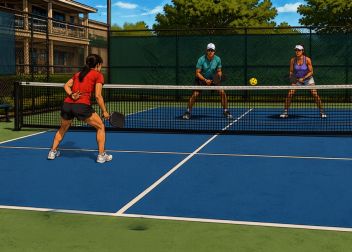
Dink rallies are patient by design. Both teams are at the net trading soft shots below net height, waiting for one that sits up. The flick is what you do the instant one does: a compact upward snap of the wrist and forearm that sends the ball fast and low at the opponent before their paddle is ready.
Two features make it work. It is short, so there is no backswing to telegraph the attack. And it is quick, so a ball that was barely attackable becomes a problem in the time it takes the opponent to blink. Our guide to dinking in pickleball covers the exchange it interrupts.
When should you flick?
When the ball rises above net height at your contact point, and not before.
That is the whole trigger, and it is stricter than most players apply. A ball below net level cannot be attacked downward. Flicking it means lifting it, and a lifted ball at the kitchen line is the easiest putaway in the sport.
Two conditions raise the value further. A ball that is both high and slow gives you time to set the wrist properly. And an opponent whose paddle has drifted low, which happens naturally during long dink rallies, has further to travel to defend.
Two errors account for most failed flicks: attacking balls that were never high enough, and passing on balls that clearly were. Both come from deciding before the ball arrives rather than reading its height at contact.
How do you hit a backhand flick?
Compact, from a ready paddle, with the wrist doing the work.
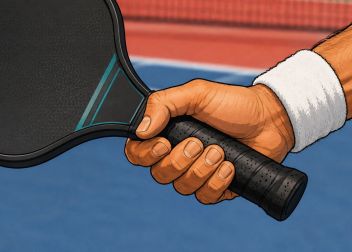
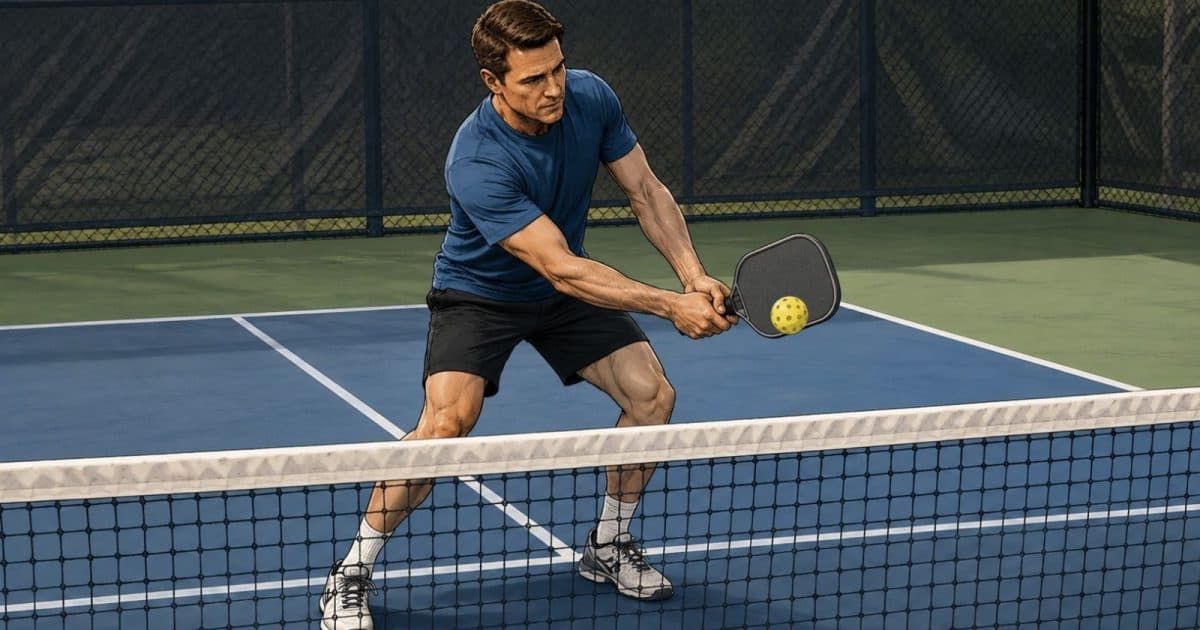
Start from a neutral backhand grip with the paddle up in front of you, which you should be holding anyway during a dink rally. When the ball rises, keep the arm quiet and snap the wrist upward and forward through the back of the ball. The follow through stays short, ideally finishing where a dink would finish.
Three details separate a flick from a pop-up:
- Contact out in front. A ball struck beside your body cannot be driven forward, only lifted.
- Brush upward for topspin. Topspin is what makes the ball dip after it crosses, which is the difference between an attack and a gift.
- Keep the paddle face closed. An open face sends the ball up regardless of how fast the wrist moves.
Targeting matters as much as the mechanics. The best flicks go at the opponent’s body, specifically the dominant-side shoulder or hip, where neither a forehand nor a backhand block is comfortable. Flicks aimed at open court give the opponent room to counter.
What happens after the flick?
A counter, usually, which is why the flick is a two-shot decision rather than a one-shot one.
Good opponents block flicks back hard and low. If your weight has drifted forward or your paddle has dropped after the swing, that block is unplayable. Recovering the paddle to a ready position immediately, before you see the result, is what makes the shot sustainable.
Expect to lose some of these exchanges. Attacking from the kitchen line trades certainty for pressure, and the flick is a percentage play rather than a winner. Players who only flick balls that genuinely sat up come out ahead over a match; players who flick to escape a dink rally they are losing do not.
When the counter comes back at your feet, the answer is a soft reset rather than another attack, and our guide to the reset in pickleball covers that recovery.
FAQ
What is a backhand flick in pickleball? A compact, wrist-driven attack hit from the kitchen line on a ball that has floated above net height, used to break up a dink rally.
When should I flick? Only when the ball rises above net height at your contact point. Below that, flicking means lifting, and lifted balls get put away.
Is the flick the same as a roll? They overlap. Both are topspin attacks from the kitchen, though a roll is typically a longer, more brushed stroke and a flick is shorter and faster.
Why do my flicks pop up? Usually an open paddle face or contact made beside the body instead of in front. Both send the ball upward regardless of wrist speed.
Should the arm move or just the wrist? Mostly the wrist and forearm. A quiet arm keeps the shot disguised and compact.
Where should I aim a flick? At the opponent’s body, particularly the dominant-side shoulder or hip, where blocking is awkward.
Is the flick a beginner shot? It is available earlier than most players expect, but it rewards a stable dink game first. Attacking before you can rally softly costs more points than it wins.
What do I do after flicking? Recover the paddle to ready position immediately. Good opponents block flicks back hard and low, and the counter arrives fast.
Want it drilled rather than described? The coaches in our directory work on kitchen-line attacks directly, and the camps and clinics listings cover hands battles in depth.
Written by the Pickler Junction Team.