Wheelchair Pickleball Rules
Quick Answer: Wheelchair pickleball follows the standard rules with a few key modifications from USA Pickleball. The biggest is the two-bounce rule: a player using a wheelchair may let the ball bounce twice before returning it, and it is a fault only if it bounces a third time. The wheelchair counts as part of the player’s body, when serving the rear wheels must stay behind the baseline, and during a volley the front wheels may touch the kitchen but the rear wheels may not. Standing and wheelchair players can play together.
Wheelchair pickleball rules differ from standing rules in a few key ways, and they’re simpler than most players expect. Wheelchair pickleball keeps the game you know with smart adaptations that make it fair and fully playable. Here is how the rules change and what makes the seated game different.
What are the rules for wheelchair pickleball?
Mostly standard rules, with a few specific changes. USA Pickleball’s rulebook integrates wheelchair players with targeted modifications. If a rule is not listed as different, the standard rule applies.
The key rule changes:
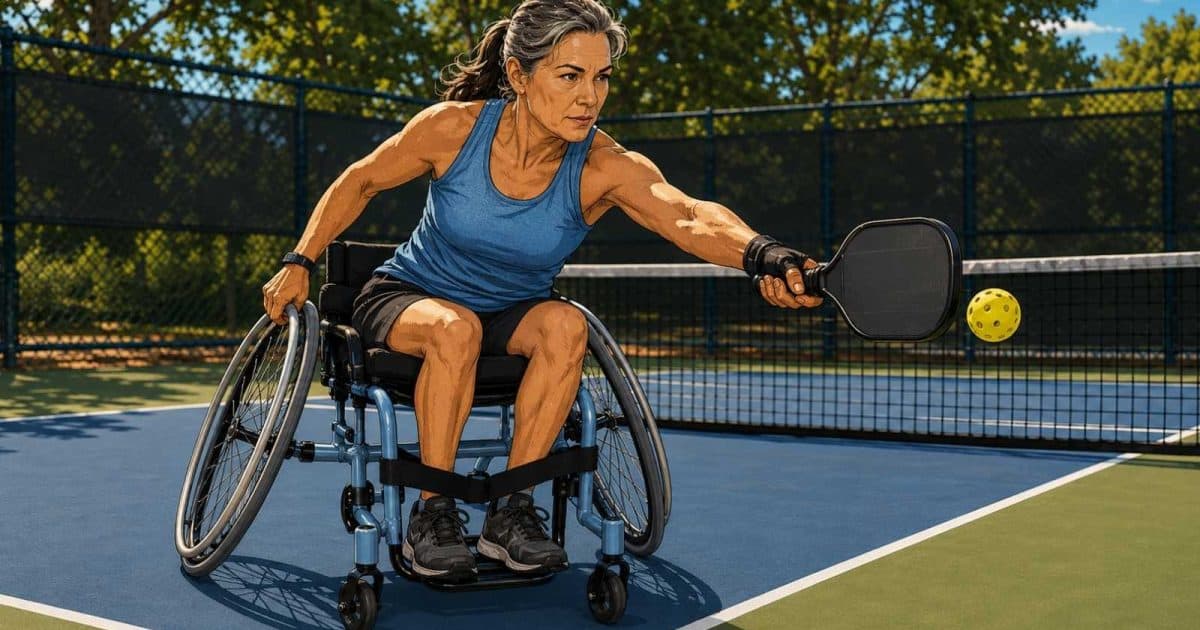
- Two-bounce rule: a wheelchair player may let the ball bounce twice before returning it; three bounces is a fault. The first bounce must land in bounds, and the second can be anywhere.
- Wheelchair as the body: the chair is treated as part of the player, so a ball that hits it stays in play (unless intentionally blocked).
- Serving: the rear wheels must stay behind the baseline, within the sideline and centerline extensions; front wheels may cross.
- Non-volley zone: during a volley, the front (smaller) wheels may touch the kitchen, but the rear wheels must stay clear.
What I tell new players is that the two-bounce rule is the heart of it. That extra bounce gives time to reach the ball and is what makes the seated game flow.
How is the court and play different?
A larger recommended surface, same net and ball. The equipment and net are standard, but USA Pickleball recommends more room around the court so wheelchairs can move freely.
The differences in setup:
- Recommended playing surface: 44 feet wide by 74 feet long for wheelchair play, larger than a standard court for maneuvering.
- Stadium courts: up to 50 by 80 feet for larger matches.
- Standard court is still playable: the larger size is recommended, not required, so a regular court works too.
- Same net and ball: 36-inch net at the posts, the usual perforated ball.
- Singles or doubles: both are played, with the same scoring.
The extra court space matters most in doubles, where two chairs share a side. On a standard court, players simply adjust their positioning and coverage.
Can wheelchair and standing players play together?
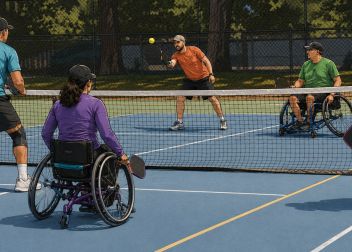
Yes, and they often do. One of the best parts of the adapted game is that it mixes seamlessly with standing play. Anyone can choose to play in a wheelchair.
How mixed play works:
- Each player follows their own rules, so a wheelchair player gets two bounces while a standing partner or opponent gets one.
- Any mix is allowed, with as many standing or seated players as you like.
- Doubles pairings often combine a standing and a wheelchair player.
- It is popular with veterans and wounded warriors as an accessible sport.
- Communication matters, especially on coverage in mixed doubles.
This inclusivity is a big reason adaptive pickleball is growing. For the gear that supports it, see our guide on adaptive pickleball equipment, and to get started, our guide on pickleball for people with disabilities. To find adaptive play, browse our adaptive pickleball directory.
Frequently asked questions
What are the rules for wheelchair pickleball? They follow standard pickleball rules with key changes: a two-bounce rule for wheelchair players (a fault on the third bounce), the wheelchair counted as part of the body, rear wheels behind the baseline when serving, and front wheels allowed in the kitchen during a volley.
How is pickleball adapted for wheelchair users? Mainly through the two-bounce rule, treating the chair as part of the player, modified serving and kitchen rules for the wheels, and a recommended larger playing surface (44 by 74 feet) for easier movement.
What is the two-bounce rule in wheelchair pickleball? A player using a wheelchair may let the ball bounce twice before returning it, rather than once. It becomes a fault only on the third bounce. The first bounce must be in bounds; the second can be anywhere.
Can wheelchair users play pickleball with standing players? Yes. Standing and wheelchair players can play together, each following their own rules (two bounces for the wheelchair player, one for the standing player). Any mix of seated and standing players is allowed.
What size court is used for wheelchair pickleball? USA Pickleball recommends a larger surface of 44 by 74 feet (up to 50 by 80 for stadium courts) for maneuvering, though wheelchair play is still possible on a standard 20-by-44-foot court.
Is the equipment different for wheelchair pickleball? The net, paddle, and ball are standard. The main addition is a sport wheelchair built for agility and stability. Lighter paddles and grip aids can also help, as our adaptive equipment guide covers.
Wheelchair pickleball is the same great game with a few smart adaptations. Explore the gear in our guide on adaptive equipment, get started with pickleball for people with disabilities, and find adaptive play in our adaptive pickleball directory.
Written by the Pickler Junction Team.