Pickleball for People With Disabilities: Programs, Equipment, and How to Get Started
Quick Answer: Pickleball is one of the most accessible racquet sports, and people with a wide range of disabilities play it through rule modifications, adaptive equipment, and inclusive programs. Wheelchair users get a two-bounce rule, visually impaired players use audible balls, and players with limited grip use straps or custom paddles. Adaptive programs run through USA Pickleball, adaptive sports organizations, and veterans groups. To get started, find a local adaptive program, choose any equipment you need, and check with your healthcare provider about what fits you.
Pickleball’s gentle pace, small court, and light equipment make it welcoming to players of all abilities. Here is how people with disabilities play, the programs and equipment that help, and how to get started.
*If you have a health condition, check with your doctor or a physical or occupational therapist about what is right for you.*
Can people with disabilities play pickleball?
Yes, and it is genuinely accessible. Pickleball is one of the more inclusive sports, with established adaptations for a broad range of physical, sensory, and cognitive disabilities.
Why it is so accessible:
- A small court, requiring less ground to cover than tennis.
- Light equipment, easier to handle with limited strength or dexterity.
- A slow ball, giving more time to react.
- Flexible rules, with official modifications for wheelchair and other play.
- A welcoming community, with inclusive programs nationwide.
What I tell people is that pickleball’s low barrier to entry is exactly why it works so well for adaptive play. Small adjustments open the game to almost anyone.
What adaptations and equipment make it work?
Rule changes and adaptive gear, by need. The specific adaptations depend on the disability, and most pair with standard paddles and balls.
Common adaptations:
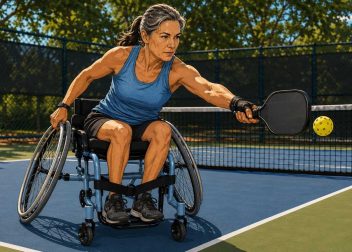
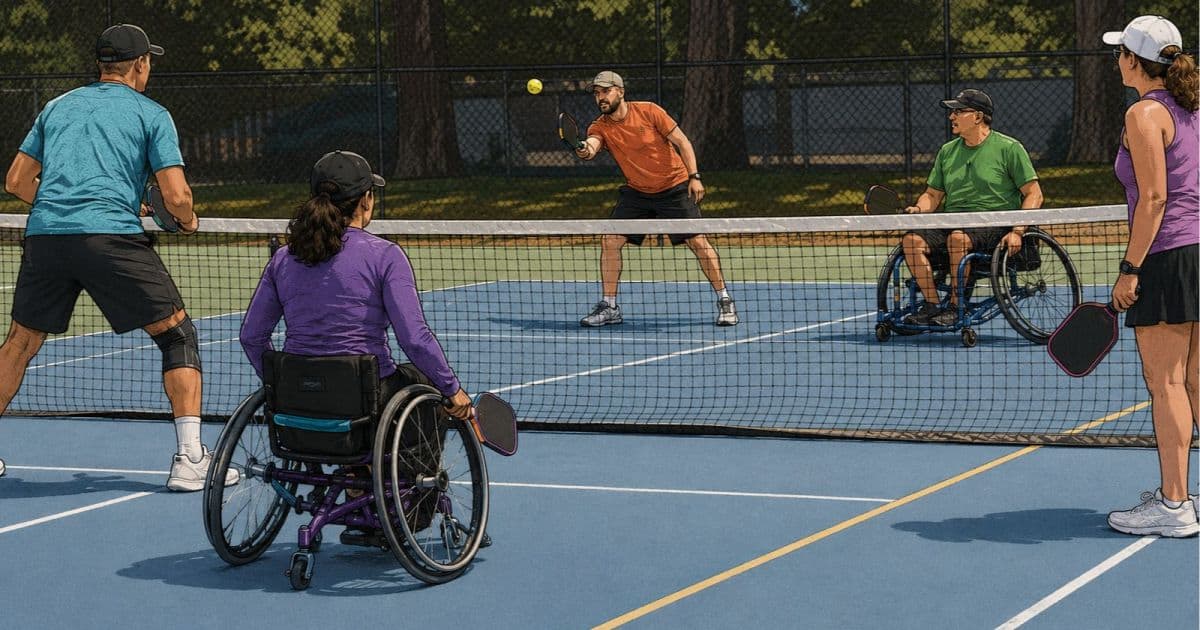
- Wheelchair users: the two-bounce rule and a sport wheelchair. See our guide on wheelchair pickleball rules.
- Visually impaired players: audible or bright balls and verbal cues. See pickleball for visually impaired players.
- Limited grip or dexterity: paddle straps, custom grips, and lighter paddles.
- Hearing impaired players: hand signals and visual cues for the score.
- Cognitive or intellectual disabilities: simplified rules and a focus on participation.
For the full toolkit, see our guide on adaptive pickleball equipment. The right combination depends on the individual, which is where adaptive programs and therapists help.
How do you get started?
Find a program, get gear, and check with a pro. Starting is easier with the support of an inclusive program, and many communities have one.
How to begin:
- Find an adaptive program, through USA Pickleball’s adaptive resources, adaptive sports organizations, or veterans groups.
- Connect with a local club that offers inclusive or all-abilities play.
- Get any equipment you need, with advice from an occupational or physical therapist.
- Check with your healthcare provider, especially if you have a medical condition.
- Start at your own pace, in a supportive, low-pressure setting.
Adaptive sports tend to have high participation and enjoyment because of the competition and community. For players recovering from a medical event, see our guide on playing pickleball after a stroke. To find inclusive play, browse our adaptive pickleball directory.
Frequently asked questions
Can people with disabilities play pickleball? Yes. Pickleball is one of the most accessible racquet sports, with rule modifications, adaptive equipment, and inclusive programs that welcome players with physical, sensory, and cognitive disabilities.
Is pickleball accessible for disabled players? Very. Its small court, light equipment, and slow ball lower the barrier to entry, and official rule modifications (like the two-bounce rule for wheelchair users) plus adaptive gear make it playable for a wide range of abilities.
What programs exist for adaptive pickleball? USA Pickleball offers adaptive resources, and many adaptive sports organizations and veterans groups run inclusive programs. Local clubs increasingly host all-abilities play. Our directory can help you find one.
What equipment do players with disabilities use? It varies by need: sport wheelchairs, lighter paddles, custom grips, paddle straps, audible or bright balls, balance aids, and tactile court markings. Much of it pairs with standard paddles and balls.
How do I get started with adaptive pickleball? Find a local adaptive or all-abilities program, connect with an inclusive club, get any equipment you need with guidance from a therapist, check with your healthcare provider, and start at your own pace.
Is pickleball good for rehabilitation? Many rehab and adaptive programs use pickleball to support coordination, balance, and social engagement, tailored to each person. Always work with your healthcare team on what is appropriate for your situation.
Pickleball welcomes players of nearly every ability with a few smart adaptations. Explore the details in our guides on wheelchair rules, adaptive equipment, and visually impaired play, and find inclusive play in our adaptive pickleball directory.
Written by the Pickler Junction Team.