What Is Para Pickleball?
Quick Answer: Para pickleball is the umbrella term for pickleball played by athletes with disabilities, covering wheelchair divisions and adaptive standing play. The main rule change is the two bounce allowance for wheelchair players. Wheelchair divisions have competed at USA Pickleball Nationals.
Para pickleball describes competitive and recreational play organized around adapted rules rather than a separate sport. The court, the net, the ball and the scoring stay the same.
What are the divisions?
Three categories cover most organized play.
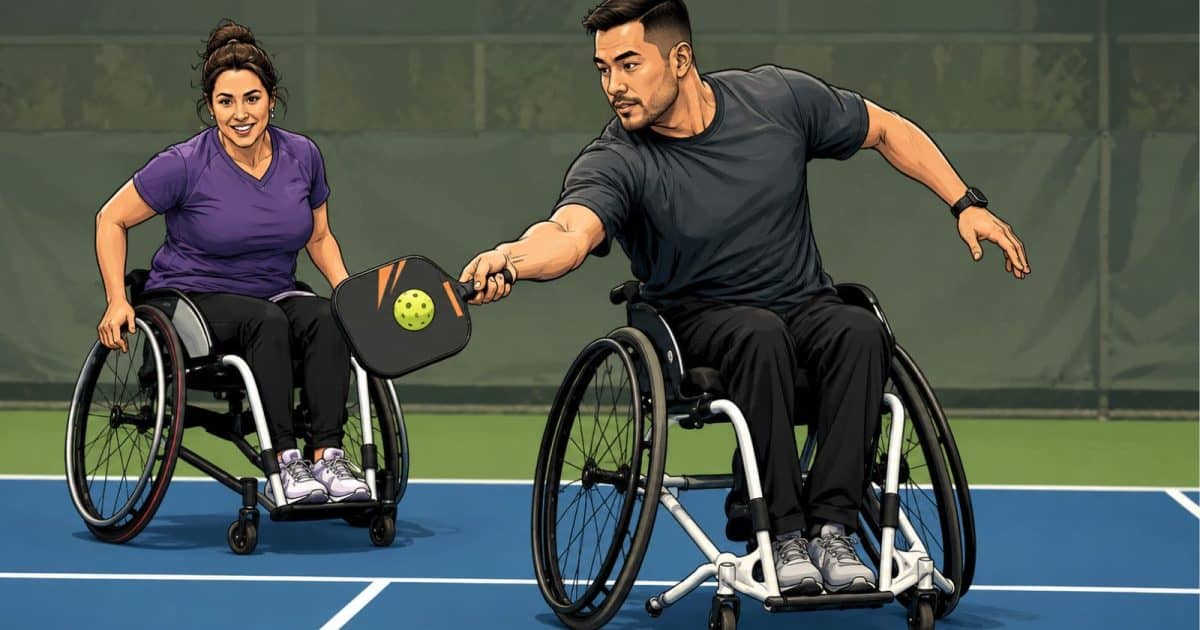
- Wheelchair. Athletes competing in sport wheelchairs, with the two bounce allowance and modified service and non volley zone rules.
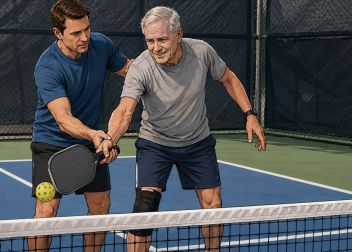
- Adaptive standing. Athletes with limb difference, amputation, visual impairment or other conditions who play standing, with accommodations set by the event.
- Hybrid doubles. A wheelchair player partnered with a standing player, each playing under their own applicable rules.
USA Pickleball’s rulebook addresses adaptive standing play and hybrid doubles rather than leaving accommodations to informal decisions at each tournament. That change matters more than it sounds. It means a player knows before they register what the rules will be.
What are the wheelchair rules?
Four modifications carry most of the weight, and everything else follows standard pickleball rules.
The two bounce allowance is the central one. A wheelchair player may let the ball bounce twice before returning it, and only a third bounce is a fault. That accommodation exists because covering a 20 foot wide court in a chair takes longer than covering it on foot.
On serve, the rear wheels must stay behind the baseline and within the imaginary extensions of the sideline and centerline. The chair, not the feet, becomes the reference point for every positional rule.
In the non volley zone, front wheels may touch the kitchen during a volley, but the rear wheels must be completely clear. The chair is treated as an extension of the player, so the same logic applies with different geometry.
Court sizing recommendations also change for dedicated wheelchair play, per the USA Pickleball rulebook, with a suggested playing surface of 44 feet wide by 74 feet long to allow room to maneuver, and larger dimensions for stadium style courts. Our detailed guide to wheelchair pickleball rules covers the full list.
Can wheelchair and standing players compete together?
Yes, and this is one of the more distinctive features of the sport.
Wheelchair players may compete in any tournament event other than an adaptive standing only event, and may partner with or play against standing players, adaptive standing players or other wheelchair players. Only wheelchair players may enter wheelchair only events.
In a mixed match, each player follows the rules that apply to them. The wheelchair player gets two bounces, the standing player gets one. It works better in practice than it sounds on paper, and it is the reason para pickleball integrates into ordinary club play more easily than most adapted sports.
Where can you play?
Wheelchair divisions have run at USA Pickleball Nationals, which marks the arrival of the discipline at the top of the domestic calendar. Below that level, availability is regional and improving.
Adaptive sport organizations, veterans programs, rehabilitation hospitals and a growing number of clubs run sessions. The limiting factor is usually equipment and coaching rather than interest.
Adaptive sessions often run with more players than chairs, which is why equipment rather than interest is usually the limiting factor. The rally quality tends to surprise first-time spectators.
What equipment is different?
Sport wheelchairs with cambered wheels are standard for competitive wheelchair play, since they turn faster and resist tipping. Paddles are ordinary, though grip aids and strapping are common for players with limited hand function.
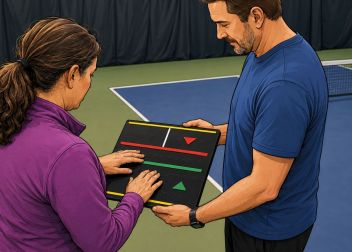
For visually impaired players, audible balls and modified court markings are used in some programs. Our overview of adaptive pickleball equipment covers the range, and our piece on pickleball for visually impaired players covers that side specifically.
Frequently asked questions
Is para pickleball the same as wheelchair pickleball? Wheelchair pickleball is one part of it. Para pickleball also covers adaptive standing play and hybrid formats.
How many bounces do wheelchair players get? Two. A third bounce is a fault. Standing opponents still get one.
Can wheelchair players enter the kitchen? Front wheels may be in the non volley zone during a volley, but the rear wheels must be clear.
Is para pickleball in the Paralympics? Not currently. The sport is still building the international governing structure that Paralympic inclusion requires, and that process takes years.
Do you need a special wheelchair to start? Not to try it. Many programs have loaner sport chairs, and everyday chairs work for a first session even though they are slower to turn.
What classifications exist? Domestic play generally organizes by division rather than a detailed medical classification system of the kind used in some Paralympic sports.
Can standing players with disabilities compete in regular divisions? Yes, adaptive standing players may compete in standard events, and adaptive standing only events also exist.
How do I find a program near me? Adaptive sport organizations and rehabilitation centers are usually the fastest route, along with clubs that have started dedicated sessions.
Para pickleball is growing quickly and most programs are short of players rather than short of space. Our article on pickleball for people with disabilities covers getting started, and the programs running in your area are listed in our adaptive and inclusive pickleball programs directory.
Written by the Pickler Junction Team.