What Is a Let in Pickleball?
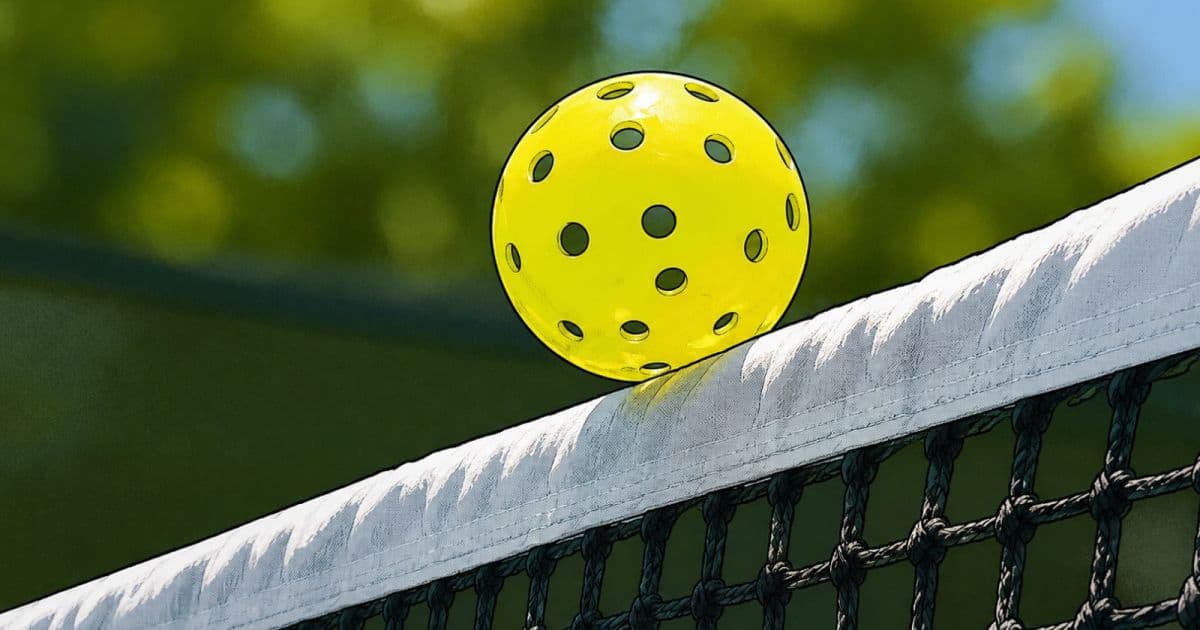
Quick Answer: A let in pickleball once meant a serve that clipped the net and landed in the correct service court, replayed with no penalty. Under the 2021 USA Pickleball rulebook, that rule was removed. Under the 2026 USA Pickleball rulebook, a served ball that touches the net and lands in the correct service court is live, and you play it out.
If you learned pickleball before 2021, this rule change still trips you up. A let used to stop play and force a replay with no fault charged, the way a let works in tennis. Pickleball worked that way too, until the rulebook changed. Here is what changed, what it means for your serve, and what still counts as a let today.
Is there still a let serve in pickleball?
No. Under the USA Pickleball rulebook, Rule 7.E covers serve placement, and it does not include a let for net contact. A served ball that touches the net and lands in the correct service court is in play. The receiver has to return it like any other serve. There is no stoppage and no replay.
This still surprises players who learned the game years ago. The old habit was to freeze the moment the ball grazed the net, waiting for a redo. That habit costs points now. If the ball trickles over the net and drops into the correct box, it counts, whether you were ready or not.
Why pickleball got rid of the let serve
Under the USA Pickleball rulebook, Rule 7.E treats a net serve as a live ball rather than a replay, and that single change removes an entire category of dispute. Net serves are fast and close, and without a referee or a net-cord sensor, judging whether the ball actually touched the tape is hard to do in real time. Once the replay disappears, there is nothing left to argue about. A serve either lands in the correct service court or it does not.
The effect shows up most in rec play, where matches run without officials:
- No stoppage to dispute. A ball that clips the net and lands in just counts, so there is no moment where players have to agree on what they saw.
- Faster points. Rallies do not pause for a redo, so a match keeps moving.
- One less job for referees. Officiated matches no longer need a call on net contact, only on where the ball lands.
What happens on a net serve now
Play it out, wherever it lands. Under the USA Pickleball rulebook, Rule 7.E.1 makes a serve that lands out of bounds a fault, and Rule 7.E.2 makes a serve that lands in the non-volley zone a fault, whether or not the ball touched the net on the way over. The net itself gives no free pass. Only the landing spot decides the call.
Here is the short version:
- Net, then into the correct service court: live, play it.
- Net, then into the kitchen or short: fault.
- Net, then long or wide: fault.
This is one of the more mechanical corners of the rulebook once you see the pattern, and it fits alongside the other calls covered in the 5 basic rules of pickleball.
The lets that are left in pickleball
Yes, but not for a net serve. Under the USA Pickleball rulebook, Section 2 defines a hinder as any transient element or occurrence not caused by a player that adversely impacts play, and Section 9.C is the rule that governs it. The rulebook lists stray balls, flying insects, foreign material, and players or officials from another court as examples. When a hinder is called, Rule 9.C requires the rally to be replayed.
A ball rolling onto the court during a rally is not spelled out by name in the rulebook, but it fits the same hinder definition, an occurrence not caused by either player that interferes with the point. In casual play without officials, treat it as a hinder: stop, and replay the point by agreement.
For everyday rec play, the takeaway is straightforward. Do not stop for a net serve, and do not expect a redo. Keep the paddle up and play the ball. Knowing this also keeps your scorekeeping clean, which ties into how pickleball scoring works once the rally is live.
FAQ
Do you replay a serve that hits the net in pickleball?
No. Under the USA Pickleball rulebook, a serve that hits the net and lands in the correct service court is live and you play it out. Under the rulebook, there is no replay for a net serve, regardless of how the ball got there.
When did pickleball remove the let serve?
The let serve was removed under the 2021 USA Pickleball rulebook. Before 2021, a served ball that touched the net and landed in the correct service court was replayed with no fault charged.
What happens if a net serve lands in the kitchen or out of bounds?
Under the USA Pickleball rulebook, Rule 7.E.2 makes a serve that lands in the non-volley zone a fault, and Rule 7.E.1 makes one that lands out of bounds a fault, regardless of net contact. Under the rulebook, the serve must clear the non-volley zone and land in the correct service court to be good.
What is a hinder in pickleball?
Under the USA Pickleball rulebook, Section 2 defines a hinder as any transient element or occurrence not caused by a player that adversely impacts play. Under the rulebook, listed examples include stray balls, flying insects, foreign material, and players or officials from another court.
What happens if a ball rolls onto the court during a point?
A ball rolling onto the court fits the hinder definition in the USA Pickleball rulebook, not the old let-serve rule. Under the rulebook, Section 9.C calls for the rally to be replayed once a hinder is called.
Is a net serve that lands in an advantage for the server?
It can be. A serve that ticks the net and drops in is awkward to return, and under the USA Pickleball rulebook there is no penalty for that contact, so the awkward bounce can win the point outright.
Do other paddle sports still use let serves?
Yes. Tennis still replays a serve that clips the net, while under the USA Pickleball rulebook, pickleball does not.
Curious how other serve rules have changed? Read about the chainsaw serve, then browse the pickleball coaches directory for instructors who keep up with the rulebook every season.
Written by the Pickler Junction Team.