How to Choose a Pickleball Bag
Quick Answer: Match bag size to your gear load. A sling holds one or two paddles and a water bottle. A backpack holds two to four paddles plus shoes and extras. Priority features are a fence hook, a ventilated shoe pocket, and a padded paddle compartment. Bag prices as of September 2026 range from about $18 to $298.
A pickleball bag is built around the shape of a paddle, with pockets sized for balls, shoes, and the extra items you bring to the court. Under Section 3.D.2 of the 2026 USA Pickleball rulebook, a paddle’s length cannot exceed 17 inches, and its combined length and width cannot exceed 24 inches. That single spec drives the shape of every dedicated pickleball bag, since the padded compartment has to hold a paddle up to that size without bending the edge guard.
What Size Pickleball Bag Do You Need?
The right size depends on what you carry to the court. Count your gear before you buy. A paddle, a ball, keys, and a water bottle fit in a sling. A backup paddle, two pairs of shoes, sunscreen, tape, and a towel need a full backpack or a duffel style tour bag.
Here is the breakdown by load:
- Sling bags hold one to two paddles and small extras. The Franklin Sports Pickleball Sling Bag, priced starting at $17.99 on Franklin Sports’ website, fits this load.
- Backpacks hold two to four paddles, shoes, clothes, and water. The JOOLA Everyday Backpack lists for $79.95 on JOOLA’s website, sized for that range.
- Tour or duffel bags hold four or more paddles plus a full kit. The Selkirk Pro Line 2.0 Tour Backpack, a 35 liter bag, is priced at $298 on Selkirk’s website, built for tournament travel.
If you outgrow a sling within a few weeks of adding a second paddle and a pair of court shoes, move up to a backpack.
Backpack vs Sling: Which One Wins?
Each bag fits a different amount of gear, and the right one depends on your kit, not on which style is trendier. A backpack adds a dedicated shoe compartment, which keeps court shoes from riding against your clothes and paddle face. A sling is lighter and faster to grab on the way out the door.
Comparing two bags at a similar price point shows the tradeoff. The Selkirk Core Line Sling Bag runs $40, and the Selkirk Core Line Day Bag, a backpack, runs $50, both on Selkirk’s website. The extra $10 buys a second strap, more structure, and room for shoes. If you keep your shoes on your feet from the car to the court, the sling covers the same trip for less money.
Your commute to the court matters too. A bike ride or a walk favors two straps over one. Parking close to the gate removes that constraint entirely.
Which Features Actually Matter?
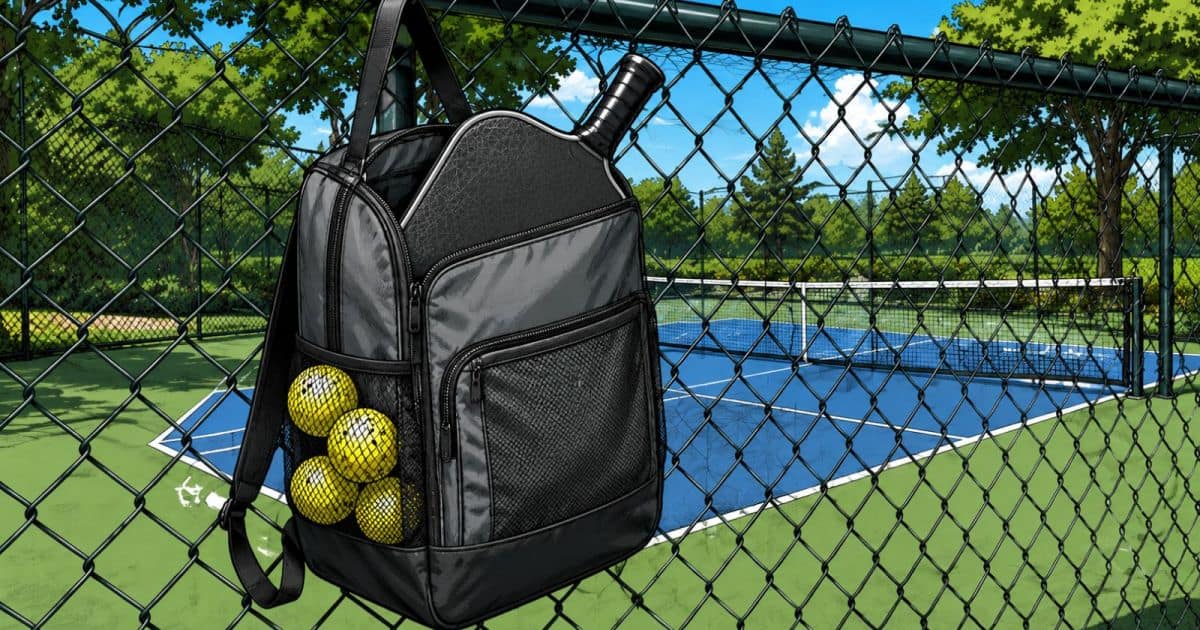
Three features do the real work, and the rest is extra. First, a fence hook. Courts rarely provide enough benches, so a bag that hangs on the chain link keeps gear off wet ground. Second, a padded or fleece lined paddle compartment. Today’s thermoformed paddles cost enough to justify separate padding, and that compartment keeps the paddle face from scratching against balls or keys. Third, a ventilated shoe pocket, which lets sweat and moisture escape between sessions.
Everything past those three counts as a nice-to-have: an insulated water pocket, a zippered valuables pocket, exterior ball storage. If you have not settled on a paddle yet, see the guide on how to choose a pickleball paddle before shopping for a bag to match it. Small consumables like grip tape, covered in the guide on pickleball paddle grip tape, fit in almost any bag’s front pocket, along with a spare overgrip from the guide on how to wrap a pickleball paddle.
What Fits in a Pickleball Bag?
A midsize backpack typically holds two paddles, a pair of shoes, three or four balls, a towel, a water bottle, and a light layer. A sling holds roughly a third of that load. A tour bag holds a full multi day kit, including spare overgrips and wrap supplies for mid match regrips, which is why the Selkirk Pro Line 2.0 Duffle, a 45 liter bag priced at $198 on Selkirk’s website, ships at close to twice the volume of a standard backpack.
If you are packing for a multi day trip, check the guide on how to choose a pickleball camp for what else belongs in the bag beyond paddles and shoes.
One packing habit protects your gear: keep paddles face to face in the padded sleeve with a cloth or cover between them. Edge guards knocking against paddle faces during a car ride cause more cosmetic damage than an afternoon of play.
How Much Should You Spend?
Bag prices span a wide range. Franklin Sports lists a Pickleball Sling Bag starting at $17.99 and a Deluxe Competition Pro Backpack starting at $28.99 on its website. JOOLA lists an Everyday Sling Bag at $44.95 and a Tour Elite Pickleball Bag at $109.95 on its website. Selkirk lists a Core Line Day Bag at $50 and a Pro Line 2.0 Tour Backpack at $298 on its website.
The middle of that range, roughly $50 to $130, covers backpacks with a fence hook, a padded compartment, and a shoe pocket already built in. Spending more adds capacity and branded materials. Spending less usually means losing the fence hook or the shoe vent first.
If you would rather compare bags in person with your own paddle inside, look for a pro shop or specialty retailer that carries more than one brand before you buy.
FAQ
Do you really need a pickleball specific bag?
A pickleball bag is not required to play. But a paddle shaped compartment, a fence hook, and a shoe vent solve three problems a generic gym bag does not solve well. Playing more than once a week is the point where those features start paying off.
Can a tennis bag work for pickleball?
A tennis bag holds a pickleball paddle without trouble. Paddle length is capped at 17 inches under Section 3.D.2, well under the length a tennis bag is built for, so the padding and shoe storage carry over even though the bag runs longer than it needs to.
How many paddles should a bag hold?
A bag with room for two paddles covers a primary and a backup, enough for a cracked face or a lost grip mid match. The tournament divisions set out in the rulebook under Section 15 often mean back-to-back matches for entrants in more than one division, so a bag built for three or four paddles suits that schedule.
What is the difference between a sling and a backpack?
A sling is a single strap bag worn across the chest, sized for one or two paddles and small items. A backpack has two straps, more compartments, and a dedicated shoe pocket in most designs.
Should a pickleball bag have an insulated pocket?
An insulated pocket keeps water cold during outdoor play in warm weather and keeps a paddle out of direct heat that can affect the paddle face. It is a genuine feature for anyone playing outdoors through the middle of the day, not just an add-on.
Do pickleball bags fit in gym lockers?
Slings and midsize backpacks fit standard gym lockers. Tour bags sized for four or more paddles often exceed a half locker’s dimensions, so measure the locker before buying a large bag for a fitness club.
How do you clean a pickleball bag?
Empty the bag, shake out debris, and wipe the interior with a damp cloth and mild soap. Air out the shoe compartment after every session to prevent odor. Machine washing breaks down the padding in most bags, so hand cleaning is the safer choice.
Choosing the right pickleball bag comes down to matching size and features to how often you play, not to buying the biggest option available. Shops and pro shops listed in the Pickler Junction gear and accessories directory stock bags across these sizes and price points, so you can try one with your own paddle inside before you buy.
Written by the Pickler Junction Team.