
Choosing the Right Outdoor Pickleball Court Surface Material
Quick Answer: Most outdoor courts use acrylic coating over a concrete or asphalt base, or interlocking modular tile. HomeGuide prices acrylic surfacing at $1,500 to $3,500 as of September 2026, cushioned acrylic at $2 to $4 per square foot, and modular tile at $4 to $17 per square foot. Cushioning adds shock absorption without changing ball bounce, per USA Pickleball.
The surface is the layer a player actually feels, and it shapes both the playing experience and part of the long-term budget. Here is how the three real outdoor options compare.
The main outdoor surface options
Three systems cover most outdoor courts built today. Each one sits on top of a base, which is a separate decision covered in the guide on concrete versus asphalt court bases.
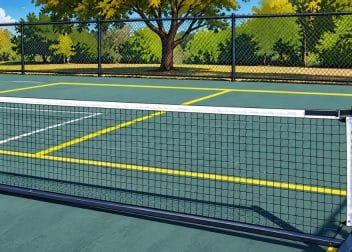
- Standard acrylic coating. USA Pickleball’s construction guidance recommends 100 percent acrylic coatings for outdoor courts because they stay breathable and allow vapor to pass through the material. A standard system layers an acrylic resurfacer with color coats and painted lines over the base. HomeGuide prices that surfacing work, crack repair and striping included, at $1,500 to $3,500 for a standard 30 by 60 foot pad.
- Cushioned acrylic. The same acrylic finish goes down over rubberized layers built for shock absorption. Sports-surface manufacturer SportMaster builds its cushioned systems from alternating coats of fine and coarse rubber granules bound in flexible acrylic. USA Pickleball’s construction guidance states that added cushioning provides shock absorption without affecting the ball bounce. HomeGuide prices a cushioned acrylic system at $2 to $4 per square foot installed, against $0.50 to $1 for standard hard acrylic, which adds several thousand dollars on a full-size pad.
- Modular tile. Interlocking tiles snap together over the same concrete or asphalt base, skipping the multi-week cure-and-coat cycle an acrylic system needs. Tile manufacturer VersaCourt markets its outdoor pickleball tile for a true ball bounce and describes it as easier on the body and joints than a poured surface, while noting the product is built for residential use rather than professional play. HomeGuide prices installed modular tile at $4 to $17 per square foot.
For where surfacing fits into a full project, a standard outdoor court build runs $20,000 to $50,000, averaging $34,000, according to HomeGuide and Angi. See the full cost breakdown for how the surface line item compares with the base, fencing, and lighting.
How the surfaces differ in play and upkeep
Feel, joint impact, and maintenance are where the three separate.
Standard acrylic gives the most predictable footing and ball bounce, since it is the finish USA Pickleball’s construction guidance recommends as the outdoor default. There is nothing between a player and the slab, so the tradeoff is that it plays firm underfoot.
Cushioned acrylic keeps that same coating on top while adding rubber layers underneath. USA Pickleball’s guidance says this cushioning cuts shock without changing how the ball bounces, which is why it shows up most on courts built for frequent use or older players who want less impact on ankles, knees, and hips.
Modular tile behaves differently. It flexes slightly, drains fast after rain, and installs faster than acrylic because there is no cure time for a base coat. VersaCourt says its tile is engineered for a true bounce, though the feel underfoot is different enough from acrylic that testing one before committing to a full court is worth the time. For a project spanning several courts, that faster install schedule compounds; see the guide on planning a multi-court pickleball complex for how surface choice affects a larger build timeline.
On upkeep, outdoor acrylic surfaces are low maintenance, though surfacing maker SportMaster suggests a cleaning about once a month, since rain helps but standing water collects dirt and can stain. When a coating does need renewal, the process is the same steps as a new install: surface cleaning, crack repair, base and color coats, and re-striping the lines. HomeGuide prices that job at $1,500 to $3,500 for a standard pad, so it is a recurring line item rather than a one-time cost.
Which surface makes sense for your project
It depends on how the court gets used, and on how the upfront number weighs against years of upkeep.
- Tight budget, standard use: standard acrylic over an existing or new base. It is the lowest-cost surfacing route at $1,500 to $3,500 and the finish USA Pickleball’s construction guidance recommends as the default. The guide on keeping court costs down without cutting corners covers where saving money actually hurts.
- Frequent play or older players: cushioned acrylic. The added rubber layers cut joint impact without changing ball bounce, worth the step up from $0.50 to $1 per square foot for standard acrylic to $2 to $4 installed for a court used several times a week.
- Fast install, drainage trouble, or a temporary setup: modular tile. It skips the cure-and-coat cycle, handles standing water well, and can work on top of a shared surface such as a temporary court on an existing tennis court.
- Backyard courts: run the numbers in the backyard pickleball court cost guide first, since surface choice moves the total meaningfully at that scale.
Get quotes from local specialists through Pickler Junction’s search for court builders once a surface type is picked, since pricing varies by region and site condition.
Whatever gets chosen, confirm the dimensions before surfacing goes down. USA Pickleball recommends a total footprint of at least 30 by 60 feet, and prefers 34 by 64 feet, around the 20 by 44 foot playing area, so the crew coats the right amount of ground. Coating a court that was laid out wrong is an expensive redo. The court dimensions guide has the full numbers.
Frequently asked questions
What is the best surface for an outdoor pickleball court? USA Pickleball’s construction guidance recommends 100 percent acrylic coatings for outdoor courts because they are breathable and let vapor pass through. Cushioned acrylic adds shock absorption for joints, and modular tile installs faster with a softer feel underfoot.
How much does pickleball court surfacing cost? Standard acrylic surfacing runs $1,500 to $3,500 for a standard pad, according to HomeGuide. Cushioned acrylic installs for $2 to $4 per square foot, against $0.50 to $1 for standard acrylic, and modular tile installs for $4 to $17 per square foot.
Is cushioned acrylic worth the extra cost? For frequent play or older players, usually yes. USA Pickleball’s construction guidance says the added rubber layers reduce shock without changing the ball bounce, though the system costs more per square foot than a standard finish.
How often does an acrylic court need recoating? Outdoor acrylic surfaces are low maintenance; surfacing maker SportMaster suggests a monthly cleaning, since rain helps but standing water collects dirt and can stain. When a coating does wear out, resurfacing a standard pad costs $1,500 to $3,500, according to HomeGuide.
Can modular tile go over an existing concrete or asphalt base? Yes. Modular tile installs over a sound existing base, which is one reason it works well for a fast resurfacing job or a court built over a shared surface.
Does the surface change how the ball bounces? USA Pickleball’s construction guidance states that added cushioning does not affect ball bounce. VersaCourt also markets its modular tile as designed for a true bounce, though the underfoot feel differs enough from acrylic that trying one first is worth it.
What does it cost to build a full outdoor court, not just the surface? A standard outdoor build runs $20,000 to $50,000, averaging $34,000, according to HomeGuide and Angi. Surfacing is one line item inside that total, alongside the base, fencing, and lighting.
Surface choice sets both how the court plays and what it costs to keep up over time. Price the base and the surface together rather than separately, and compare local specialists in the Pickler Junction pickleball court construction and infrastructure directory before signing a contract.
Written by the Pickler Junction Team.