Can You Play Pickleball With Arthritis
Quick Answer: Yes, many people with arthritis can play pickleball, and doctors often encourage staying active, since movement helps joints. Pickleball is low-impact and less demanding than tennis, and gentle activity can stimulate the fluid and cartilage that keep joints healthy. The key is to warm up, strengthen the muscles around your joints, manage flare-ups, and check with your doctor before starting, especially if your arthritis is advanced.
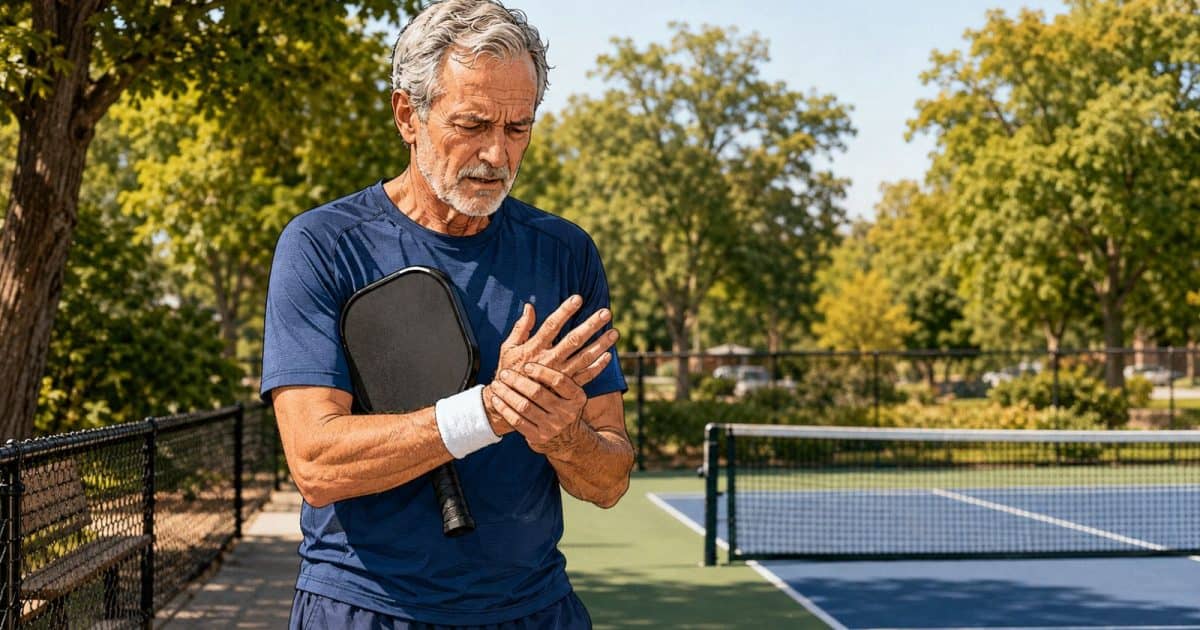
Arthritis is inflammation of the joints, most commonly osteoarthritis from gradual joint wear, and it causes pain and stiffness that can make exercise feel daunting. But the medical consensus is that the right kind of activity helps arthritis more than rest, and pickleball can be one of those activities.
What do doctors say about pickleball and arthritis?
That movement is medicine, with sensible precautions. Sports medicine specialists generally view pickleball as a relatively safe, low-impact option, and they emphasize that staying active is important for arthritic joints. Regular movement can help stimulate the production of synovial fluid and support cartilage, which keeps joints working better.
What the guidance comes down to:
- Staying active is usually better than resting for arthritis.
- Low-impact, moderate activity like pickleball fits the recommendation for arthritic joints.
- Individual factors matter, so your provider’s input is essential, especially with advanced arthritis or joint instability.
Doctors at the Hospital for Special Surgery have noted that even people with knee osteoarthritis generally should not be afraid to play, while being mindful of the knees. For knee-specific guidance, see our piece on playing pickleball with bad knees.
How can you play pickleball safely with arthritis?
Prepare your joints, strengthen your muscles, and listen to your body. A few habits make pickleball comfortable and sustainable for arthritic joints.
Smart steps:
- Talk to your doctor first, especially if your arthritis is moderate to advanced.
- Warm up with dynamic stretches, like arm circles, leg swings, and trunk twists, to loosen joints. Our warm-up routine helps.
- Strengthen the muscles around your joints, which reduces the load on them. See our off-court workouts guide.
- Stretch before and after to ease stiffness, per our post-play stretches.
- Play when joints are looser, since warmer temperatures and later in the day often feel better for arthritis.
- Choose doubles to reduce running and joint load.
A practical tip clinicians mention: warmer conditions tend to loosen stiff joints, so timing your play for a warmer part of the day can make a real difference.
How do you manage flare-ups and know when to stop?
Respect pain, and adjust rather than push through. Arthritis has good days and bad days, and matching your activity to how your joints feel keeps you playing for the long run.
Managing it well:
- On flare days, ease off or take a rest day rather than forcing play.
- Distinguish normal effort from joint pain. Sharp or worsening joint pain is a stop signal.
- Ice after play if a joint is sore or swollen.
- Keep a steady, moderate routine, since consistency helps more than occasional hard sessions.
If a joint becomes more painful, swollen, or stiff over time, or a flare does not settle, see your doctor or a physical therapist or sports medicine provider. They can adjust your approach and rule out other issues.
Frequently asked questions
Can you play pickleball with arthritis? Often yes. Doctors generally encourage staying active with arthritis, and pickleball is low-impact and joint-friendly. Warm up, strengthen supporting muscles, and check with your provider first.
Is pickleball good or bad for arthritis? Gentle, regular activity is generally good for arthritis, helping joint fluid and cartilage. Pickleball fits that bill as a low-impact sport, though you should manage flare-ups and protect vulnerable joints.
What kind of arthritis are we talking about? Most pickleball-and-arthritis guidance refers to osteoarthritis, the wear-related type. If you have rheumatoid or another inflammatory arthritis, your rheumatologist’s guidance is especially important.
Should I play pickleball during an arthritis flare? Usually no. On flare days, ease off or rest. Pushing through a flare can worsen pain. Return to play as the joint settles.
How do I protect my joints playing pickleball with arthritis? Warm up, strengthen the muscles around the joints, play doubles, time play for warmer parts of the day, and stop if you feel sharp or worsening joint pain.
When should I see a doctor? If a joint becomes increasingly painful, swollen, or stiff, or a flare does not settle, see your doctor or physical therapist before continuing to play.
For most people with arthritis, the goal is to keep moving comfortably. Prepare your joints with our warm-up and strengthening guides, and let a physical therapist or sports medicine provider help you tailor a joint-friendly plan.
Written by the Pickler Junction Team.
This article is general information, not medical advice. If you have arthritis, talk with your doctor before starting or changing a sport.