The Pickleball Momentum Rule: Can You Enter the Kitchen After a Volley?
Quick Answer: No, you cannot enter the kitchen right after a volley if your momentum from that volley carries you in. The momentum rule says that if your forward motion makes you touch the kitchen or its line before you regain balance, it is a fault, even though you hit the ball from outside the zone.
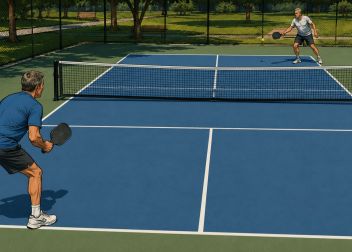
The momentum rule is part of the non-volley zone (kitchen) rules, and it is one of the most misunderstood points in pickleball. It exists so players cannot leap at the net, volley, and crash into the kitchen without penalty.
What is the pickleball momentum rule?
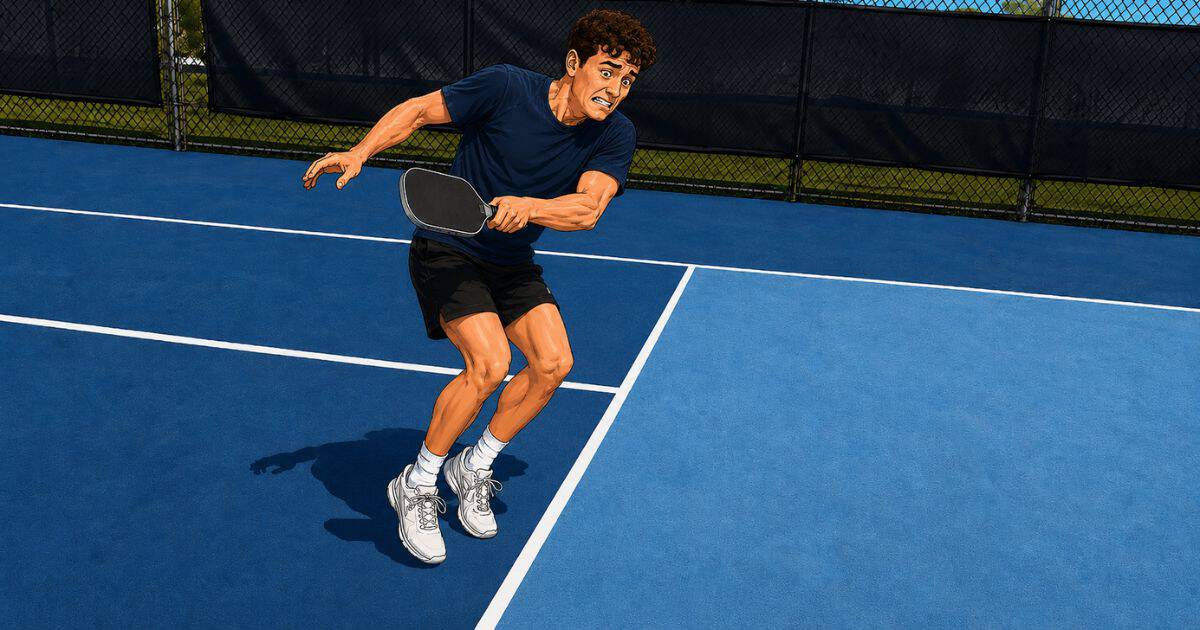
It says your volley momentum cannot carry you into the kitchen. When you hit a volley (a ball out of the air), your feet must be outside the kitchen at the moment of contact. The momentum rule extends that: if the force of that volley then carries you forward into the kitchen or onto the line before you are stable, you have faulted.
The key points:
- Your feet must be outside the kitchen when you volley.
- If your momentum carries you in afterward, it is a fault.
- This applies even if you clearly hit the ball from outside the zone.
- It counts if anything you are wearing or carrying touches the kitchen as a result, like a dropped paddle or a hat.
The principle is simple: you must be in full control. What I tell players is that the rally is not over the instant you hit the ball, so do not relax until your feet have stopped outside the line.
Why does this rule exist?
To stop players from crashing the kitchen to attack. Without it, a player could sprint to the net, jump, volley a ball downward, and land in the kitchen with no penalty, which would make the net almost impossible to defend. The momentum rule keeps the non-volley zone meaningful.
What it preserves:
- Fair net play, so no one can volley from inside the zone by way of a running leap.
- The soft game, which depends on the kitchen line being respected.
- Balance and control, rewarding players who stay set rather than lunging recklessly.
It pairs with the basic kitchen rule, which we cover in our guide on whether you can step in the kitchen.
How do you avoid a momentum fault?
Stay balanced and finish your volley under control. Most momentum faults come from over-committing on an aggressive volley. A little discipline prevents them.
How to stay clean:
- Set your feet before volleying rather than lunging forward.
- Keep your weight back slightly on aggressive volleys near the line.
- Finish balanced, so your follow-through does not pull you in.
- Wait until you are stable before stepping into the kitchen for the next ball.
- Practice volleys at the line so your footwork becomes controlled.
If you are unsure about an edge case, the official USA Pickleball rulebook is the final word, but the core idea is straightforward: do not touch the kitchen as a result of your volley. For drills to build controlled net play, see our beginner drills.
Frequently asked questions
Can you enter the kitchen after a volley? Not if your momentum from the volley carries you in before you are stable. That is a fault. You can only step into the kitchen once you have come to a stop and re-established balance outside it.
What is the momentum rule in pickleball? It states that if your volley motion causes you to touch the kitchen or its line before you regain balance, it is a fault, even if you hit the ball from outside the zone.
Is it a fault if I fall into the kitchen after hitting a volley? Yes. If the volley’s momentum carries you into the kitchen or onto the line, it is a fault, regardless of how clean the shot was.
What if my paddle or hat lands in the kitchen after a volley? That is also a fault. If anything you are wearing or carrying touches the kitchen as a result of the volley, your team loses the rally.
Why does the momentum rule exist? To prevent players from crashing the net, volleying, and landing in the kitchen without penalty, which would make the non-volley zone meaningless.
How do I stop committing momentum faults? Set your feet before volleying, keep your weight controlled, finish balanced, and wait until you are fully stable before stepping into the kitchen for the next shot.
Controlled feet at the net are a hallmark of a sharp player. Build that control with our beginner drills and the soft game in our third shot drop guide, or work with a pro from our coaches and clinics directory.
Written by the Pickler Junction Team.