Can You Play Pickleball in the Rain?
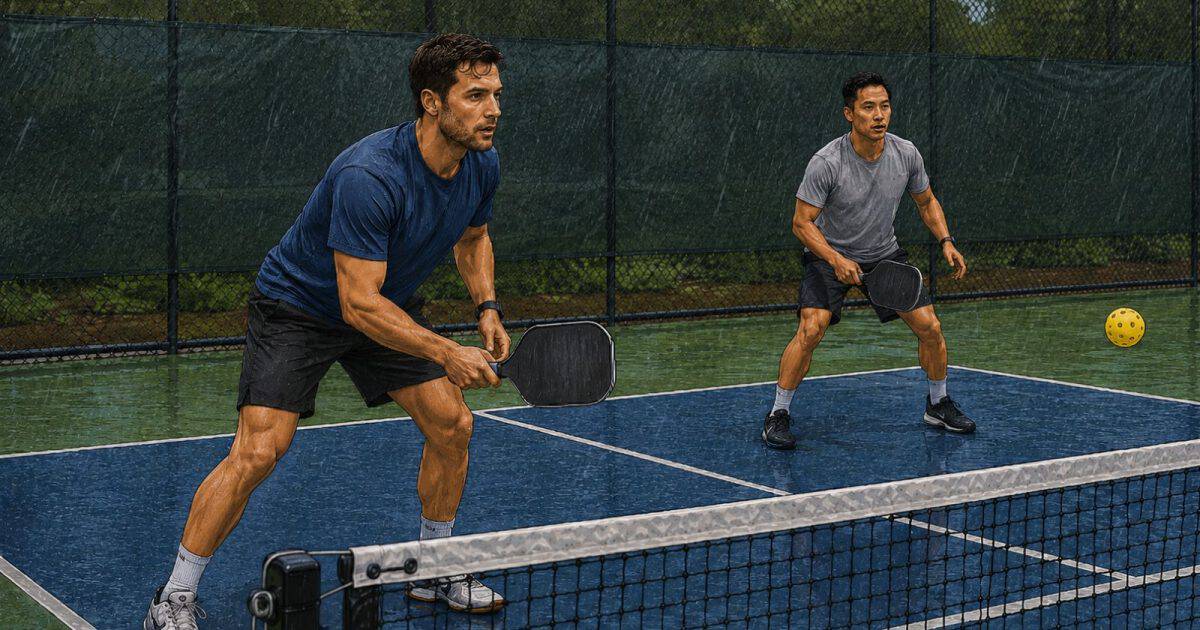
Quick Answer: You can play pickleball in a light drizzle if the court still has grip, but a truly wet court is slick and unsafe. Rain makes the surface slippery, softens the ball’s bounce, and raises your fall risk. When you see standing water or the ball skids, stop. Safety beats stubbornness every time.
Every outdoor player faces this eventually. The forecast said clear, the clouds disagreed, and now you are staring at a spitting sky wondering whether to keep going. Playing pickleball in the rain is possible in the lightest conditions, but the honest answer leans toward caution.
Is it safe to play pickleball in the rain?
Only in a very light drizzle on a court that still grips your shoes. The moment water beads on the surface, traction drops and the danger climbs. Pickleball already involves quick lateral moves and stops, and a slick court turns a normal split step into a slip.
The risks stack up fast on a wet court:
- Slips and falls, the most common wet-court injury, often on lunges and pivots.
- A skidding ball that no longer bounces true, ruining any real rally.
- Wet grips that slide in your hand and send paddles flying.
- Puddles that hide how slick a spot really is.
I have finished a game in a light mist and felt fine. I have also called it after two points once the lines turned shiny, because no rally is worth a wrist or a hip. That line, shiny lines and a skidding ball, is my personal stop sign.
What happens to the ball and court in the rain?
Both get unreliable. A wet pickleball skids low instead of bouncing cleanly, so shots you would normally read become guesswork. The ball also picks up water and grit, which changes its weight and flight and can crack it faster in cold, wet conditions.
The court surface matters just as much. Textured acrylic sport coatings hold a little grip when damp, while smooth concrete gets treacherous almost instantly. If you are curious why some courts drain and dry faster than others, outdoor court surface material explains how the coating changes wet-weather behavior.
When should you stop playing?
Stop the moment the court stops giving you grip. You do not need a rulebook for this one, just a little discipline. Here is a simple checklist to call it:
- Standing water anywhere on the playing surface: stop.
- The ball skids or refuses to bounce: stop.
- Your shoes chirp or slide on a normal step: stop.
- Lightning or thunder in the area: stop immediately and get indoors.
That last one is non-negotiable. An open court is no place to be in a lightning storm, and no game is worth the gamble. When rain rolls in, a quick teardown helps, which is one reason a portable pickleball net is so handy for outdoor players.
How do you dry a court and play after rain?
Clear the water, then test your footing before you commit. Once the rain passes, a wet court can be playable again with a little work. A foam roller or a squeegee pushes standing water off the surface quickly, and a leaf blower moves the thin film that is left.
Give the court a few minutes to air-dry, then do a slow test slide with your foot near the kitchen line. If it grips, ease back in. If it still slides, wait longer. Good footwear helps here, and the grip differences in pickleball shoes vs tennis shoes are worth knowing before you trust a barely dry court.
FAQ
Can you play pickleball in a light drizzle?
Often yes, if the court still grips and the ball still bounces. Watch the surface closely, because a light drizzle can turn into a slick court quickly. Stop the moment traction fades.
Is it bad for pickleball paddles to get wet?
A little moisture will not ruin a paddle, but repeated soaking can damage the core and edge guard over time. Wipe your paddle dry after wet play and never store it damp in a closed bag.
Does rain damage a pickleball court?
Rain itself does not, but standing water and poor drainage can shorten a surface’s life and grow slick algae. Well-built courts are sloped to drain, which is why surface and base choices matter.
How do you dry a pickleball court fast?
Use a squeegee or foam roller to push off standing water, then a leaf blower for the thin remaining film. Let it air-dry a few minutes and test your footing before playing.
Can you play pickleball indoors when it rains?
Yes, and that is the safest option in bad weather. Indoor courts sidestep rain entirely, which is a big reason many players keep an indoor backup spot in mind.
Is a wet pickleball dangerous to hit?
It is more unpredictable than dangerous. A wet ball skids and flies oddly, and it can crack sooner in cold, damp air. The bigger hazard is the slick court under your feet.
What should you do if it starts raining mid-game?
Finish the current point if the court is still safe, then pause and assess. If water is pooling, the ball is skidding, or you hear thunder, stop and pack up. Do not push your luck.
Rained out for the day? The Pickler Junction directory lists indoor courts and entertainment centers near you, so a wet forecast does not have to end your session.
Written by the Pickler Junction Team.