Pickleball and Parkinsons Disease
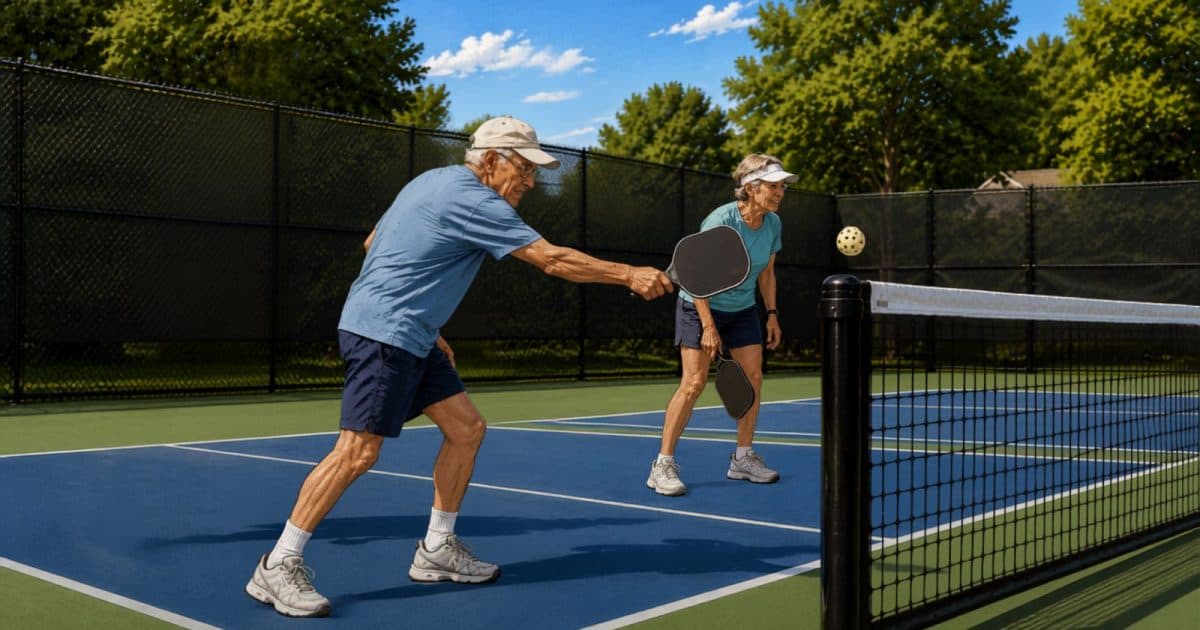
Quick Answer: For many people with Parkinson’s disease, pickleball can be a helpful form of exercise. It combines aerobic activity, balance and agility work, quick decision-making, and social connection, all of which support Parkinson’s management. The Parkinson’s Foundation highlights it as a way to stay active, and early research programs report gains in balance, gait, and hand function. Always start with your doctor’s guidance and, ideally, supervised instruction.
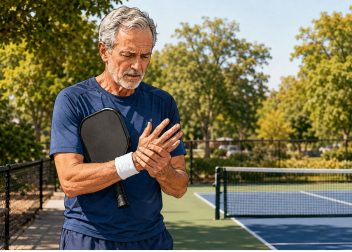
The connection between pickleball and Parkinson’s disease deserves a careful answer. Parkinson’s disease is a progressive neurological condition that affects movement, causing symptoms like tremor, stiffness, slowness, and balance problems. Exercise is one of the most important tools for managing it, and pickleball offers a fun, social way to get that exercise for people who are able to play.
Is pickleball good for Parkinson’s disease?
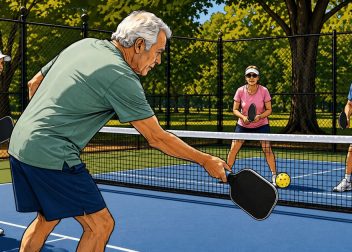
For many people with Parkinson’s, yes, as part of an exercise routine. Exercise is well established as a key part of Parkinson’s management, and pickleball delivers several of the movement types that help. The Parkinson’s Foundation describes it as an aerobic workout that supports balance, agility, strength, and cognitive function.
Why it fits Parkinson’s so well:
- Aerobic activity, which is linked to better symptom management
- Balance and agility work, addressing common Parkinson’s challenges
- Quick thinking and reaction, which engage the brain
- Big, coordinated movements that resemble Parkinson’s physical therapy
- Social connection, which supports mood and motivation
The movements line up remarkably well. Physical therapists often have Parkinson’s patients practice large, amplified, quick movements, and pickleball naturally involves exactly that kind of motion.
What does the research and expert guidance show?
Emerging studies and major organizations point to real benefits. Research in this area is still early, but promising. A six-week pickleball program for people with Parkinson’s, studied by researchers from Midwestern University and Creighton University, looked at balance, gait, cognition, and hand function, with the shirt-buttoning task among the measures showing improvement.
More broadly:
- The Parkinson’s Foundation notes that consistent exercise, at least 2.5 hours a week, can help slow symptom progression, and that programs lasting longer than six months yield the biggest gains in balance and mobility.
- Specific symptom benefits cited by experts include improved stride for a shuffling gait, better balance from direction changes, and reduced trunk stiffness from rotation.
- Dedicated programs like Parkinson’s pickleball groups have emerged around the country, often supported by clubs and movement organizations.
It is worth being clear: this is supportive evidence, not a cure. Pickleball is a complement to your medical care, not a replacement for it.
How can someone with Parkinson’s get started safely?
Start with your care team, then ease in with support. Safety comes first, since balance and fall risk need careful management with Parkinson’s. The right approach makes the sport accessible for many people across the early-to-middle stages.
Steps to begin safely:
- Talk to your neurologist or doctor first about whether pickleball is right for you.
- Work with a professional, ideally a coach, physical therapist, or occupational therapist familiar with Parkinson’s-friendly modifications.
- Warm up and stretch to reduce stiffness, using our warm-up routine.
- Build balance and strength alongside play to lower fall risk. Our off-court workouts guide helps.
- Start slow, with short sessions, and progress as tolerated.
- Look for adapted or group programs designed for people with Parkinson’s.
A physical therapist or sports medicine provider experienced with Parkinson’s can assess your balance and mobility and help you play in a way that is safe for you. The Parkinson’s Foundation Helpline (1-800-4PD-INFO) is another resource for finding exercise programs near you.
Frequently asked questions
Is pickleball good for Parkinson’s? For many people with Parkinson’s, yes. It provides aerobic exercise, balance and agility work, quick thinking, and social connection, all of which support Parkinson’s management. Start with your doctor’s guidance.
What are the benefits of pickleball for Parkinson’s? Reported benefits include better balance, improved gait, reduced stiffness, engaged cognition, and improved mood. Early research programs have also noted gains in hand function and quality of life.
Is pickleball safe for people with Parkinson’s? It can be, with precautions. Balance and fall risk need managing, so medical clearance, supervised or adapted programs, balance training, and starting slowly are all important.
Can exercise slow Parkinson’s progression? Research supports that consistent exercise can help slow symptom progression and improve quality of life. The Parkinson’s Foundation suggests at least 2.5 hours a week.
Are there pickleball programs for Parkinson’s? Yes. Dedicated Parkinson’s pickleball groups and adapted programs have emerged around the country. The Parkinson’s Foundation Helpline can help you find exercise options nearby.
Do I need special modifications to play? Many people benefit from modifications and from coaches or therapists familiar with Parkinson’s. Adapted rules, slower pacing, and balance support can make the game accessible and safe.
Pickleball can be a genuinely uplifting part of living well with Parkinson’s, played thoughtfully and with the right support. Build a safe routine with our warm-up and conditioning guides, and connect with a physical therapist or sports medicine provider who can tailor it to you.
Written by the Pickler Junction Team.
This article is general information, not medical advice. If you have Parkinson’s disease, talk with your neurologist or doctor before starting a new exercise or sport.