How to Hit an Overhead in Pickleball
Quick Answer: Turn sideways and shuffle back under the lob instead of backpedaling straight, pointing at the ball with the off hand to track the drop. Use a continental grip and contact the ball in front of the body, above head height. Aim at the opponents’ feet or open angles instead of swinging for power, and let a deep lob bounce first.
The overhead is one of the few pickleball shots where the ball arrives from above rather than across the net, and that changes the setup. Solid footwork, a stable grip, and a controlled swing turn a rushed swat into a shot that ends the point on purpose.
How Should You Move Your Feet Under a Lob?
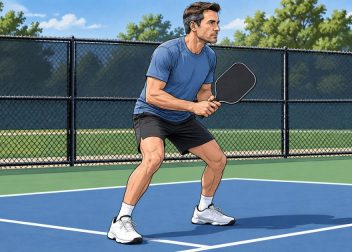
Running straight backward with the eyes locked on the ball is a common way to trip or lose track of the drop point. The better move is turning the shoulders and hips sideways as soon as the lob leaves the opponent’s paddle, then shuffling or cross-stepping back to a spot slightly behind where the ball will land. That sideways turn keeps the feet under the body and leaves room to step into the swing instead of reaching backward for it. The guide to footwork for pickleball covers the shuffle step and cross-step in more detail, along with the split-step timing that sets up quick direction changes at the net.
Why Point at the Ball With the Off Hand?
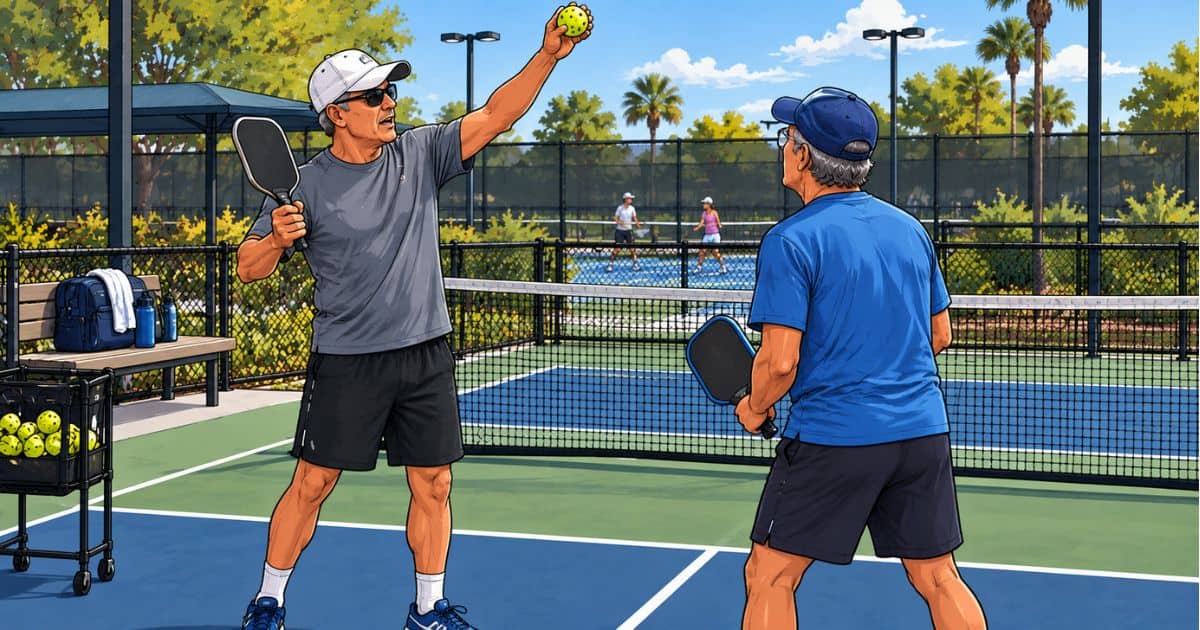
Raising the non-paddle hand and pointing it at the ball as it falls is a simple way to track a shot dropping from height. Pointing keeps the head up and the eyes on the contact point instead of drifting toward the target too early, and it helps time the swing so the paddle arrives when the ball sits in the ideal strike zone rather than a half-second late. Skipping this step tends to produce mistimed swings at a ball that has already fallen past shoulder height.
Where Should Contact Happen?
Contact on a well-hit overhead happens out in front of the lead shoulder, at the top of the reach, with the arm close to fully extended. Hitting the ball too close to the body cuts off the swing and usually sends the shot into the net, while waiting too long lets the ball drop below the ideal strike zone and turns a smash into a defensive poke. The same forward contact point used on a serve or a groundstroke applies here, just higher off the ground.
What Grip Works Best for an Overhead?
The continental grip is the standard choice for the overhead, the same grip used for the serve and most volleys. Staying in one grip through the overhead, the volley, and the reset shot that follows avoids the wasted time of switching mid-point, since a fast-developing lob rarely leaves room for that. The guide to the continental grip in pickleball covers hand placement in more detail, along with how the grip carries over into dinking and blocking at the net.
Should the Overhead Aim for Power or Placement?
A full-power swing sends more balls long or into the net than a controlled one does, especially once fatigue sets in late in a match. Aiming down at the feet of the closest opponent, or into open space along a sideline, gives a better margin than swinging for outright pace. Because the ball is already dropping from above, a downward swing path does much of the work on its own without needing extra force behind it. Reading the strategy behind pickleball doubles helps identify which opponent is out of position, so the overhead can aim there instead of at whoever happens to be closest.
What Should You Do When the Lob Is Too Deep?
Not every lob should be smashed. When a lob lands deep enough that reaching it cleanly out of the air would require an off-balance stretch, the safer play is letting it bounce and hitting the next shot as a controlled groundstroke or a bounce overhead instead. Forcing an overhead on a ball dropping past the baseline usually produces a mishit, while the extra half-second from letting it bounce keeps the swing balanced and the contact point in front of the body. Recognizing this moment starts with recognizing the lob itself, covered in the guide to what a lob is in pickleball, including why opponents use it to push players off the kitchen line in the first place.
What Happens If Momentum Carries You Into the Kitchen After the Smash?
An overhead hit before the ball bounces counts as a volley, which puts the shot under the non-volley zone rule. Under the 2026 rulebook, Section 11, a player cannot have any part of the body or paddle touching the non-volley zone or its line while volleying, and the rule keeps working after the ball is gone: if a player’s forward momentum from the swing carries them into the zone once the ball has already become dead, that contact is still a fault. This is a common way an otherwise well-hit overhead smash turns into a lost point, which is why the finish matters as much as the swing near the net. Standing well behind the kitchen line when the lob arrives leaves more room to finish the swing without drifting forward into a fault, one reason the setup described in the pickleball ready position guide favors staying balanced over crowding the line.
Why Does the Overhead Put Extra Strain on the Shoulder?
The overhead repeatedly asks the shoulder to work through a full overhead arc, and that motion loads the rotator cuff. Franciscan Health states that reaching overhead in pickleball requires significant force from the rotator cuff tendon and that the sport’s overhead activity stresses those muscles through several different arm movements, with the highest risk for players who increase activity without building shoulder strength and flexibility first. Warming up the shoulder before playing and easing into overhead swings rather than swinging at full effort on the first lob of the day both help manage that load. The guide to pickleball shoulder pain and the rotator cuff covers prevention in more depth.
How Can Players Practice the Overhead?
The overhead comes up rarely enough in most matches that building comfort with it means practicing it on purpose. A partner feeding lobs from across the net, or a coach working through footwork and contact point in a structured session, gives far more repetitions than a single match provides. The beginner pickleball drills guide includes lob-and-smash feeding patterns that isolate the footwork and swing without the pressure of a live point.
Between the footwork, the grip, and the non-volley zone rule that governs where the swing can finish, the overhead has more moving parts than it looks like from the sideline. A coach who watches the swing in person can spot a backpedaling step or a late contact point faster than a player can feel it alone, and the directory of pickleball coaches lists instructors by city for players who want that kind of hands-on correction.
Frequently Asked Questions
What is the correct footwork for an overhead in pickleball? Turn the shoulders sideways as the lob goes up, then shuffle or cross-step back rather than backpedaling straight, which keeps the feet balanced under the body for the swing.
What grip should you use for a pickleball overhead smash? The continental grip is the standard choice, the same grip used for the serve and most volleys, since it keeps the paddle face square through contact and allows a fast switch back to dinking or volleying right after the shot.
Should you swing as hard as possible on an overhead? No. Aiming down at the opponents’ feet or into open court angles gives a better margin for error than swinging purely for pace, since the downward drop of the ball already adds difficulty for the returning side.
What should you do if the lob is too deep to smash? Let it bounce. Forcing an overhead on a ball dropping near or past the baseline usually produces a mishit, while letting it bounce and playing a controlled groundstroke keeps the swing balanced.
Is an overhead smash considered a volley under the pickleball rules? Yes. Any ball struck before it bounces counts as a volley under the 2026 rulebook, so an overhead smash hit out of the air follows the same non-volley zone restrictions in Section 11 as any other volley.
What happens if you touch the non-volley zone after hitting an overhead? It is a fault. Under the 2026 rulebook, Section 11, a player’s momentum carrying them into the non-volley zone after a volley is a fault even if the ball has already become dead by the time the contact happens.
Can you hit an overhead smash on the return of serve? No. Under the 2026 rulebook, Section 10.A, the return of serve must bounce before either side hits it, which rules out an overhead swing on that specific shot.
Why does the overhead put strain on the shoulder? The overhead repeatedly loads the rotator cuff through a full overhead arc, and under 2026 guidance from Franciscan Health, that stress is highest for players who increase overhead activity without first building shoulder strength and flexibility.
Written by the Pickler Junction Team.