Can You Hit Overhand in Pickleball?
Quick Answer: Yes during a rally, no on the serve. Any overhead shot, including a smash, is legal once the two-bounce rule is satisfied and the player is not volleying inside the non-volley zone. The serve is different: the 2026 rulebook, Section 7.C, requires an upward paddle arc and contact below the waist, ruling out a full overhand swing.
Pickleball splits this question into two answers because the serve and the rally are governed by separate rules. Once that split is clear, the overhead smash stops looking like a gray area and starts looking like one of the more straightforward shots in the sport.
Overhand Shots Are Legal Once the Ball Is in Play
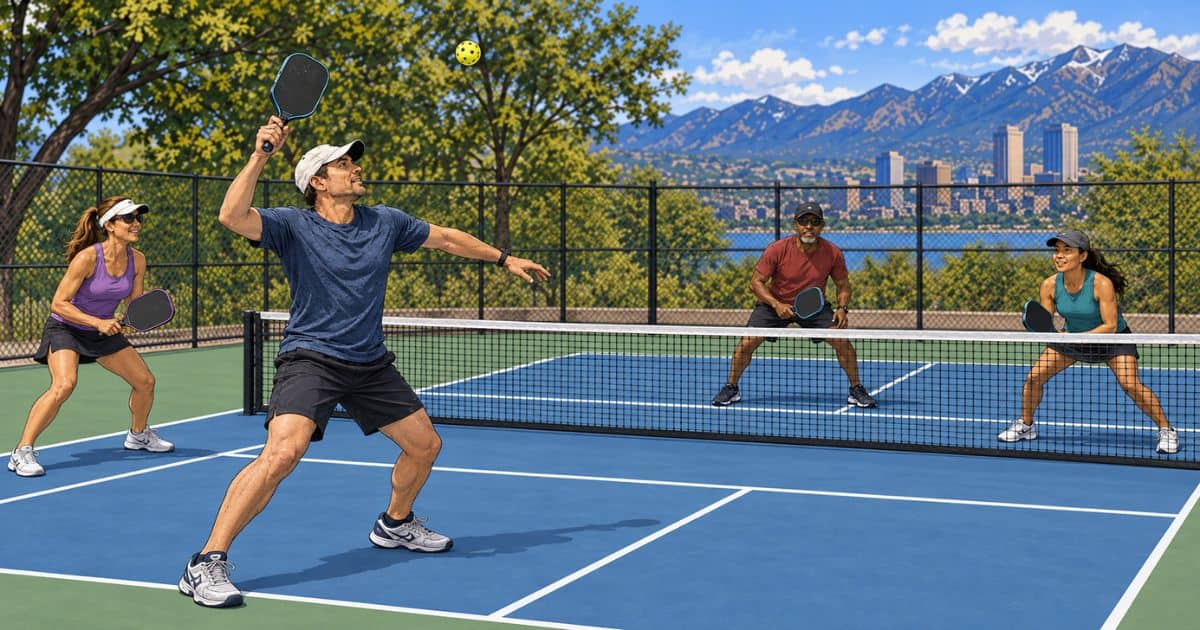
During a rally, nothing in the rulebook restricts the angle or height of a swing. A player can hit a ball above the shoulder, at the shoulder, or down at the ankles, and none of those choices is a fault by itself. What matters under the 2026 rulebook is timing and position, not swing style. Section 10.A sets the two-bounce rule: the serve and the return of serve must each bounce once before either side can volley the ball. After those two bounces happen, any player on the court is free to hit the ball out of the air, overhand or otherwise, unless that player is standing inside the non-volley zone described in Section 11. Put those two rules together and the picture is simple. An overhead smash hit from behind the kitchen line, after the two required bounces, is a completely legal shot.
What Does the Rulebook Say About the Volley Serve?
The serve is where the overhand restriction actually lives, and it comes from Section 7 of the 2026 rulebook, covered in full in the pickleball serving rules. A standard volley serve has three parts that shape the swing. Section 7.A requires at least one foot to stay behind the baseline and inside the imaginary extension of the sideline and centerline when the paddle contacts the ball. Section 7.B requires the ball to be released from one hand or off the paddle face, with no added spin from the toss. Section 7.C is the part that rules out overhand motion directly: the paddle must travel in a clear upward arc through contact, and the ball must be struck at a point that is no higher than the server’s waist. A full overhand swing, the kind used on an overhead smash, moves downward or level through the ball rather than upward, so it cannot satisfy 7.C no matter how it is aimed. The rules on serving overhand cover this requirement in more detail, including how it differs from the drop serve option in Section 7.D, which lets a player drop the ball and strike it after it bounces, still without any upward-arc requirement removed.
When Do Players Hit an Overhead Smash?
The overhead smash shows up almost exclusively as an answer to a lob. When an opponent lifts the ball high and deep to push a player back from the kitchen line, the ball often drops within reach at shoulder height or higher, and that height is exactly what makes an overhand swing useful. A player who reads the lob early enough can move back, let the ball reach a comfortable strike point, and drive it down into the opposing court with much more pace than a groundstroke allows. Because the lob is the shot that most often creates this opportunity, recognizing one early is part of setting up the smash in the first place.
Why Is an Overhead Smash a Fault Near the Non-Volley Zone?
The shot itself is never the problem. Position is. Section 11 of the 2026 rulebook, laid out in full in the pickleball kitchen rules, defines the non-volley zone as the 7 foot by 20 foot area on each side of the net, and it bars any player from volleying a ball while any part of the body or paddle touches that zone or its line. An overhead smash counts as a volley, since it strikes the ball before a bounce, so a player who jumps to smash a lob while standing on or inside the kitchen line commits a fault the moment the paddle makes contact. The rule reaches further than the swing itself. If a player’s momentum carries them into the non-volley zone after the hit, even after the ball has already gone dead, that contact is still a fault under Section 11. That is why the overhead smash carries more risk near the net than anywhere else on the court. A player has to judge not just the swing but where the follow-through and the next step will land.
How Does the Two-Bounce Rule Affect Overhead Shots?
Under the 2026 rulebook, Section 10.A only applies to the first two shots of a rally, the serve and the return. Once both of those have bounced, the two-bounce rule has done its job and stops restricting anything for the rest of the point. That means an overhead smash can legally happen on the third shot of a rally if the ball is lobbed back early, though that is uncommon so soon since rallies at that stage usually stay low rather than lift into a lob, a pattern covered in the guide to how to keep the ball low in pickleball. It shows up far more often once a rally has settled into a dinking exchange near the kitchen line and one side lifts a lob to try to reset the point.
What Does Overhead Technique Look Like?
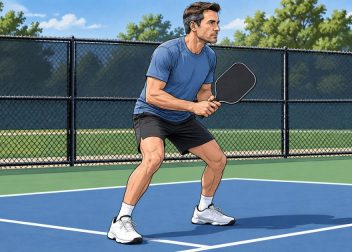
Good overhead technique starts with early recognition of the lob, a small step back to get the paddle behind the ball, and contact made in front of the body with a mostly straight arm before finishing away from the non-volley zone. The guide to how to hit an overhead in pickleball breaks the swing down step by step, along with common footwork mistakes that push players into the kitchen line fault described above.
Learning the difference between the rally and the serve clears up most of the confusion around this question, and the same rulebook sections that govern the smash also shape the rest of a match, from the two-bounce rule to the non-volley zone. A certified coach can turn that rule knowledge into a repeatable swing, working on lob recognition, footwork away from the net, and contact point in a single session, and the directory of pickleball coaches lists instructors by city for players who want that kind of hands-on correction.
Frequently Asked Questions
Can you hit an overhead smash on the return of serve? No. The return of serve is one of the two shots covered by the two-bounce rule, so under the 2026 rulebook it must bounce before either side hits it, which rules out any overhead swing on that specific shot.
Is smashing the ball illegal in pickleball? No, an overhead smash is a legal shot at any point in a rally once the two-bounce rule has been satisfied, as long as the player hitting it is not touching the non-volley zone under Section 11 of the 2026 rulebook.
Can you volley an overhead shot from the non-volley zone line? No. Section 11 treats the line itself as part of the non-volley zone, so contact with the line while volleying, overhead or otherwise, is a fault under the 2026 rulebook.
What happens if your momentum carries you into the kitchen after a smash? It is still a fault. Section 11 of the 2026 rulebook counts momentum-carried contact with the non-volley zone as a fault even if it happens after the ball has already become dead.
Can you serve the ball overhand in pickleball? No, not with a standard volley serve. Section 7.C of the 2026 rulebook requires an upward paddle arc and contact at or below waist height, which a full overhand motion does not meet.
Do you have to let the ball bounce before hitting an overhead? Only on the serve and the return of serve. After those two required bounces under Section 10.A of the 2026 rulebook, a player can hit an overhead directly out of the air anywhere outside the non-volley zone.
Is an overhead smash different from an overhead serve? Yes. A smash is a rally shot with no restriction on swing path, while a serve must follow Section 7.C of the 2026 rulebook, which requires an upward arc and below-waist contact regardless of how the ball arrived.
Can beginners use an overhand serve motion in casual play? Recreational games sometimes relax rules by agreement, but any match played to the 2026 rulebook requires the underhand-style volley serve or the drop serve under Section 7.D, not a full overhand motion.
Does the overhead smash count differently in doubles than in singles? No. The two-bounce rule and the non-volley zone rule in the 2026 rulebook apply the same way regardless of whether one or two players are on each side of the court.
What is the fastest way to get comfortable hitting an overhead smash? Working with a coach on lob recognition and footwork away from the net addresses the two most common mistakes, judging the drop point and drifting into the non-volley zone on the follow-through.
Written by the Pickler Junction Team.