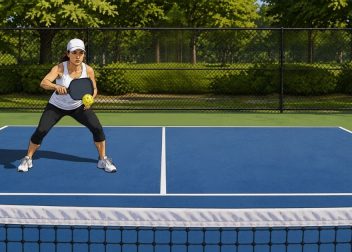
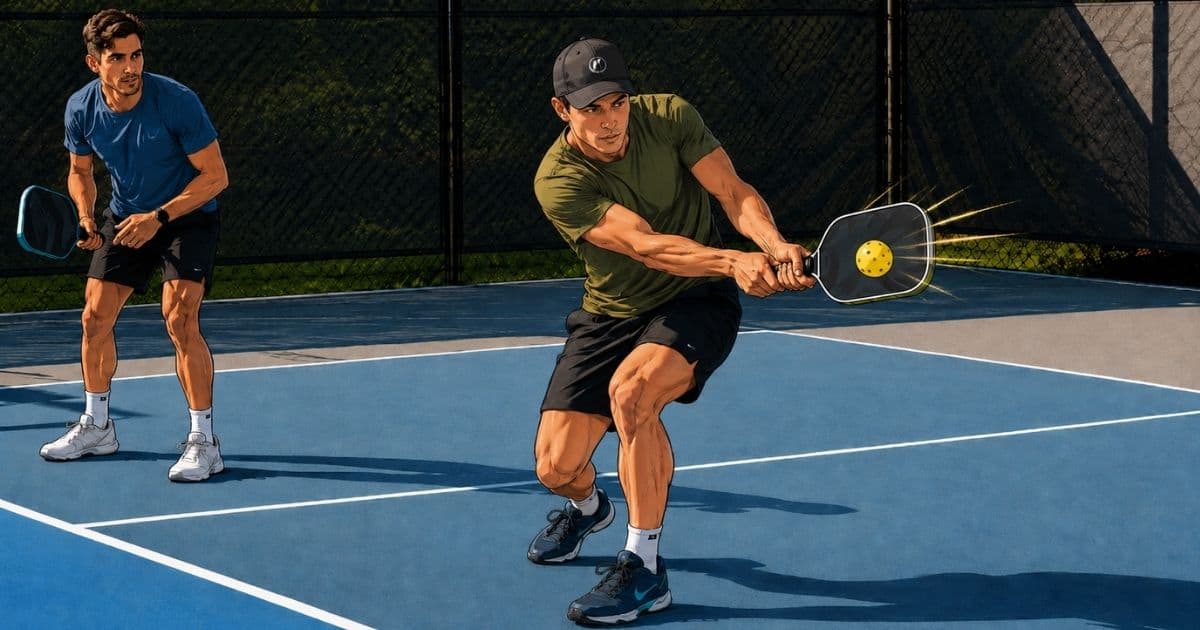
Aggressive Dinking: How to Create Pressure with Your Dinks
Quick Answer: Aggressive dinking is dinking with a target. Instead of trading safe balls crosscourt, you flatten the arc, push the ball deep in the kitchen, and aim at feet, backhands, and the outside foot until somebody lifts one. The pop-up is the entire point of the exercise.
Aggressive dinking is any dink hit with the intent to force a weak reply instead of simply keeping the rally alive. This is a 3.5-and-up conversation about offense. For the shot itself, our article on what a dink is handles the basics.
The goal is never a winner. The goal is the ball that comes back a few inches too high.
What Makes a Dink Aggressive?
Intent and placement, applied over several balls in a row. An aggressive dink asks a question the other player would rather not answer, and it does that through angle, depth, and target choice rather than pace.
Three levers do the work:
- Depth in the kitchen. A ball landing deep near the non-volley zone line keeps an opponent from leaning in and taking it early.
- A flatter, lower arc. Less height over the net means less time to set up underneath the ball.
- A dipping ball. Shape that drops the ball toward the shoelaces is harder to lift cleanly, because the bounce kicks forward and low instead of sitting up.
Pace is the lever that does the least. Hard dinks sit up.
How Do Arc and Depth Force a Pop-Up?
They shrink the space an opponent has to work with. A dink that lands short and floats gives a player room to step in, contact the ball high, and attack it. A dink that lands deep and low forces contact near the ground, below the level of the net, which means the reply has to travel upward.
That upward reply is the pop-up. Everything else in this article exists to produce it.
Depth carries risk, which is the honest tradeoff. The margin between a deep dink and a ball that lands past the kitchen line is a few inches, and a dink that drifts long is a free attack for the other team.
Where Should an Aggressive Dink Land?
At the feet, at the backhand, or at the seam. Those three targets create awkward contact without asking for the sideline.
The specific spots worth memorizing, with the backhand wing covered in its own section below:
- The shoelaces. A ball at the feet forces either a backpedal or a short hop, and both produce a lift.
- The outside foot. Pulls the player wide and stretches the reach on the next ball.
- The outside hip seam. The space where a player has to pick forehand or backhand under time pressure.
- The paddle-side shoulder. The chicken-wing position, which cramps the swing badly.
- The middle seam between two opponents, which adds a decision to the physical problem.
A stretched or reaching player almost always lifts the ball. That is the whole mechanism, repeated until it works.
Is the Backhand Always the Right Target?
No, though it is the right default. The backhand dink is the less practiced wing at most levels, and a steady diet of them produces more short and high replies than any other single target.
The exception matters. A player with a genuine two-handed backhand often prefers that wing, and feeding it repeatedly hands them their best shot. Watch two or three dinks and pick the side that comes back least confidently, then stay there.
Targeting the weaker player rather than the weaker wing is often the better version of the same idea, especially in mixed and in league play.
Should You Go Crosscourt or Down the Middle?
Crosscourt for the angle, middle for the confusion. The crosscourt dink travels over the lowest part of the net and has the most court to land in, so it is the higher-margin ball and the one that pulls an opponent widest.
Down the middle solves a different problem. It removes angle from the opponent’s reply and forces a decision between two players, and our article on hitting down the middle covers why that seam produces so many weak balls.
The pattern that works is a mix. Two neutral crosscourt dinks to establish rhythm, then one hard-angled ball at the feet or the middle to break it. Sameness is what lets opponents get comfortable, and comfortable players do not pop the ball up.
How Do You Move an Opponent Off the Line?
Angle them out, then hit behind them. A sharp crosscourt dink that lands wide pulls a player off the sideline edge of the court, which opens the middle for your partner and leaves a gap where they were standing.
The second ball is the one that scores. Once a player has committed sideways, a dink back into the space they abandoned forces a lunge, and a lunging player has almost no chance of keeping the reply low.
That whole sequence depends on a partner who slides with you. An angle sharp enough to pull one opponent wide opens the middle for both teams, so the partner has to shade toward the seam as the ball travels.
When Does Aggression Become a Mistake?
When the ball starts dictating you. Aggressive dinking stops working the moment you are reaching, off balance, or hitting the same pressure ball every time.
The failure modes:
- Reaching outside your body to force one. A dink hit off balance floats, and a floating dink at the kitchen line gets attacked immediately.
- Attacking a ball below the middle of the net. That is a speed up on a red light, covered in our article on when to speed up.
- Aiming for the sideline. The extra two inches of angle are worth far less than the unforced errors they generate.
- Going aggressive while your partner is off the line. The counter lands in open court.
- Never hitting a neutral ball. Contrast is what makes the pressure ball feel like pressure.
The rally where nothing seems to be happening is often the one being won, three dinks before the pop-up shows up. Patience is the aggressive play more often than it looks.
FAQ
What is an aggressive dink in pickleball? It is a dink hit with the intent to force a weak or high reply instead of just continuing the rally. It relies on depth, a low arc, and a specific target such as the feet or the backhand. The goal is a pop-up that your team can attack.
Should I dink crosscourt or down the middle? Both, in a pattern. Crosscourt gives you the lowest part of the net and the most court, which makes it the higher-margin ball and the best one for pulling an opponent wide. Down the middle takes away angle and forces two players to decide who takes it.
How do I force a pop-up with dinks? Land the ball deep in the kitchen with a low arc so your opponent has to contact it near the ground. A ball taken low has to be lifted to clear the net, and a stretched or reaching player lifts it higher than they intend. Repeating the target matters more than any single dink.
Where do you aim a dink to make it uncomfortable? The shoelaces, the outside foot, the outside hip seam, and the paddle-side shoulder. Each one takes away a clean swing and forces contact in a cramped position. The middle seam between two opponents adds a decision on top of the physical problem.
Is dinking to the backhand always right? It is the best default, though not a rule. Players with a strong two-handed backhand may prefer that wing, and feeding it repeatedly gives them their most confident shot. Watch a few exchanges and target the side that comes back weakest.
How deep should an aggressive dink land? Deep in the non-volley zone, near the kitchen line, which stops opponents from leaning in and taking the ball early. The tradeoff is margin, since a dink that drifts past that line becomes an easy attack. Depth is worth the risk only when your own contact is balanced.
Can you be too aggressive with dinks? Yes, and it shows up as unforced errors and floaters. Aggression breaks down when you reach outside your body, attack from below net height, or hit a pressure ball every time. Neutral dinks are what make the aggressive ones effective.
Does aggressive dinking work below 3.5? It works better once opponents are reliably returning dinks, which is usually around 3.5. Below that level, points tend to end on errors before a pressure pattern gets a chance to develop. Building dependable dinks first makes the offense worth adding.
Pressure dinking only sharpens against people who dink back well, which means the practice partner matters as much as the plan. Find a regular group through our pickleball clubs listings, or have a coach watch a few kitchen exchanges and tell you which target you are avoiding. Multi-day work on the same patterns lives in our camps and clinics directory.
Written by the Pickler Junction Team.