How to Improve Your Backhand in Pickleball
Quick Answer: Improve your pickleball backhand by turning your shoulders early, keeping contact out in front of your body, and shortening the swing. Most backhand problems are late preparation rather than weak technique. A two-handed backhand adds stability for players who struggle with control, and drilling dinks builds the shot faster than playing games.
The backhand in pickleball is any shot hit on the non-dominant side of your body, and it shows up more often here than in tennis because so much of the game happens close to the net where there is no time to run around it.
Why is the backhand such a common weakness?
Because players avoid it, and avoiding it makes it worse.
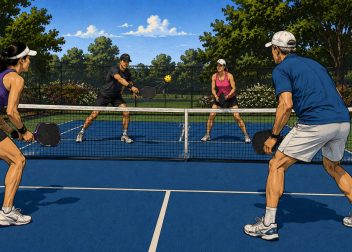
In tennis you can often run around a backhand and hit a forehand. At the pickleball kitchen line there is no time and no space to do that. The ball is on you in a fraction of a second, and the shot you get is the shot you are standing in front of.
The other reason is that most recreational players get almost no backhand repetitions. They warm up crosscourt forehands, they drill forehand drops, and then they get to a game and discover that roughly half the balls arrive on the other side.
What actually fixes a weak backhand?
Three things, in this order.
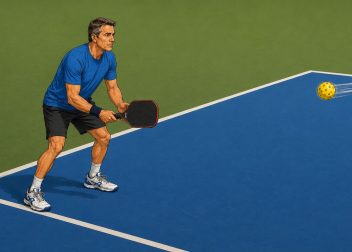
Turn earlier. Almost every bad backhand is a late backhand. The shoulders should start turning the moment you recognize the ball is going to that side, not when it arrives. Late preparation forces you to swing harder in less space, which is where errors come from.
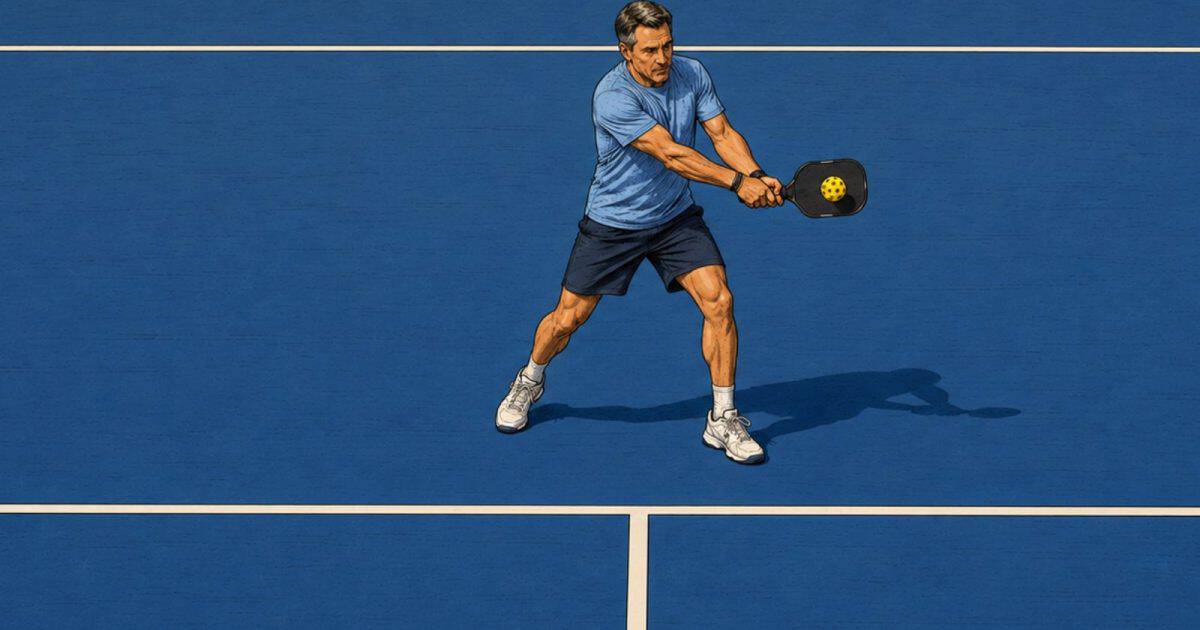
Contact out in front. A backhand hit beside or behind your body has no support and no direction. Meet the ball in front of your lead hip. This one change fixes more backhands than any grip adjustment.
Shorten the swing. The backhand needs less motion than players give it, especially at the kitchen. A compact push from the shoulder is more repeatable than a full stroke and gets the paddle back into ready position faster.
Should you hit a one-handed or two-handed backhand?
Both work, and the choice depends on where you struggle.
A one-handed backhand gives you more reach, faster recovery, and is essential for dinks and blocks at the kitchen line. Every player needs one whether or not they also use two hands.
A two-handed backhand adds stability and power from the baseline. It often feels natural to anyone coming from tennis. It is genuinely useful for driving and for handling pace, and it has become common at the professional level.
The practical answer for most players is one hand at the kitchen and two hands from the baseline if you like it. Nobody should be hitting two-handed dinks.
What grip should you use?
A continental grip works for most players, since it lets you hit forehands and backhands without switching, which matters enormously in fast hands battles at the net where there is no time to change.
Some players use a slightly stronger eastern backhand grip for baseline drives and shift back for volleys. That works if you have the time to make the switch. At the kitchen line you generally do not. Our guide to pickleball grips covers the tradeoffs.
How do you drill the backhand alone or with a partner?
The backhand improves faster than almost any other shot with focused reps, because most players are starting from so few of them.
With a partner:
- Crosscourt backhand dinks only, ten minutes, aiming for control rather than winners.
- Backhand blocks, with your partner driving at your backhand side from mid-court.
- Backhand drops from the baseline, partner feeding from the kitchen.
Alone, a wall is the best backhand tool there is. Stand about ten feet back and hit continuous backhands, aiming for the same spot. Wall work builds paddle control and reaction speed at the same time, and it costs nothing. Our guide to practicing against a wall has a full routine.
Players who drill their backhand for a few weeks usually find the shot stops feeling like a liability well before it starts feeling like a weapon. That is the normal progression.
What backhand shots are worth adding?
Once the basic backhand is reliable, two additions pay off quickly.
The backhand roll is a topspin dink or drop that dips over the net and gives your opponent a low ball to deal with. It is one of the most useful shots in intermediate pickleball.
The backhand flick is a quick wrist-driven speed-up from the kitchen, useful because opponents rarely expect attack from that side. See the backhand flick for the mechanics and when it is worth the risk.
Neither is worth learning before the basic backhand block and dink are solid.
FAQ
Why is my pickleball backhand so weak?
Usually late preparation and contact too far back, rather than a strength problem. Turning the shoulders earlier and meeting the ball in front of your lead hip fixes most weak backhands without changing anything else.
Should I use a two-handed backhand in pickleball?
It is a reasonable choice from the baseline, particularly for drives and for players coming from tennis. At the kitchen line you need a one-handed backhand regardless, because there is no time to get the second hand on the paddle.
What grip is best for a pickleball backhand?
Continental works well for most players because it requires no switching between forehand and backhand, which matters in fast net exchanges. Some players use an eastern backhand grip for baseline shots only.
How do I stop hitting backhands into the net?
Usually the paddle face is closing at contact or the contact point is too far back. Meet the ball in front and keep the paddle face slightly open on dinks and drops.
Is it better to run around my backhand?
Occasionally from the baseline. Almost never at the kitchen line, where moving around the ball leaves your whole side of the court open and there is rarely time anyway.
How long does it take to improve a backhand?
A noticeable difference usually shows up within a few weeks of focused drilling, because most players are starting from very few repetitions. The shot becoming reliable under pressure takes longer.
Can I practice backhands without a partner?
Yes. A wall is the best available tool. Ten feet back, continuous backhands at a consistent target. Fifteen minutes of that a few times a week builds real paddle control.
Should beginners work on the backhand or forehand first?
Both together. Beginners who only drill forehands develop a hole that becomes harder to fix later, since opponents find it immediately and hit there all day.
Backhand problems are often easier for someone else to see than to feel. If it has been a weakness for a while, a session with a coach is usually faster than another month of guessing. Our directory lists coaches by city.
Written by the Pickler Junction Team.