Pickleball Social Leagues: How They Work and How to Join One Near You
Quick Answer: A pickleball social league is an organized, recurring program where players sign up for weekly play grouped by skill level, with community valued over fierce competition. Leagues run for several weeks using formats like round robin or rotating partners at entertainment centers, clubs, and rec centers. Find one through Pickleheads or a local venue.
Pickleball social leagues are one of the most reliable ways to play every week, improve steadily, and meet other players. Here is how they work and how to find one near you.
What is a pickleball social league?
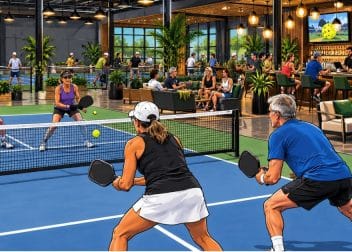
A social league sits between casual open play and a competitive tournament bracket. You register for a season, show up on a set schedule, and play alongside people close to your own skill level. The focus stays on consistent play and community rather than high stakes.
What defines a social league:
- Recurring play across a multi-week season, usually one session per week.
- Skill-based grouping, so games stay balanced for every player on the court.
- A social emphasis, with fun and connection valued over strict competition.
- Organized structure, run by a venue, club, or independent league organizer.
Pickleball participation has grown quickly, which helps explain why leagues have multiplied at clubs and rec centers. The Sports & Fitness Industry Association counted 24.3 million pickleball players in the United States in 2025, up from 4.2 million in 2020. A social league gives new and returning players the structure to keep showing up, plus a built-in community, without the pressure of a tournament bracket. If you are still working out how skill levels get assigned, the guide on how long it takes to get good at pickleball breaks down the ratings leagues use to sort players into divisions.
How do pickleball social leagues work?
Leagues follow a predictable rhythm that makes it easy to show up and play, even though the exact format changes from one organizer to the next.
How they typically run:
- Registration for a season, often sorted by skill level or rating.
- A set schedule, with one session per week over several weeks.
- A format such as round robin, rotating partners, or fixed teams.
- Skill divisions that keep matches competitive and enjoyable for both sides.
- Standings or playoffs, for leagues that add a light competitive element.
Many organized leagues sort players using DUPR, the Dynamic Universal Pickleball Rating, which assigns a rating between 2.000 and 8.000 based on match results, according to DUPR. A league that uses DUPR can place you in a division that matches your current level instead of guessing where you fit. Leagues that finish a season with a playoff round often use a small bracket similar in structure to the format covered in the guide on how pickleball round robin tournaments work.
Within a season, leagues typically rotate partners or opponents from week to week. That keeps the format social, spreads out the competition, and helps you meet more players over the course of a season. For a broader look at how organized pickleball leagues are scored and structured outside the social format, see the guide on how pickleball leagues work.
How do you join a social league near you?
Finding a league is usually straightforward, since they run at a wide range of venues and get listed across a handful of go-to resources.
Where to look:
- Entertainment centers and clubs, which frequently run their own in-house social leagues. See the guide on what a pickleball entertainment center offers.
- Pickleheads, the official court and game finder of USA Pickleball, which lists more than 25,000 places to play pickleball nationwide as of September 2026, according to Pickleheads. League and event listings often appear alongside its court search.
- Municipal and rec centers, which often host lower-cost leagues open to the public.
- Local community groups, a common place to catch current-season sign-ups.
- DUPR, which lists rated leagues and events sorted to match your rating, according to DUPR.
Some competitive-leaning leagues ask players to hold a USA Pickleball membership for tournament eligibility or insurance purposes. USA Pickleball offers a free Casual membership, a $12 Challenger membership, and a $60 Champion membership, according to USA Pickleball. Purely social leagues rarely require a membership, but check the registration page before you sign up.
League registration fees vary by venue, season length, and whether court time is included, so confirm the total cost before committing. For comparison, group clinics generally cost $20 to $50 per person for a one to two hour session, and private coaching runs $50 to $100 or more per hour. Pick a league that fits your schedule and skill level, then register early, since popular seasons fill quickly. To find venues that host leagues near you, use a court finder as covered in the guide on how to find indoor pickleball courts.
Frequently asked questions
What is a pickleball social league? An organized, recurring program where players sign up for weekly play, usually grouped by skill level, with community and fun prioritized over intense competition.
How do I find a pickleball league near me? Check entertainment centers and clubs, search Pickleheads, the official court and game finder of USA Pickleball, look at municipal rec centers, and check DUPR for rated league listings.
How do pickleball social leagues work? You register for a season, play on a set weekly schedule over several weeks, and follow a format such as round robin or rotating partners, usually grouped into skill divisions.
Are social leagues good for beginners? Yes. Skill-based divisions keep matches balanced, and the format is built around community rather than high-stakes competition, which makes it approachable for new players.
Do I need a USA Pickleball membership to join a social league? Most purely social leagues do not require one, though some competitive-leaning leagues ask for a membership for insurance or tournament eligibility. USA Pickleball membership options are a free Casual tier, a $12 Challenger tier, and a $60 Champion tier, according to USA Pickleball.
How long does a pickleball league season last? Season length varies by organizer, typically several weeks with one session per week, so check the specific league’s schedule when you register.
What is DUPR and how does it relate to leagues? DUPR, the Dynamic Universal Pickleball Rating, is a rating system that many leagues use to sort players into skill divisions and track results, according to DUPR.
Do social leagues cost money? Yes, most charge a season registration fee that varies by venue and length, and it typically covers court time and organization for the multi-week program.
A social league is one of the most dependable ways to play every week, sharpen your game, and build a pickleball community, without the pressure of a tournament bracket. Browse local venues that host leagues in the Pickler Junction entertainment centers directory, then pair that with a court finder to lock in a season that fits your schedule.
Written by the Pickler Junction Team.