Pickleball Lessons and Clinics in Minneapolis
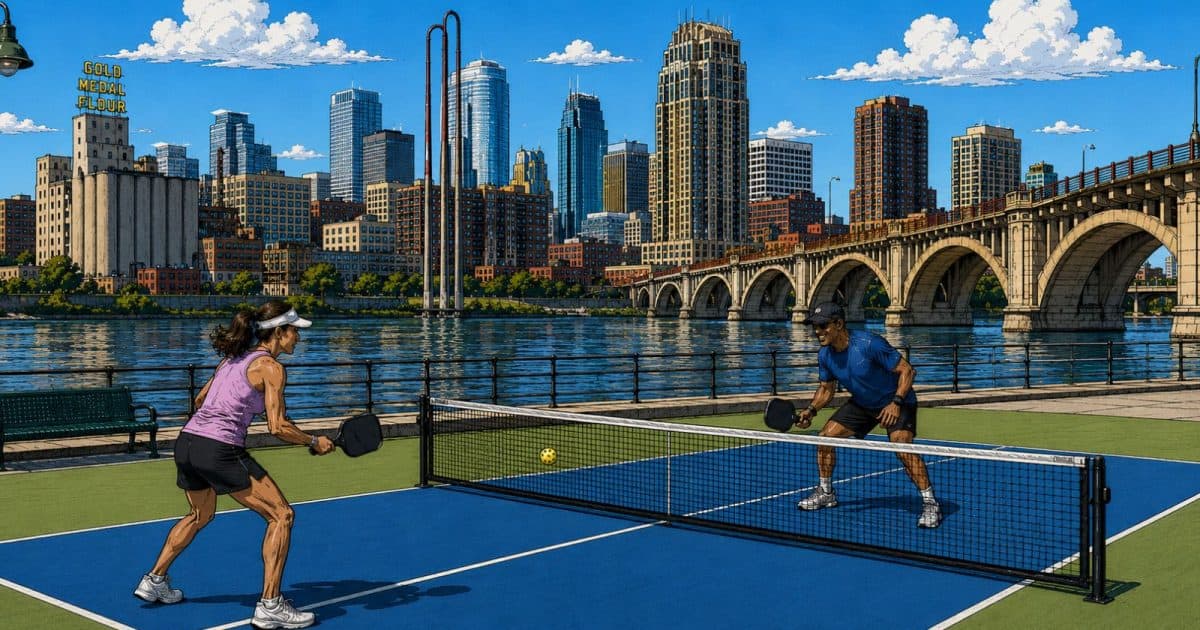
Quick Answer: Pickleball lessons in Minneapolis are an indoor sport for most of the year. The outdoor season runs roughly May through September, so the serious instruction calendar is the winter one, held in field houses, community centers, and dedicated indoor clubs. Winter is when Twin Cities players actually get better.
A pickleball lesson is paid instruction from a coach, private or in a small group clinic, aimed at fixing a specific problem. Minneapolis flips the usual assumption about when to take one. In most of the country lessons are a summer thing. Here, summer is for playing and winter is for learning.
How do you find pickleball lessons in Minneapolis?
Start with parks and recreation programming for both Minneapolis and St. Paul, then look at dedicated indoor pickleball facilities, then at independent coaches renting court time.
The Twin Cities have unusually strong public recreation infrastructure, and a lot of winter pickleball happens in field houses, school gyms, and community centers that were built for other sports and adapted. Parks programming is the affordable route and it publishes on a seasonal registration calendar, which means the deadline that matters is often weeks before the session begins.
Dedicated indoor facilities have expanded across the metro and are where the structured, rating tiered clinic ladders tend to live. Independent coaches fill the gaps. Our guide to finding a pickleball coach covers how to read credentials and teaching background once you have names.
What makes learning pickleball in Minneapolis different?
The short outdoor window changes the whole logic of when to spend money on coaching. With roughly five reliable outdoor months, spending your summer taking lessons means spending your best playing weather standing in a drill line.
The local pattern that works:
- Take lessons November through March. You are indoors anyway. Use the time to rebuild something rather than just playing games.
- Play hard May through September. Outdoor courts across the metro are busy and social, and that is where you convert instruction into results.
- Expect converted spaces. Winter courts are often taped onto gym floors with portable nets, so lines and footing vary from one venue to the next.
- Check the taping. A properly taped court still needs the non-volley zone running 7 feet from the net on each side, and cramped conversions sometimes shortchange the space behind the baseline instead.
- The indoor ball is lighter. It carries less and plays softer than the outdoor ball, and switching seasons without adjusting your swing is the standard spring frustration here.
Should you take a clinic or a private lesson?
Take a clinic if you are building fundamentals, and a private if you have one clear thing to fix.
Winter clinics in the Twin Cities do something extra: they hold your playing group together through the months when nobody is bumping into each other at an outdoor court. A lot of local players treat a winter clinic as their social anchor as much as their instruction.
Privates make sense once your problem is specific and personal. A serve that will not land deep, a dink that pops up, a habit of retreating off the line. Our comparison of clinics and open play explains what each one delivers, and how many lessons it takes to improve will keep you from overbuying a winter package.
What should you ask a Twin Cities coach before booking?
Ask what the court surface is and whether the lines are permanent or taped. Gym floors, sport court tiles, and outdoor hard courts all play differently, and a session on an unfamiliar surface is partly wasted while you adjust.
Then the usual list: rating band, students per court, whether balls and loaner paddles are provided, which ball the session uses, cancellation policy, and what to practice on your own between sessions.
Add a Minneapolis question about parking and access. Winter sessions in shared community facilities frequently have entrance rules, sign in desks, or shoe requirements that are obvious to regulars and invisible to newcomers. Non marking indoor shoes are commonly required on gym floors.
Where do you play between lessons?
Indoors from late fall through early spring, and outdoors on the metro’s public courts once the weather turns. The outdoor inventory has grown quickly, including converted tennis courts, and it is uneven enough that a little research pays.
Our guide to finding public pickleball courts walks through the apps and databases that track court locations, surfaces, and whether a site has lights.
Between sessions, the highest value winter practice is the boring kind. Serves, returns, and dinks against a wall or a patient partner. The players who show up in May noticeably better are almost always the ones who drilled something small all winter instead of only playing games.
FAQ
When is the pickleball season in Minneapolis? Outdoor play runs roughly May through September. Indoor play and most structured instruction run from fall through spring.
Should I take lessons in summer or winter in the Twin Cities? Winter, for most people. You are already indoors, court time is already scheduled, and it leaves the short outdoor season free for playing.
Are indoor courts taped or permanent? Both exist. Dedicated facilities have permanent lines, while community centers and field houses often tape courts onto gym floors with portable nets.
Do I need special shoes for indoor pickleball? Many gym floors require non marking soles. Check with the venue, because this is a common reason first timers get turned away.
Do I need my own paddle for a first lesson? Usually not. Most coaches and park programs keep loaner paddles for beginners.
What is the difference between the indoor and outdoor ball? The indoor ball is lighter with fewer, larger holes. It carries less and plays softer. Most Minnesota players own both.
How many students are in a typical clinic? Four to eight per court is normal. Larger groups mean more waiting and less hitting.
What rating should a beginner sign up for? Look for a session labeled beginner or intro. Numbered bands like 2.5 to 3.0 assume you already know the rules and can rally.
Ready to fill your winter calendar? Browse the programs in our pickleball camps and clinics listings, or find an instructor through the pickleball coaches directory. If indoor court access is the piece you are missing, the clubs across the Twin Cities are the place to start looking.
Written by the Pickler Junction Team.