Pickleball Lessons and Clinics in Chicago
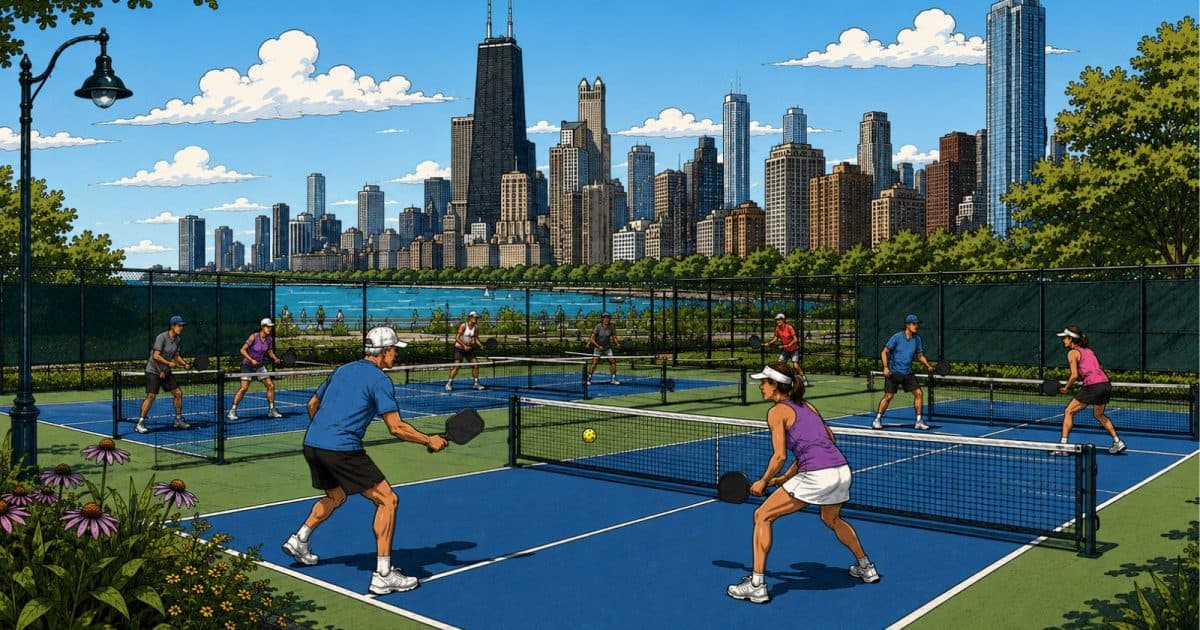
Quick Answer: Pickleball lessons in Chicago run year round, but the season splits hard. Outdoor group clinics fill park courts from May through September, and instruction moves indoors to field houses and converted gyms once the lake wind turns. Book winter indoor sessions early, because indoor court time is the real limiting factor.
A pickleball lesson is paid instruction from a coach, either one on one or in a small group clinic, aimed at fixing something specific rather than just getting you on a court. In Chicago the hard part is rarely finding a coach. It is finding a coach with court time in February.
How do you find pickleball lessons in Chicago?
Start with three sources and work them in parallel: the public park system, private indoor clubs, and independent coaches who rent court time rather than owning it.
Park programming is the cheapest route and the most seasonal. Sessions are posted in blocks, they sell out, and the registration window opens well before the season starts. If you wait until the weather is nice to look for a summer clinic, you are already late.
Private clubs and indoor facilities carry the winter. They run their own clinic calendars, usually tiered by rating, and they tend to hold court time back for members first. Independent coaches are the flexible option: they will often travel to a court you already have access to, which matters a lot in a city where court access is the scarce resource.
The search itself is generic enough that our guide to finding a pickleball coach covers most of the legwork. What follows is what changes in Chicago specifically.
What makes learning pickleball in Chicago different?
The calendar. Chicago gives you roughly five reliable outdoor months and seven months where indoor access decides whether you improve or stall.
That single fact reshapes how you should buy instruction here:
- Learn outdoors in summer, drill indoors in winter. Summer group clinics are cheap and plentiful. Winter is when a private lesson earns its money, because you are paying for scarce court time either way.
- Wind is a real skill. Lakefront and open park courts get honest crosswind. A coach who never adjusts for it is teaching you a game you will not play here.
- Indoor ball flight is different. Indoor balls are lighter with larger holes and they behave differently on a drive. Switching surfaces mid season without adjusting is a common Chicago frustration.
- Gym floors are not court surfaces. Plenty of winter play happens on wood or on multi sport flooring where footing and bounce both change.
- Space is tight. A standard court is 20 feet by 44 feet plus surrounding room, and a gym squeezing courts in will give you less run-off space than you get outdoors.
Should you take a group clinic or a private lesson?
Take a clinic if you are below about a 3.0 and still building basic shapes. Take a private if you have one specific thing that is losing you points.
Group clinics are efficient for fundamentals because most beginners are making the same four mistakes and a coach can fix them all at once. They are also how you meet the people you will end up playing with, which in a city this size is worth as much as the instruction.
Privates make sense once your problem is personal. A serve that floats, a backhand that collapses under pace, a habit of drifting into the kitchen. Those need somebody watching only you. The full tradeoff is laid out in our comparison of clinics and open play, and if you are trying to budget the whole thing, how many lessons it actually takes to improve is the honest answer most coaches will not volunteer.
What should you ask a Chicago coach before booking?
Ask where the lesson happens and who supplies the court, because in Chicago that answer changes the price more than the coach’s rate does.
Then ask the normal things: what rating range the session is built for, how many students per court, whether balls and loaner paddles are provided, and what the cancellation policy is when a park court is unplayable. That last one is not a small question here. Rain, wind, and early season court conditions cancel more outdoor sessions than people expect.
Also ask what happens after the lesson. A coach who sends you off with two drills you can run on your own is worth more than one who fills the hour with rallying. You are buying homework as much as instruction.
Where do you play between lessons?
Wherever you can get on, which in peak season means having a backup plan. Public court demand in the city runs well ahead of supply during summer evenings, and a lesson you cannot practice after is a lesson that fades in a week.
Open play is the cheapest reps you will ever get, and learning the etiquette of paddle stacking and rotation is its own small skill. Our guide to handling court wait times covers the systems you will run into and how to read them fast.
Winter, the answer is usually a membership somewhere. It costs more than the summer version of this sport and it is the only way most Chicago players hold their level through the cold months.
FAQ
When should I book winter pickleball lessons in Chicago? Before winter. Indoor clinic calendars and court blocks are typically set weeks ahead of the season, and the popular rating tiers fill first.
Do I need my own paddle for a first lesson? Usually not. Most coaches and clinics keep loaner paddles for beginners. Confirm when you book so you are not buying gear before you know what you like.
What rating do I need to join a Chicago clinic? Most clinics are grouped in bands like beginner, 2.5 to 3.0, and 3.5 and up. If you have never played, look for a session explicitly labeled beginner or intro rather than guessing at a number.
Are outdoor lessons available all year in Chicago? Not reliably. Outdoor instruction is a roughly May through September proposition, with shoulder weeks on either end that depend entirely on the weather.
Is the indoor ball really different? Yes. Indoor balls are lighter and have fewer, larger holes, so they carry less and play softer. Most Chicago players own both and switch with the season.
How many people should be in a group clinic? Four to eight per court is common. Above eight per court you are watching more than you are hitting.
Can a coach come to my court? Many independent coaches will, if you have access to a court and the venue allows outside instruction. Ask the venue before you book the coach.
Do lessons help if I only play socially? They do, and usually faster than social players expect. Two or three sessions on serve, return, and the third shot will change the outcome of your regular games more than a new paddle will.
Ready to book something? Browse the coaches and programs in our pickleball camps and clinics listings, or go straight to individual instructors through the pickleball coaches directory. If your real problem is winter court access rather than instruction, the clubs in your part of Chicagoland are the place to start.
Written by the Pickler Junction Team.