Does Compression Clothing Help Pickleball Players?
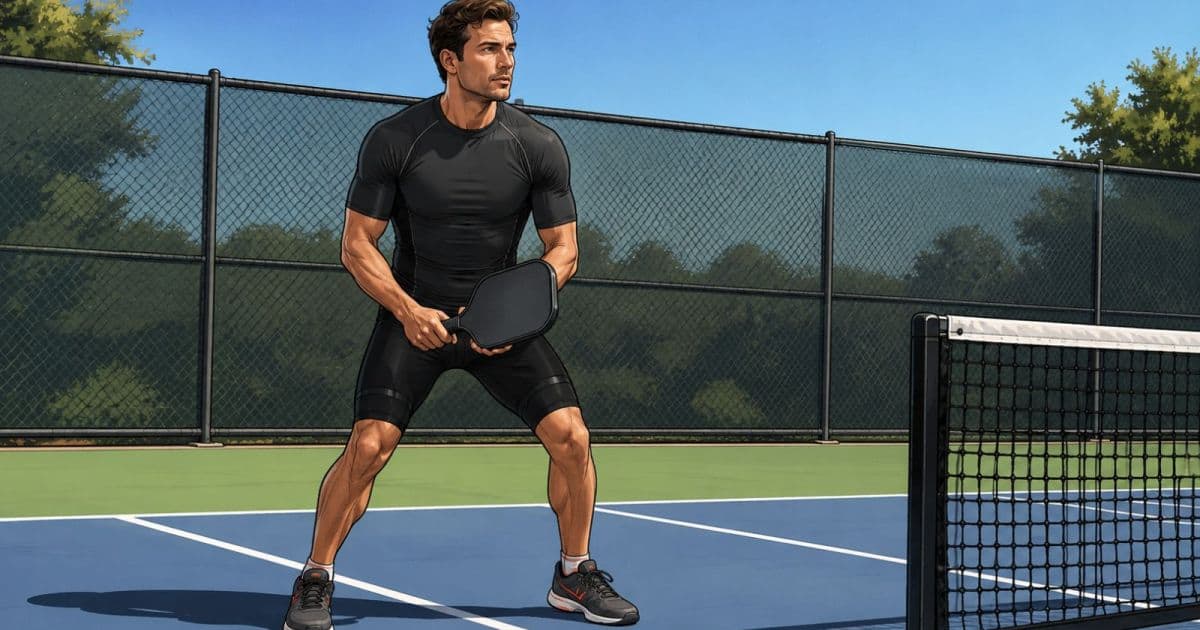
Quick Answer: Compression clothing pickleball benefits are real and modest. Research reviews find little evidence it improves performance during play, and small but consistent benefits for recovery and perceived soreness afterward. For most healthy players the main cost is the price tag. If it feels good, the comfort is legitimate. It is not equipment that will change your game.
Compression wear is the rare gear category where the honest answer is “a little, mostly afterward,” and that answer is worth more than the marketing version.
What does the research actually say?
Systematic reviews of compression garment studies, and there are many, sort the claims into three piles with unusual consistency.
Performance during exercise: mostly no measurable effect. Reviews across sports find the majority of studies show no meaningful improvement in strength, power, or endurance while wearing compression, with scattered positive findings that do not replicate reliably.
Recovery afterward: small, likely real benefits. Meta analyses find compression modestly improves recovery of muscle function and reduces delayed onset soreness after hard exercise, with proposed mechanisms including improved local blood flow and reduced muscle oscillation. The effect sizes are small, the direction is consistent.
Perceived comfort and soreness: the most reliable finding. People wearing compression report feeling better, less sore, more supported, and that perception persists across studies even where objective measures barely move. The studies in these reviews generally did not report harm in healthy participants, which makes it a reasonable thing to try. That is not the same as saying compression is right for everyone. Garments that are too tight, or worn by people with circulation problems, diabetes, neuropathy, varicose veins, lymphedema, or fragile or broken skin, can restrict blood flow or irritate the skin. If any of that applies to you, ask your doctor before wearing compression to play.
For a recreational pickleball player, translate it this way: nothing in the research says compression wins you Tuesday’s games, and a modest case says your legs may feel better Wednesday.
Where might compression actually earn a place in a pickleball bag?
In the recovery window and the comfort column, with a few specific use cases leading:
- After long play days, tournaments and multi session days, where the recovery evidence is most relevant.
- Calf sleeves or compression socks for players prone to calf tightness, the most common lower leg complaint in a lunge heavy sport.
- Knee and thigh coverage for players who like the held together feeling during lateral movement. The proprioceptive comfort is subjective and genuinely reported.
- Warmth, since compression layers under shorts or a skort are a practical cold morning base.
- Travel days, where compression socks on long drives or flights to tournaments borrow a use case with its own support.
Note what is absent from the list: anything promising more power, faster hands, or fewer losses. The garments that most plausibly help a pickleball player are the below the knee ones, because calves do this sport’s stop start work.
Compression arm sleeves deserve one disambiguation, since they share a silhouette with the sun sleeves covered in our guide to why players wear long sleeves in the heat: the tight version is muscle support with modest evidence, the loose version is UV protection with strong evidence, and buyers regularly conflate the two.
What should you not expect compression to do?
Prevent injury, fix pain, or substitute for the boring things that actually work. The evidence supports none of those jobs.
No review shows compression meaningfully prevents strains or sprains, and a tight sleeve over a complaining knee is a sensation, not a treatment. Persistent pain is a professional’s question. Meanwhile the interventions with real evidence behind them remain the unglamorous ones: warming up, sensible session loads, and the cooldown work covered in our guide to the best stretches after playing pickleball. Compression is, at best, a small addition to that stack, never a replacement for it.
The honest mental model: compression is a comfort technology with a modest recovery bonus. Priced like that, it is a fine purchase. Priced like performance equipment, it is a disappointment on schedule.
How should you try it if you are curious?
Cheaply and specifically. Pick the one complaint you actually have, buy the one garment that addresses it, and run a two week comparison against your normal kit.
Calf tightness after long sessions is the classic starter case: a pair of calf sleeves, worn during play or for a few hours after, judged on how your legs feel the next morning. Sizing matters more than brand tier, since compression that is loose does nothing and compression that is painful is wrong, and the size charts are there to be actually measured against, not guessed at.
Run the classic self test, calf sleeves on tournament days and nothing on Tuesdays, and the difference that shows up is next day, not same day, which is exactly where the literature says it should be. A 20 dollar experiment that agrees with the meta analyses is tidier than these things usually go.
If the experiment reads as a wash, you have lost little. The fit and comfort baseline for everything else you wear on court, covered in our hub guide to what women wear to play pickleball, matters more than any single specialty garment.
FAQ
Does compression clothing improve pickleball performance? The research says mostly no. Reviews across sports find little reliable evidence of performance gains during play.
Does compression help recovery? Modestly, yes. Meta analyses find small consistent benefits for muscle recovery and reduced soreness after hard exercise, which is the strongest part of the evidence.
Are compression socks good for pickleball? They are the most defensible compression buy: calves do the sport’s stop start work, and lower leg comfort is where users report the most difference.
Can compression prevent injuries? The evidence does not support injury prevention claims. Warmups, sensible load, and conditioning carry that job.
Compression sleeve or sun sleeve for arms? Different products. Tight compression is muscle support with modest evidence; loose UPF sleeves are sun protection with strong evidence. Buy for the job you mean.
Is there any downside to wearing compression? For most healthy players the downsides are cost and over expectation rather than risk. A garment that is too tight, or compression worn with an underlying circulation or skin condition, is a different situation and worth a conversation with your doctor.
How tight should compression be? Snug per the size chart, never painful or circulation pinching. Measured sizing matters more than brand.
Is expensive compression better? Fit beats price. The evidence does not distinguish premium tiers, and a correctly sized mid range garment delivers whatever benefit exists.
Is compression clothing safe for everyone? Not automatically. Most healthy players can wear it without trouble, but compression can be a poor fit for people with circulation conditions, diabetes, neuropathy, varicose veins, lymphedema, or fragile skin, and a garment that is too tight can do more harm than good. Check with your doctor first if any of that describes you.
Trying the experiment? Compression basics show up in our gear and accessories listings, and the pro shops and retailers in our directory can size you against an actual chart instead of a guess.
Written by the Pickler Junction Team.