Can You Play Pickleball While Pregnant?
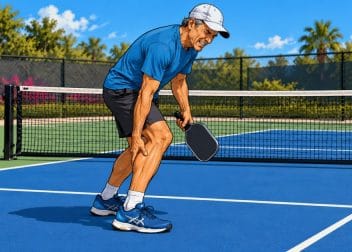
Quick Answer: Whether you can play pickleball while pregnant depends on your own pregnancy, not a general rule. The CDC recommends at least 150 minutes of moderate-intensity aerobic activity a week for healthy pregnancies, but pickleball’s quick lateral movement, hard courts, and fall risk mean the decision belongs to your doctor or midwife.
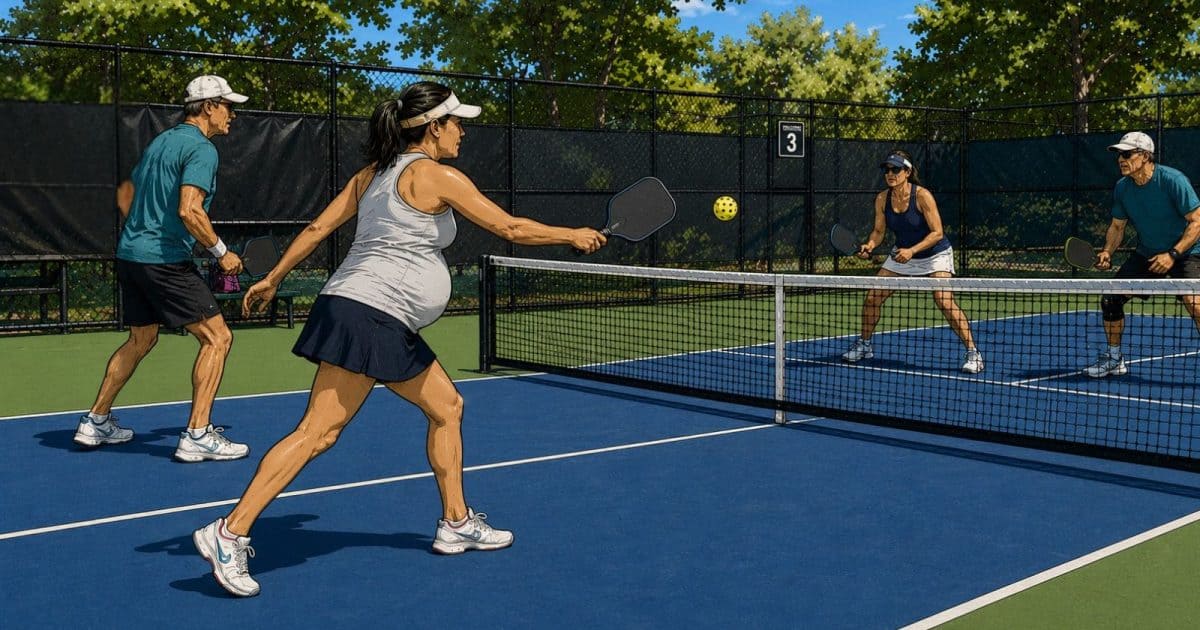
Pickleball is a fast, lateral sport played on a hard surface with another player just a few feet away at the kitchen line. If you are new to the game, the guide to what pickleball is and how to play it covers the basics. That mix of speed, hard flooring, and close quarters is why this call gets made with a clinician who knows your history, not a website.
What the general exercise guidelines say
The Centers for Disease Control and Prevention recommends that pregnant and postpartum women get at least 150 minutes of moderate-intensity aerobic activity a week, such as brisk walking for 30 minutes on 5 days, according to the CDC’s physical activity guidelines. The CDC also advises avoiding activities that require lying flat on your back after the first trimester, since that position can reduce blood flow.
Pickleball sits in a gray area next to that guidance. It qualifies as moderate aerobic activity by most measures, similar to brisk walking or doubles tennis. It also involves quick direction changes, a hard court, and a ball moving at speed toward a shared space. The CDC guidance does not name specific racket or paddle sports, so where pickleball lands for a given pregnancy depends on the person playing it.
The changes in the body that affect play
Several physical shifts happen during pregnancy that a player will notice on court.
- Balance shifts as the center of gravity moves forward. Lateral shuffling and backpedaling change as pregnancy progresses.
- Ligaments loosen. Mayo Clinic notes that hormonal changes relax the ligaments supporting the joints during pregnancy, which raises the risk of joint injury during quick cuts.
- Balance-dependent movement becomes riskier as pregnancy advances. Mayo Clinic advises avoiding exercises that require good balance skills later in pregnancy, since falling carries more consequence than it did before.
- Heat tolerance changes. Mayo Clinic recommends staying cool, wearing loose clothing, drinking plenty of fluids, and taking breaks to avoid overheating during exercise, which matters more on a sunny outdoor court.
- Breathing and perceived effort shift. The same pace on court can feel harder than it did before pregnancy.
Why falling is the central concern
Falling is the concern that separates pickleball from lower risk activities like walking or stationary cycling. Mayo Clinic lists contact sports and other high-fall-risk activities, including soccer, basketball, downhill skiing, and gymnastics, among the activities to avoid during pregnancy. Pickleball is not on that list by name, but it shares the trait that puts those sports there: quick direction changes on a surface where a fall is possible.
Backward movement for an overhead lob is a well documented fall mechanism in pickleball, and it is exactly the movement most affected by a shifting center of gravity. The article on pickleball and fall prevention covers the mechanics in more detail.
Court surface adds another variable. Outdoor courts collect grit that reduces traction, and indoor gym floors can be slick underfoot in a different way.
Questions to bring to your appointment
Walking in with specifics gets a more useful answer than asking whether exercise is fine in general.
Describe the sport accurately. Mention that it involves lateral movement, quick stops, occasional backward steps for lobs, a hard court surface, and other players within a few feet. Say how often you currently play and at what intensity, and whether you played before pregnancy.
Then ask directly what would need to change and which symptoms should stop you immediately. Ask about heat, hydration, and how long a session should run. Ask whether recreational doubles looks different to your provider than competitive singles.
Two people can get two different, equally reasonable answers from their own providers, because the answer depends on a health history no article can see.
What players who continue tend to change
Among people whose clinicians have cleared continued play, common modifications repeat. Doubles instead of singles, so a partner is closer for support. Letting a partner take the lob so there is less backpedaling. Playing indoors or early in the morning to manage heat. Shorter sessions with more breaks. Supportive court shoes rather than running shoes, along with clothing built for the heat; the guide on what women wear to play pickleball has more on that.
Hydration deserves specific attention given the sweat losses a hot court produces. Mayo Clinic’s guidance to drink plenty of fluids applies directly here, and the comparison of sports drinks versus water for pickleball explains when each makes sense.
Frequently asked questions
Is pickleball considered a contact sport? Not officially, but doubles puts four players in a small space, and paddle contact or collisions do happen near the kitchen line. That detail is worth mentioning to your provider.
What symptoms mean stop immediately? According to Mayo Clinic, stop exercising and contact your provider right away if you notice vaginal bleeding, dizziness, chest pain, or fluid leaking from the vagina.
Can you play pickleball while pregnant if you played before? Prior participation is one factor a clinician weighs, since continuing a familiar activity is generally viewed differently than starting a new one. It is still an individual decision made with your own provider.
Is indoor pickleball safer than outdoor during pregnancy? Indoor courts remove heat and sun as variables and offer a more consistent surface underfoot, though some indoor floors can be slicker, which is why supportive shoes matter either way.
Does playing doubles instead of singles reduce the physical demand? Doubles generally means less court to cover per player, since two people share ball retrieval. It does not remove the lateral movement or fall risk, since the court is still shared, hard, and fast near the kitchen line.
What about pickleball after giving birth? Return-to-activity timelines are individual and depend on delivery type and recovery. Pelvic floor readiness matters for a sport with jumping and lunging, which is a conversation for your provider or a pelvic health physical therapist.
Should I wear a support belt to play? Maternity support belts can help with walking comfort. Whether one makes sense for a lateral court sport is a question for your clinician or a physical therapist, not a general rule.
Is pickleball good exercise during pregnancy? It is good exercise generally, as covered in the piece on whether pickleball counts as real exercise. Whether it is the right exercise for your specific pregnancy is a separate, personal question.
This article describes what changes in the body and what to ask, not whether to play. That call belongs to the provider who knows your chart and history. If you want a clinician or physical therapist who understands paddle sports, the Pickler Junction physicians and therapists directory is a place to start looking. This article is general information, not medical advice.
Written by the Pickler Junction Team.