Do You Need a Pickleball Glove?
Quick Answer: A pickleball glove is optional for casual players, but useful if your hands sweat heavily, blister at the base of the fingers, or you play in hot, humid conditions where a dry grip loses its tack within a set. A tacky overgrip solves the same problem for less money and keeps more feel through the paddle handle.
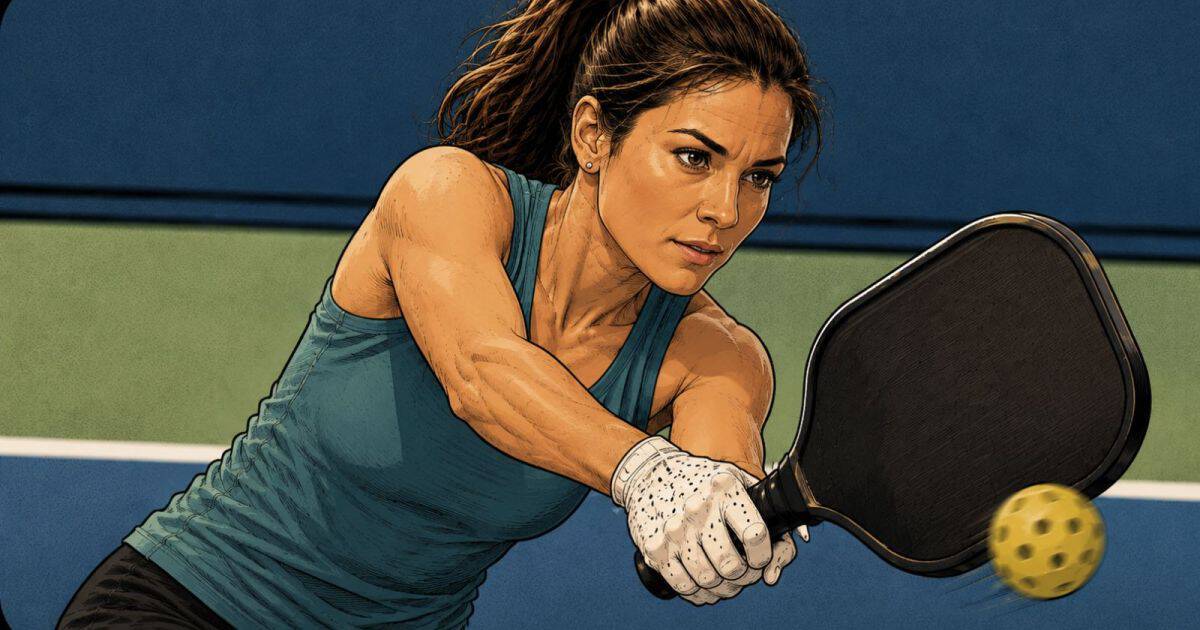
A pickleball glove is a thin, fingerless or half-finger glove worn on the paddle hand to improve grip and prevent blisters. The idea carried over from racquetball and golf, two sports with the same sweaty-palm problem. Whether it is worth adding to your bag comes down to your hands, your climate, and how long your sessions run.
What does a pickleball glove actually do?
A glove puts a consistent, tacky layer between your skin and the paddle handle. That solves two separate problems. The first is slip, where a sweaty palm lets the paddle rotate slightly on contact and shots spray off line. The second is friction, where the same sliding motion rubs a blister at the base of the fingers or in the web of the thumb.
A glove also helps keep grip pressure steady over a long session. A player who squeezes harder late in a match is often reacting to a handle that feels slick, not choosing to grip tighter on purpose. Removing the slip tends to relax the hand, and a relaxed hand produces softer resets and cleaner dinks than a white-knuckle one.
Who needs a pickleball glove?
A glove is not a standard piece of gear the way a paddle or a pair of court shoes is. It solves a specific problem, so it helps to know if that problem applies to you. Consider a glove if any of the following sound familiar:
- You play in heat or humidity where a dry grip loses its tack within 20 minutes or less.
- You blister in the same spot every few sessions, usually at the base of a finger or in the web of the thumb.
- You manage a hand or joint condition where a slightly padded glove reduces how hard you need to squeeze.
- You already own one for golf or racquetball and the feel is familiar.
- Your last game of a long session is noticeably sloppier than your first, which often traces to a tired, overworked grip.
If none of those describe you, a glove is unlikely to change much. Slipping usually comes from a worn-out grip rather than a missing glove, and rewrapping the handle solves it more often than adding a layer on top of the skin. If you are still building out a starter kit, a glove typically is not on the short list of what pickleball equipment beginners need; a paddle, balls, and proper shoes come first.
Glove or overgrip: which should you try first?
Try the overgrip first. It is the cheaper of the two fixes, it takes a couple of minutes to wrap onto a clean handle, and a fresh, tacky overgrip resolves the majority of slip complaints on its own without adding anything between your hand and the paddle.
Move to a glove if the overgrip stops working partway through a session, which is common in high humidity or during back-to-back matches. Some players run both, a fresh overgrip under a lightweight glove, for the sweatiest conditions. A glove costs less than a paddle and more than an overgrip, so it sits in the low-risk range if the overgrip alone is not holding up.
One tradeoff is worth knowing before you buy. A glove dulls some of the feedback that travels through the handle. Players who lean on feel for drop shots and resets sometimes notice and dislike that change. Players who lean on power and consistent contact rarely notice it at all.
What should you look for in a pickleball glove?
Fit comes first. A glove that bunches in the palm creates the exact hot spot it was supposed to prevent. It should sit snug against the skin with no loose fabric where the fingers meet the palm, the same way a properly sized pair of pickleball-specific socks avoids the hot spots that generic athletic socks create inside a court shoe.
After fit, check breathability, since a glove that traps sweat defeats its own purpose, and check the closure, since a wrist strap that loosens mid-point becomes a distraction rather than a help. Half-finger designs are common because they leave the fingertips free for touch shots at the net. Sizing is also hand-specific. Most brands sell a glove for the paddle hand only, so buy for the hand that actually holds the paddle.
How do you care for a glove so it lasts?
Let a glove dry completely between sessions. That means pulling it out of a bag pocket rather than leaving it balled up and damp. A glove that stays wet stiffens, starts to smell, and loses its tack faster than one that gets aired out after every match. Most gloves are hand washable in cool water and should air dry away from direct heat.
The same principle applies to the rest of what you carry. Gear left in a hot car or a sealed bag degrades faster than gear that gets a chance to breathe, which is part of why how you store your paddles matters almost as much as what you paid for them. A bag with a ventilated pocket helps here, and a guide to choosing a pickleball bag covers what else to look for. Wet weather adds its own set of problems for the ball and the court surface, covered separately in a guide to playing pickleball in the rain.
FAQ
Do pro pickleball players wear gloves? Some do and some do not. It tends to track with climate and personal preference rather than skill level, and gloves show up more often at hot, humid tournament stops than at cooler indoor events.
Are pickleball gloves allowed in tournament play? Yes. Section 3 of the 2026 USA Pickleball rulebook covers the court, net, ball, and paddle in detail but does not restrict what a player wears on their hands, so a glove does not create a legality issue.
Is a pickleball glove the same as a golf glove? They are similar, and some players use a golf glove without trouble. Pickleball-specific gloves tend to offer more breathability and shorter fingers to preserve touch on soft shots near the net.
Which hand does the glove go on? The paddle hand. Buy the glove sized for that hand specifically, since most brands sell gloves individually rather than as a matched pair.
Will a glove help with pickleball elbow? Not directly. Elbow pain usually traces to technique, paddle weight, or an oversized grip rather than skin friction, though a glove can reduce how hard a player squeezes the handle, which may ease strain indirectly.
How long does a pickleball glove last? It depends on how often someone plays and how much they sweat. Regular players often replace a glove every few months, and the palm typically wears through before any other part fails.
Can you wear a glove on both hands? You can, though it is uncommon. A glove on the non-paddle hand offers little benefit unless a player is managing a skin condition or a blister on that side too.
Does a glove change grip size? Slightly. A glove adds a small amount of thickness inside the hand, so if a grip already feels a touch large, that is worth factoring in before buying a glove on top of it.
Sorting out a grip setup does not have to be trial and error. Browse the gear and accessories listings in the Pickler Junction directory for gloves, grips, and the rest of what keeps a paddle from slipping.
Written by the Pickler Junction Team.