Best Off-Court Workouts for Pickleball Players: Strength, Agility, and Flexibility
Quick Answer: The best off-court workouts for pickleball players build leg and core strength, lateral agility, and flexibility, the three areas that improve your game and protect you from injury. Focus on squats, lunges, and rows for strength, side shuffles and ladder drills for agility, and hip, calf, and shoulder mobility for flexibility. Two to three short sessions a week is plenty for most players.
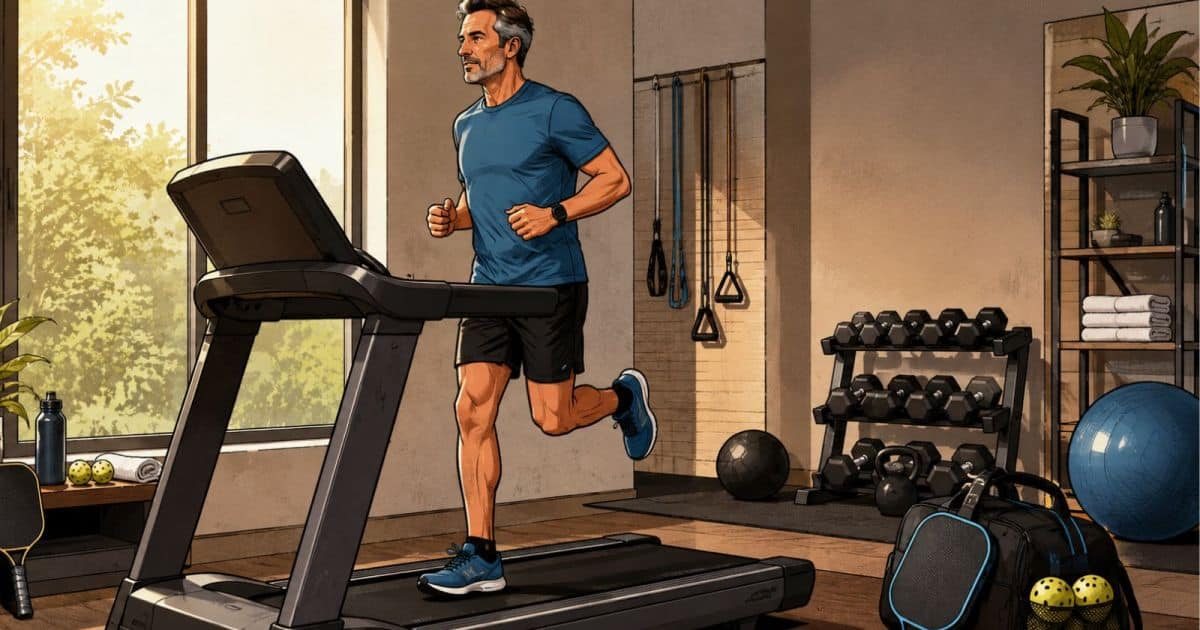
Off-court training is the conditioning you do away from the court to play better and stay healthy. Pickleball is demanding on the legs, core, and shoulders, so a little targeted work goes a long way toward sharper movement and fewer injuries.
Why do pickleball players need off-court workouts?
Because the sport stresses your body in specific, repetitive ways. Quick stops, lateral steps, reaching, and overhead swings load your legs, core, and shoulders. Building capacity in those areas improves performance and lowers injury risk, which matters since common pickleball injuries include strains, sprains, and falls.
What off-court training does for you:
- Strengthens the muscles that power and stabilize your movement
- Improves agility for faster, safer direction changes
- Adds flexibility and mobility to protect joints and extend your reach
- Reduces injury risk by preparing your body for the loads of play
The honest reality: most recreational players never train off the court, which is exactly why so many tweak a calf, knee, or shoulder. A small routine prevents a lot of sidelined weeks.
What strength exercises help pickleball players most?
Lower-body and core moves, plus some pulling for the upper back. You do not need heavy weights. Bodyweight and light resistance build the stability pickleball rewards.
A simple strength menu:
- Squats and lunges for leg power and knee stability
- Glute bridges for hips and posterior chain
- Planks and dead bugs for core control and balance
- Rows or band pull-aparts for the upper back and shoulder health
- Calf raises to protect against Achilles and calf strains
Aim for two short strength sessions a week. Strong legs and core also support balance and bone health, which our guide on pickleball and osteoporosis covers.
What about agility and flexibility?
Train quick feet and keep your joints mobile. Agility work sharpens the exact movements pickleball demands, while flexibility keeps you reaching and recovering without strain.
For agility:
- Side shuffles to mimic lateral court movement
- Agility ladder drills for quick, coordinated footwork
- Split-step practice to react faster off the bounce
- Short sprints and stops to train deceleration
For flexibility and mobility:
- Hip openers for lunging and reaching
- Calf and ankle mobility for push-off and landing
- Shoulder and thoracic mobility for overhead shots
- Hamstring stretches for safe bending and lunging
Do mobility work most days, even briefly. Save deeper static stretching for after play, which our guide on stretches after playing pickleball details, and warm up before you play using our warm-up routine.
Frequently asked questions
How do I get in shape for pickleball? Train legs and core for strength, practice lateral agility drills, and keep your hips, calves, and shoulders mobile. Two to three short sessions a week, plus warm-ups, prepares your body well.
What muscles does pickleball use most? The legs, core, and shoulders carry the most load, along with the forearms. Strengthening the legs and core improves both power and stability on court.
How often should I do off-court workouts? Two to three short sessions per week is enough for most recreational players, combined with mobility work on other days. Consistency matters more than long workouts.
Do I need weights to train for pickleball? No. Bodyweight exercises and light resistance bands build plenty of the stability and strength pickleball rewards. Add weights only if you want to progress further.
Will off-court training prevent injuries? It lowers your risk by preparing muscles and joints for the sport’s demands. Combined with warming up and not overplaying, it is one of the best injury-prevention tools.
What is the single most valuable exercise for players? There is no one answer, but squats and lunges deliver a lot, since strong, stable legs power nearly every pickleball movement and protect the knees.
Build the routine into your week and your game and joints will thank you. Pair it with a proper warm-up and post-play stretches. If you are managing an injury or condition, a physical therapist can tailor a program to you.
For the fundamentals behind it, see why pickleball is genuinely good exercise.
Written by the Pickler Junction Team.
This article is general information, not medical advice. Talk with your doctor or a physical therapist before starting a new exercise program.