The Cheapest Way to Build a Pickleball Court Without Cutting Corners
Quick Answer: The cheapest way to build a pickleball court is to add an acrylic surface and a portable net to an existing concrete slab, garage floor, or barn, which can cost as little as a few hundred to a few thousand dollars. If you need a new surface, converting an existing tennis court (about $5,000 to $20,000) or using modular tiles over a sound slab are the next most affordable routes. The trick is saving on the surface and extras, never on the base or drainage.
Building cheap and building poorly are not the same thing. You can cut real costs on a pickleball court without ending up with a cracked, unplayable surface, as long as you know where it is safe to save. Here is how.
What is the cheapest way to build a pickleball court?
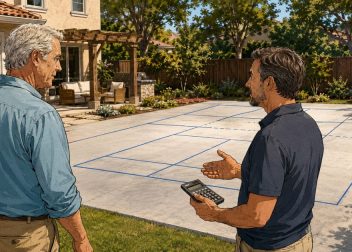
Use a surface you already have. The single biggest cost in any court is the foundation. If you already have a sound, flat slab, you skip the most expensive step entirely.
The cheapest routes, in order:
- Surface an existing slab. Add an acrylic coating and a portable net to an existing concrete pad, garage, or barn floor. The cheapest option by far.
- Convert a tennis court. About $5,000 to $20,000 to turn one into four pickleball courts. See our conversion guide.
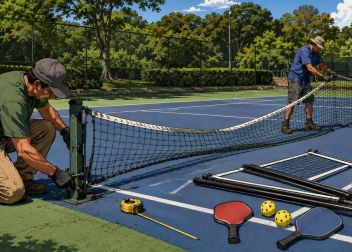
- Modular tiles over a sound slab. Click-together tiles with pre-painted lines, avoiding a full resurface. See our court tiles guide.
- Paint lines on an existing court and drop in a portable net for casual play.
What I tell budget-minded builders is that if you already have concrete, you are most of the way there. The expensive part is the slab, and you have it.
Where can you save, and where can’t you?
Save on extras, never on the base. The key to building cheap without cutting corners is knowing which costs are safe to trim and which will cost you more later if you skimp.
Safe places to save:
- Use an existing slab instead of pouring new.
- Skip premium cushioned coatings for a standard acrylic finish.
- Use a portable net instead of permanent posts at first.
- Add lighting and fencing later, not on day one.
- Do the line painting yourself if you are careful and precise.
Do not cut corners on:
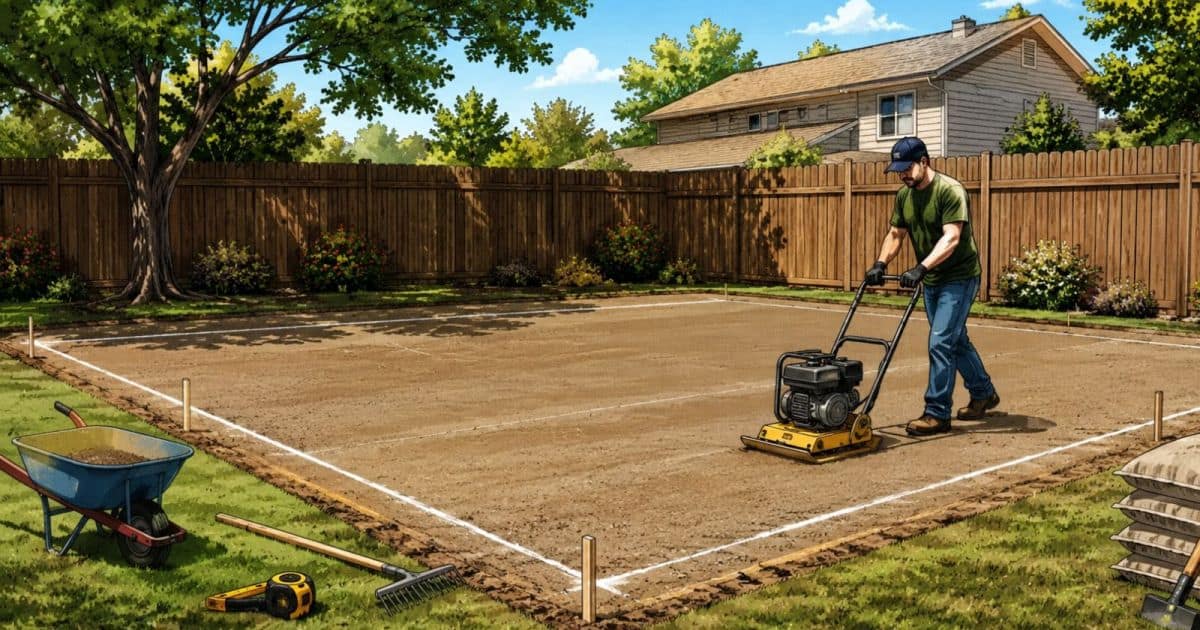
- The base and drainage. A bad foundation cracks and fails, costing far more to fix.
- Surface prep, since coatings fail over a poorly prepped base.
- Proper dimensions, since an off-spec court plays badly.
The honest rule is simple: spend on the foundation and the prep, save on the finishes and extras. For full budgeting, see our guide on the cost to build a court.
What does a budget court actually look like?
A sound slab, an acrylic surface, and a portable net. A genuinely good budget court does not look cheap. It just spends wisely.
A smart budget build includes:
- A sound, level slab (existing or new) with good drainage.
- A quality acrylic surface coating for grip and durability.
- Crisp, regulation lines in contrasting colors.
- A portable net you can upgrade to permanent posts later.
- Add-ons deferred until the budget allows.
This gives you a court that plays well and lasts, at a fraction of a premium build. If you do need a fresh slab, choose your base carefully, as our guide on concrete vs asphalt explains. A court construction contractor can advise on what is safe to save on for your situation.
Frequently asked questions
What is the cheapest way to build a pickleball court? Adding an acrylic surface and a portable net to an existing concrete slab, garage, or barn floor. Skipping the foundation step, which is the biggest cost, makes this the most affordable route.
Can I build a pickleball court for cheap without it failing? Yes, if you save on finishes and extras rather than the base. A sound foundation, good drainage, and proper surface prep are the things you should never skimp on.
Is converting a tennis court a cheap option? Yes. Converting one tennis court into four pickleball courts runs about $5,000 to $20,000, far less than building new, since the base already exists.
Are modular tiles a budget option? They can be, when installed over a sound existing slab. Click-together tiles with pre-painted lines avoid a full resurface, though tiles have their own pros and cons.
Where should I never cut corners? The base, drainage, and surface prep. A poor foundation cracks and fails, and coatings will not last over bad prep, so fixing it later costs far more than doing it right.
Can I paint the lines myself? Yes, if you are careful and precise with measurements and use proper 2-inch lines. DIY line painting is a reasonable way to save on a budget build.
Cheap and well-built can absolutely go together when you spend in the right places. See where the money goes in our cost to build guide, choose a base wisely, and consult a court construction contractor for your site.
For the bigger picture, start with the standard pickleball court dimensions.
Written by the Pickler Junction Team.