Pickleball Skill Levels Explained: What 2.5, 3.0, 3.5, 4.0, and Above Really Mean
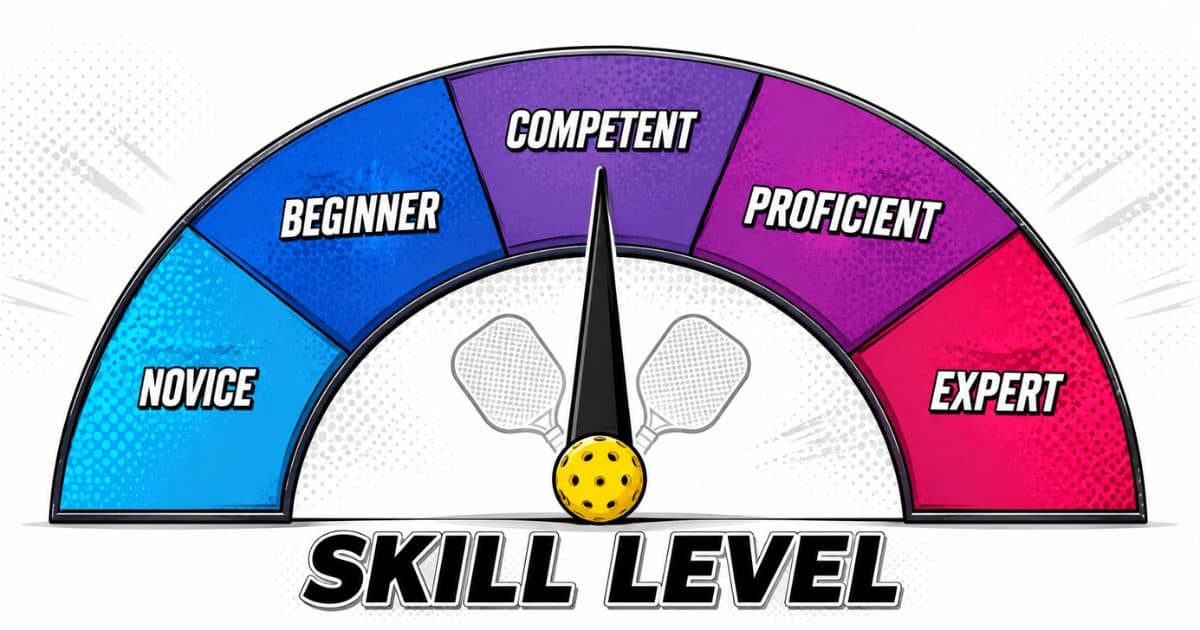
Quick Answer: Pickleball skill levels run on a scale from about 1.0 (brand new) to 5.5 and above (pro), with most recreational players between 3.0 and 4.0. A 2.5 is a true beginner, a 3.0 can sustain short rallies, a 3.5 has improving consistency, a 4.0 plays with control and strategy, and 4.5 to 5.0 are advanced.
Skill ratings tell you, and everyone you play, roughly how good you are, so games and divisions are fair. Here is what each level really means in practice.
What are the pickleball skill levels?
A scale from 1.0 to 5.5 and up. The numbers describe ability in half-point steps, and most players cluster in the middle. Knowing the scale helps you find your place and the right competition.
The levels at a glance:
- 1.0 to 2.0: brand new, learning rules, scoring, and basic contact.
- 2.5: beginner, can play but with limited consistency and rallies.
- 3.0: developing, sustains short rallies, learning the kitchen and scoring.
- 3.5: improving consistency, dinks and third shots, better court position.
- 4.0: dependable strokes, control, strategy, and stacking.
- 4.5: advanced, varied shots, spin, anticipation, few errors.
- 5.0 to 5.5+: highly skilled to tournament and professional level.
What I tell players is that the jump from 3.0 to 3.5 to 4.0 is where most of the journey happens, and it is mostly about consistency and decision-making, not power.
What does each level mean in practice?
Consistency and strategy separate the levels. The numbers map to specific abilities. Here is what actually changes as you climb.
The practical differences:
- 2.5: can serve and return, but rallies are short and errors frequent.
- 3.0: keeps the ball in play longer, knows the rules, starting to dink.
- 3.5: more consistent, uses the third shot drop, moves to the kitchen with purpose.
- 4.0: controls pace and placement, plays strategically, communicates in doubles.
- 4.5 and up: mixes spin and speed, anticipates well, rarely beats themselves.
The pattern is clear: lower levels lose points on unforced errors, while higher levels force you to earn every point. Improving is mostly about reducing your own mistakes.
How do these ratings get used?
To group players fairly. Skill levels are the backbone of organized play, making sure you compete against people near your ability rather than getting crushed or coasting.
Where they apply:
- Tournaments, which run divisions by skill (often combined with age).
- Leagues and ladders, grouping similar players. See ladder leagues.
- Open play sessions, often split by level. See open play.
- Finding partners, since players seek others at their level.
- Rating systems, like self-rating, UTPR, and DUPR.
There are two ways to land on a number: estimate it yourself or earn it through results. For self-assessment, see our guide on how to self-rate, and for the algorithmic system, our guide on what a DUPR rating is. To find play at your level, browse our clubs directory.
Frequently asked questions
What are the pickleball skill levels? They run from about 1.0 (brand new) to 5.5 and above (pro), in half-point steps. Most recreational players are 3.0 to 4.0, with 2.5 a beginner and 4.5 to 5.0 advanced.
What is a 3.5 pickleball player? A 3.5 has improving consistency, can dink and use the third shot drop, moves to the kitchen with purpose, and makes fewer unforced errors than a 3.0. It is a solid intermediate level.
What is the difference between a 3.0 and a 4.0? A 3.0 sustains short rallies and knows the basics, while a 4.0 plays with control, placement, and strategy, communicates well in doubles, and forces opponents to earn points rather than gifting them.
What level is a beginner in pickleball? A true beginner is around 1.0 to 2.5. A 2.5 can serve, return, and play, but with limited consistency and short rallies. Most new players progress out of this range fairly quickly.
What is a good pickleball rating? It depends on your goals, but 3.5 to 4.0 is a strong recreational level that most dedicated players reach. 4.5 and above is advanced, and 5.0 to 5.5+ approaches tournament and pro play.
How do I know my skill level? You can self-rate using level descriptions, get evaluated by a coach, or earn an objective rating through match results with a system like DUPR. See our self-rating and DUPR guides for how.
Skill levels are the language of organized pickleball, so knowing yours helps you find fair, fun games. Figure out your number with our guides on how to self-rate and DUPR ratings, and find play at your level in our clubs directory.
Written by the Pickler Junction Team.