What Are Rally Scoring Rules in Pickleball?
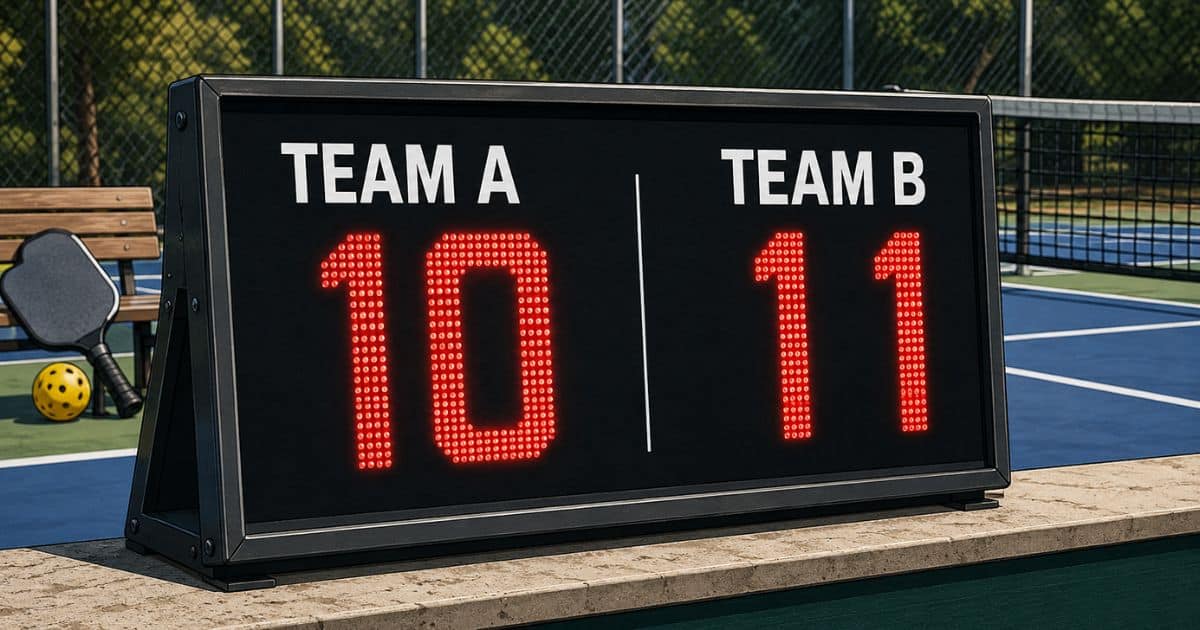
Quick Answer: Rally scoring in pickleball awards a point on every rally, no matter who served. Whoever wins the rally scores. It is faster and more predictable than traditional side-out scoring, where only the serving team can score. Rally scoring shows up mostly in pro team events and some leagues, not standard rec and tournament play.
Scoring is where pickleball confuses new players the most, and rally scoring adds another layer. Rally scoring is a format where the winner of each rally earns a point, so every ball matters. It borrows from sports like volleyball, and it changes the rhythm of a game in a big way.
How does rally scoring work in pickleball?
Every rally ends in a point for someone. If your team wins the rally, you score, whether you served or not. There is no such thing as a side-out that gives the ball away without any points changing.
That single change speeds everything up. In a rally-scoring game, points come steadily, so matches finish on a more predictable clock. Many rally-scoring formats play games to 21 and require a win by 2, though the exact target varies by event, so always check the rules for the game you are entering.
- A point is scored on every rally, by either team.
- Games often go to 21, win by 2, but targets differ by format.
- Play moves faster and finishes on a tighter schedule.
- Serving still rotates, but losing a rally on serve does not just yield a side-out, it gives the other team a point.
How is rally scoring different from side-out scoring?
Side-out scoring only lets the serving team score. Traditional pickleball uses side-out scoring, where you must be serving to earn a point, games go to 11, and you win by 2. If the serving team loses the rally, the result is a side-out, meaning the serve passes over with no point awarded.
Here is the core contrast in plain terms:
- Side-out scoring: only the server scores, games to 11, win by 2.
- Rally scoring: anyone can score every rally, games often to 21, win by 2.
I coach newer players on side-out scoring first, because it is still the standard for most rec sessions and sanctioned tournaments. Rally scoring is easier to follow, but you will meet side-out scoring far more often on a normal court. If the whole three-number serve call still feels fuzzy, the walkthrough in how pickleball scoring works clears it up.
Where is rally scoring actually used?
Mostly in pro team play and some organized leagues. Major League Pickleball has used rally scoring to speed up its team matches and fit them into a broadcast window, and various rec leagues adopt it to keep sessions on time. You are unlikely to see it as the default in a standard USA Pickleball sanctioned singles or doubles bracket.
Formats change season to season, so treat any specific number as something to confirm rather than memorize. The safe rule is this. Before a league night or an event, ask whether you are playing rally or side-out, and to what number. Two minutes of asking saves a lot of mid-game confusion. If you want the bigger picture on team play, see what Major League Pickleball is.
Why do some events prefer rally scoring?
Time and TV. Rally scoring makes match length predictable, which matters when you are running a packed tournament schedule or broadcasting to a set slot. Because a point lands on every rally, there are no long stretches of side-outs with the score frozen.
There are trade-offs. Some purists feel side-out scoring rewards the discipline of holding serve and grinding out points, and that rally scoring can make a game feel more like a sprint. Both camps have a point. The format you prefer often depends on whether you value tradition or a faster clock. Either way, knowing what score you need to win under each system keeps you from arguing at 10-10 or 20-20.
FAQ
What is rally scoring in pickleball?
Rally scoring awards a point to the winner of every rally, regardless of who served. It differs from traditional side-out scoring, where only the serving team can score.
Is pickleball rally scoring or side-out scoring?
Standard rec and sanctioned tournament play uses side-out scoring to 11, win by 2. Rally scoring appears in some pro team events and leagues, so it depends on where you play.
What number do rally scoring games go to?
Many rally-scoring formats play to 21, win by 2, but the target varies by event and season. Always confirm the number before you start, because it is not fixed across all leagues.
Does Major League Pickleball use rally scoring?
Major League Pickleball has used rally scoring to speed up its team matches. Specific rules shift by season, so check the current MLP format if you are following or playing in it.
Why is side-out scoring still the standard?
It is the traditional format most players learn, and USA Pickleball sanctioned events are built around it. Many players feel it rewards the skill of holding serve.
Is rally scoring easier for beginners?
In one way, yes. A point on every rally is simpler to track than side-outs and second servers. Still, most beginners should learn side-out scoring first, since that is what they will play most.
Can you switch a rec game to rally scoring?
Sure. Rally scoring is a great way to keep casual games moving and on schedule. Just agree on the target score and the win-by-2 rule before you serve.
Scoring is only the start. Browse the coaching and clinics categories in the Pickler Junction directory for instructors who can drill both formats until the call becomes second nature.
Written by the Pickler Junction Team.