
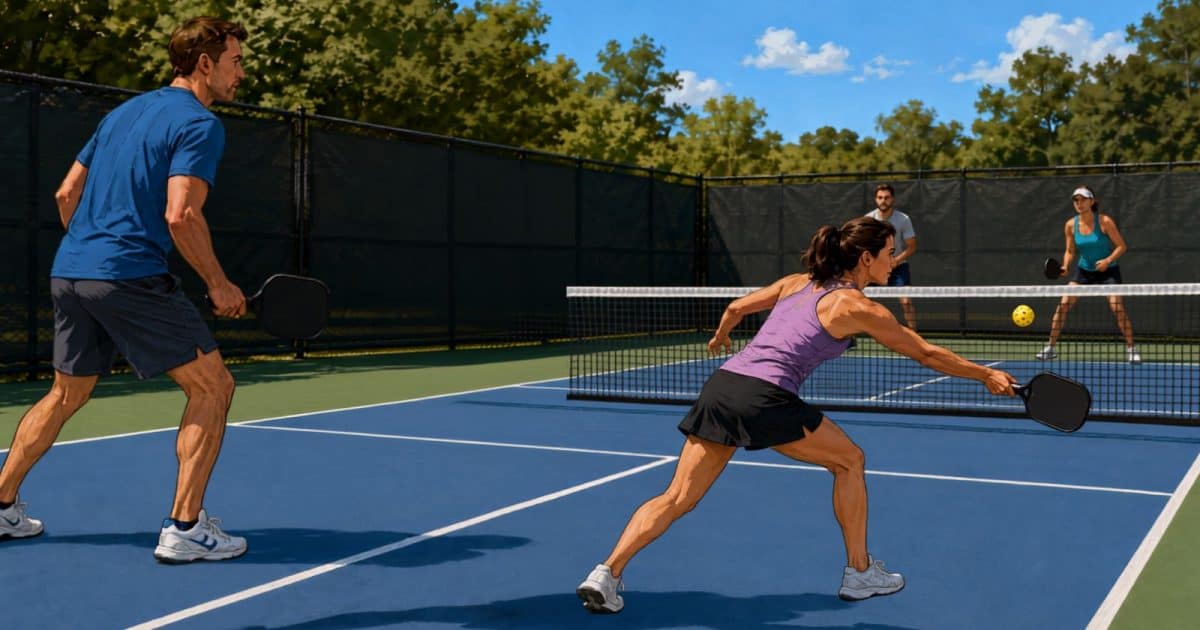
What Is the Double Bounce Rule in Pickleball
Quick Answer: The double bounce rule, more accurately called the two-bounce rule, says the ball must bounce once on each side before anyone can hit it out of the air. The receiving team must let the serve bounce before returning, and the serving team must let that return bounce before their next shot. After those two bounces, either team may volley. It exists to make rallies longer and fairer.
The two-bounce rule is one of the first things every new player learns, and it shapes the early part of every point. “Double bounce” is the common nickname, though the ball does not bounce twice in the same spot. It bounces once on each side.
What is the two-bounce rule?
One bounce on each side before any volley. After the serve, two things must happen before the ball can be hit out of the air.
The sequence:
- The serve must bounce once on the receiving side before it is returned.
- The return must bounce once on the serving side before that team hits it.
- After those two bounces, either team may volley (hit the ball in the air) or play it off a bounce.
So the serve is hit, it bounces, the return is hit, it bounces, and only then does normal play with volleys begin. If a team volleys before both bounces have happened, it is a fault and they lose the rally.
Why does pickleball have the two-bounce rule?
To prevent a serve-and-volley power game. Without it, the serving team could rush the net and smash every return out of the air, making the serve far too dominant. The two-bounce rule forces both teams to play a groundstroke first, which evens things out.
What it accomplishes:
- Longer, more interesting rallies instead of quick serve-and-smash points.
- A fairer start, since the serving team cannot immediately attack at the net.
- A natural path to the kitchen line, since both teams hit from deeper first.
- A bigger role for the soft game, like the third shot drop.
Honestly, this one rule is a big reason pickleball rallies are fun to watch and play. It keeps power in check and rewards placement and strategy.
How does the two-bounce rule affect strategy?
It sets up the race to the kitchen. Because the serving team must let the return bounce, they usually hit their third shot from near the baseline, then try to move up. That third shot, often a drop, is one of the most important in the game.
How it shapes the point:
- The returning team gets to the kitchen first, since they can move up after returning.
- The serving team plays a third shot (drop or drive) to neutralize and advance.
- Both teams aim to reach the kitchen line, where points are won.
This is exactly why the third shot drop matters so much. For that skill, see our guide to the third shot drop, and for the full beginner ruleset, our 5 basic rules of pickleball.
Frequently asked questions
What is the double bounce rule in pickleball? It is the two-bounce rule: the ball must bounce once on each side (the serve, then the return) before anyone can volley. After those two bounces, either team may hit the ball in the air.
Why is it called the two-bounce rule? Because the ball must bounce once on the receiving side and once on the serving side before volleys are allowed. “Double bounce” is a common nickname, though the bounces happen on opposite sides.
Does the serve have to bounce? Yes. The receiving team must let the serve bounce once before returning it. Volleying a serve is a fault.
Does the return have to bounce? Yes. The serving team must let the return bounce once before hitting their next shot. After that, volleys are allowed.
Why does pickleball have this rule? To prevent a serve-and-volley power game, create longer rallies, and give both teams a fair start before net play begins.
When can you start volleying? After the two required bounces (the serve and the return), either team may volley or play the ball off a bounce for the rest of the rally.
The two-bounce rule is the launchpad for every point, which is why the third shot matters so much. Master it with our third shot drop guide, and get the rest of the fundamentals in our 5 basic rules of pickleball. For hands-on help, browse our coaches and clinics directory.
Written by the Pickler Junction Team.