USA Pickleball’s New Spin Test: What It Means for Your Paddle
Quick Answer: USA Pickleball’s new spin test, in effect October 1, 2026, certifies new paddles by measuring how fast the ball actually spins off the face, with a limit of 2,100 revolutions per minute (RPM). It replaces the old upper limits on surface roughness and friction, which are now recorded but no longer used as the spin cap. Paddles approved before October 1 do not need to be replaced, because certified paddles must meet the standards in effect when they were approved. The 2,100 RPM ceiling matches UPA-A’s limit, but the two certifications are still separate, so check the exact model on the official approved list before sanctioned play.
Pickleball paddles have changed enormously in the past few years. New cores, surface materials, and manufacturing techniques have produced paddles capable of generating more power and spin than earlier models. Along the way, equipment testing has struggled to keep up.
On October 1, USA Pickleball introduced a new spin-rate standard that changes how paddles are evaluated for certification. Instead of relying on how rough or grippy a paddle’s surface is, the organization will now measure how much spin the paddle actually produces.
The new limit is 2,100 revolutions per minute (RPM).
For players, the immediate question is whether a paddle they already own is still approved. In most cases, the answer is yes. But the change could influence the paddles available in the future, and it represents an important shift in how the sport regulates equipment.
The Problem With the Old Test
For years, USA Pickleball used two measurements to help regulate paddle spin: surface roughness and coefficient of friction.
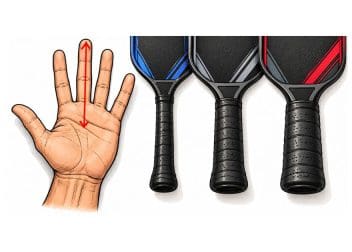
Surface roughness measures the texture of the paddle face. Coefficient of friction measures how much resistance the surface creates when something moves against it. Both were intended to help limit how much spin a paddle could generate.
The reasoning was straightforward. A rougher, grippier surface could generally create more spin, so limiting those properties offered a way to regulate paddle performance. The guide to how paddle texture creates spin explains that relationship.
But paddle technology became more complicated.
Manufacturers developed new surfaces and constructions that could generate considerable spin without necessarily exceeding the existing roughness or friction limits. At the same time, some textured surfaces could exceed those limits without producing unusually high spin.
The relationship between surface texture and actual ball rotation was no longer reliable enough to serve as the primary standard.
The new test addresses that problem by measuring the result rather than relying on the characteristics of the paddle face.
Inside the New Spin Test
USA Pickleball developed the testing system with Image Systems, a company specializing in high-speed motion analysis.
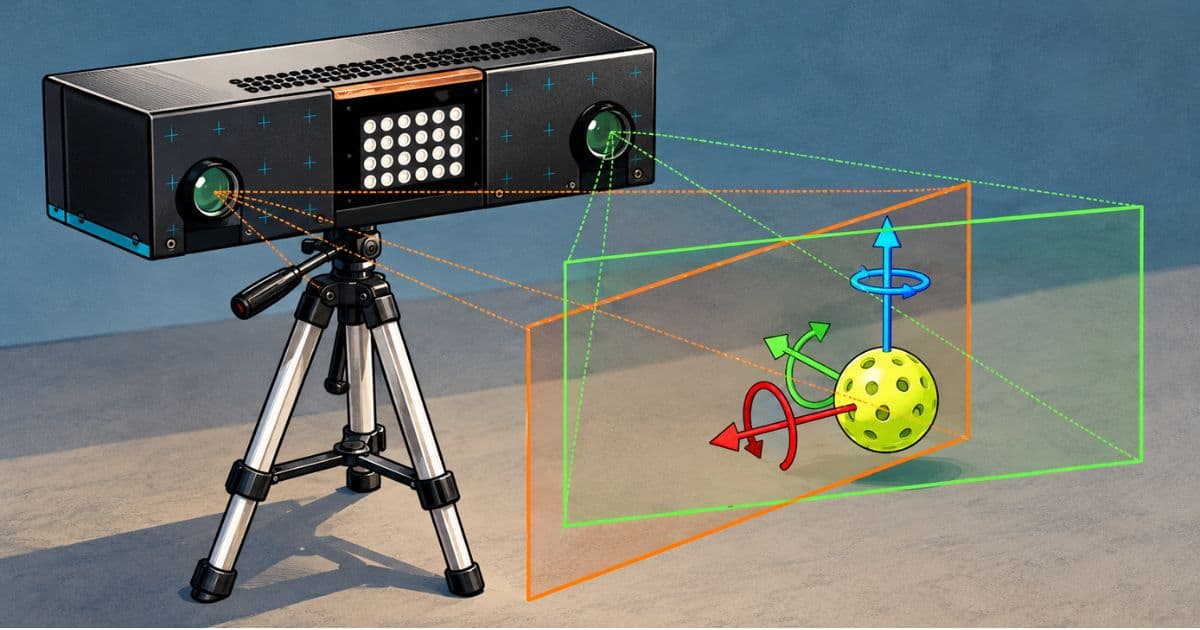
The system uses two high-speed cameras and specialized software to measure how quickly a ball rotates after contact with the paddle. Instead of having someone manually count rotations from video footage, the software calculates the spin rate automatically.
A specially developed test ball is used to help make the measurements consistent.
The result is expressed in RPM, or revolutions per minute. A measurement of 2,100 RPM means the ball is rotating at a rate equivalent to 2,100 complete revolutions in one minute.
Beginning October 1, 2026, paddles submitted for new USA Pickleball certification must produce no more than 2,100 RPM under the organization’s testing procedure.
The previous upper limits for surface roughness and coefficient of friction have been replaced with measurements of record. Those properties can still be measured and documented, but they no longer serve as the primary upper-limit tests for spin.
USA Pickleball says the new system should provide more consistent results while reducing differences caused by testing operators.
Paddles That Are Already Approved
This is probably the most important part of the change for players.
Paddles that received USA Pickleball certification before October 1 are not automatically required to pass the new spin test.
USA Pickleball has stated that certified paddles must comply with the standards in effect when they were approved. That means a paddle properly certified under the previous system does not suddenly become illegal simply because the testing method has changed.
There is no general requirement to replace an existing approved paddle because of the new spin limit.
That does not mean an approved paddle can never lose its certification for other reasons. USA Pickleball can still take compliance action when appropriate. The new spin test itself, however, does not automatically cancel earlier approvals.
Players entering sanctioned tournaments should continue checking the official USA Pickleball Approved Paddle List to confirm that their particular model remains approved.
Paddles Could Play Differently
The new rule may change how paddles play over time, and this may be the most interesting long-term consequence.
Under the previous system, manufacturers had to work within limits on surface texture and friction. Now they have more freedom to experiment with those characteristics, provided the finished paddle stays within the spin-rate limit.
That could encourage new surface designs, including textures that are more durable or that maintain their performance longer.
It could also allow some paddles to generate more spin than designs constrained by the previous roughness requirements.
But a 2,100 RPM certification limit does not mean every player using that paddle will produce 2,100 RPM.
Spin depends on several factors, including swing speed, paddle angle, contact quality, and technique. The laboratory test measures performance under standardized conditions. It does not predict exactly how much spin an individual player will generate on the court.
A paddle capable of producing more spin may make certain shots easier for someone who already uses good topspin or slice technique. It will not automatically give those shots to a player who has not developed the necessary mechanics. The guide to topspin in pickleball covers the technique side.
And more spin is not necessarily better for every player. Control, weight, balance, feel, and comfort remain important considerations when choosing a paddle.
Two Certification Systems Remain
The change also brings USA Pickleball closer to the approach already used by UPA-A, the equipment certification organization associated with the professional PPA Tour and Major League Pickleball.
UPA-A has been using a 2,100 RPM spin limit, so the two organizations now share the same numerical ceiling for spin.
That is significant because the organizations previously evaluated spin differently. A paddle could satisfy one organization’s approach while failing the other’s.
However, sharing a spin limit does not make the certifications interchangeable.
USA Pickleball approval remains important for events requiring USAP-approved equipment, including sanctioned amateur tournaments. UPA-A certification applies to professional competitions operating under its rules.
The organizations also have other equipment requirements and testing procedures that may differ. A paddle meeting the spin standard for one organization is not automatically certified by the other.
Players who compete should check the equipment requirements for their particular event rather than assuming that either approval mark is sufficient.
Buying Your Next Paddle
For most players, there is no immediate reason to change anything.
An existing approved paddle can continue to be used, provided it remains on the approved list and meets the requirements of the event or facility where it is being used.
When shopping for a new paddle, the spin-rate change is another reason to pay attention to certification rather than relying entirely on marketing claims.
A manufacturer may advertise exceptional spin, a new textured surface, or technology designed to increase ball rotation. Those features may be appealing, but the official approval status matters if the paddle will be used in sanctioned competition.
It is also important to check the exact model and version. Paddles with similar names can have different constructions or certification histories.
The USA Pickleball Approved Paddle List remains the most reliable starting point. The guide to what USA Pickleball approved means for paddles explains how to check a model.
Players should also remember that a spin rating is only one measure of paddle performance. A high-spin paddle may be excellent for one playing style and less suitable for another. The ability to control depth, placement, pace, and touch is still far more important than chasing the highest possible RPM.
The Debate Over 2,100 RPM
Whether 2,100 RPM is the right limit is likely to remain part of the equipment discussion.
The new standard makes the testing process more directly related to actual spin performance, but choosing a maximum acceptable spin rate is a separate decision.
A limit that is too restrictive could unnecessarily constrain paddle development. One that is too generous could allow equipment to change the character of the game in ways players and governing organizations may not want.
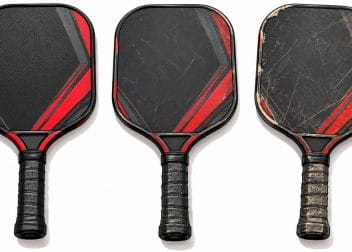
There is also the question of how paddles perform as they age. Surface materials can wear, and some paddle constructions may change with use. A paddle’s performance when new does not necessarily describe its performance months later.
USA Pickleball has said it will monitor the implementation and impact of the new testing standard over the next 12 months.
That makes October 1 an important starting point rather than necessarily the final word on how spin will be regulated.
Frequently Asked Questions
Is my paddle still legal after USA Pickleball’s new spin test?
In most cases, yes. Paddles certified before October 1, 2026 must comply with the standards in effect when they were approved, so the new spin test does not automatically cancel earlier approvals. Check the USA Pickleball Approved Paddle List to confirm your exact model is still listed.
What is the USA Pickleball spin limit for paddles?
Paddles submitted for new USA Pickleball certification from October 1, 2026 must produce no more than 2,100 revolutions per minute under the organization’s testing procedure.
How does USA Pickleball measure paddle spin?
The system, developed with Image Systems, uses two high-speed cameras and software that calculates how fast a specially developed test ball rotates after contact with the paddle.
Are surface roughness and friction still tested?
They can still be measured and documented as measurements of record, but they no longer serve as the upper-limit tests for spin.
Do USA Pickleball and UPA-A use the same spin limit?
Both now use a 2,100 RPM ceiling, but the certifications are not interchangeable. A paddle that meets one organization’s spin standard is not automatically certified by the other, so check the requirements for your event.
Will a paddle certified at 2,100 RPM give me more spin?
Not automatically. The limit describes performance under standardized laboratory conditions. The spin you actually produce depends on swing speed, paddle angle, contact quality, and technique.
Will USA Pickleball change the spin limit again?
USA Pickleball has said it will monitor the implementation and impact of the new testing standard over the next 12 months.
Final Thoughts
USA Pickleball’s new spin test is a meaningful change in equipment certification, even though most players will notice nothing different when they step onto the court.
The organization is moving away from using surface texture as a substitute for spin and toward measuring the actual rotation a paddle produces. That should provide a more direct way to evaluate increasingly sophisticated paddle designs.
For manufacturers, the change creates new opportunities to develop surfaces and constructions while working within a defined spin limit.
For players, the immediate message is much simpler. An existing approved paddle does not need to be replaced because the test has changed. Anyone buying a new paddle for sanctioned competition should confirm that the exact model appears on the appropriate approved list.
The technology used to make paddles will continue to evolve, and equipment standards will have to evolve with it.
The new spin test is one more step toward making sure the rules measure what paddles actually do. When it is time for a new paddle, the Pickler Junction gear and accessories directory lists pro shops and retailers.
Written by the Pickler Junction Team.