How Many Holes Does a Pickleball Have?
Quick Answer: A pickleball has between 26 and 40 circular holes, per USA Pickleball’s ball specifications. Outdoor balls typically use 40 smaller holes for stability in wind, while indoor balls use around 26 larger holes for a softer bounce. Hole count changes flight and durability, not whether the ball is legal for sanctioned play.
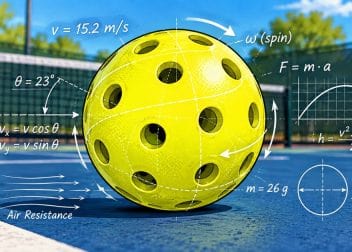
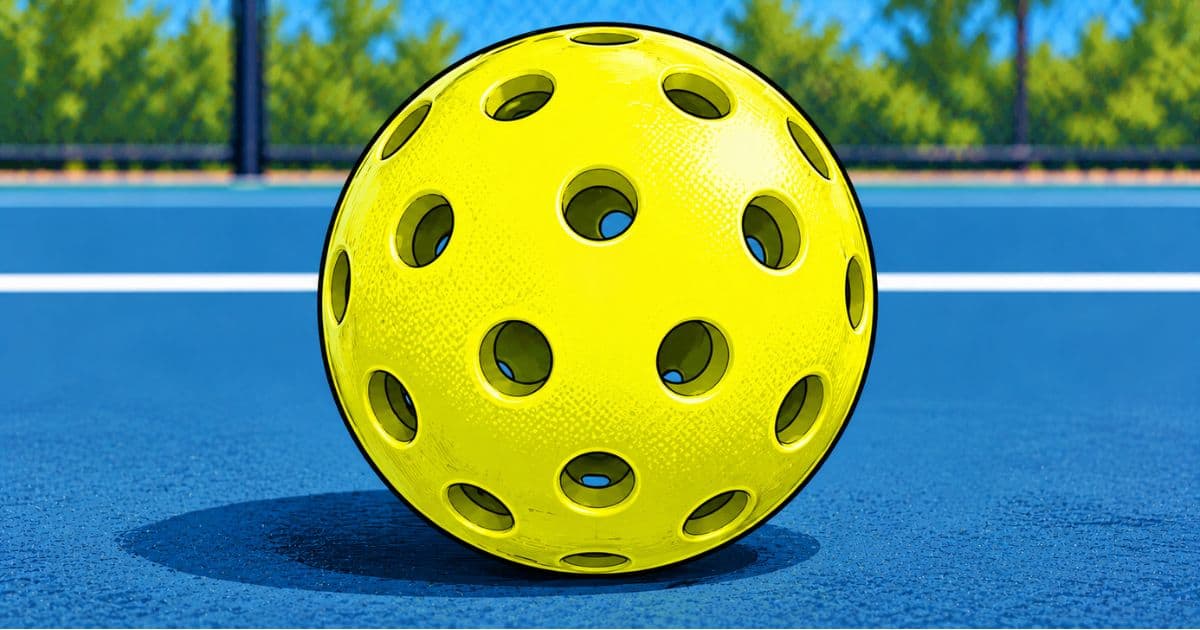
A pickleball is the hard, hollow plastic ball used in the sport, molded with a pattern of round holes cut through its shell. That perforated design is not decorative. It changes how far the ball flies, how it handles wind, and how long it survives contact with a paddle or the court surface. The rulebook does not pin the hole count to one single number. Instead, it sets a range, and where a specific ball lands inside that range depends mostly on whether it is built for outdoor or indoor play.
What Does the 2026 Rulebook Say About Pickleball Holes?
Section 3 of the 2026 rulebook covers ball construction and requires every ball used in sanctioned play to be approved by USA Pickleball, with a smooth, texture-free surface and a uniform color. The exact numbers for holes, diameter, weight, and bounce live in a companion document, USA Pickleball’s Equipment Standards Manual, which the rulebook points to for approval. That manual sets a minimum of 26 and a maximum of 40 circular holes, a diameter of 2.87 to 2.97 inches, and a weight between 0.78 and 0.935 ounces. It also runs a bounce test: dropped from 78 inches onto a hard surface, an approved ball has to rebound between 30 and 34 inches. A ball that clears every one of those checks, hole count included, can appear on USA Pickleball’s list of approved equipment.
Why Do Outdoor and Indoor Balls Use Different Hole Counts?
Outdoor balls have to fight wind, so manufacturers mold them with more, smaller holes, commonly 40, which stiffens the ball’s surface and reduces how much it balloons off course in a crosswind. Indoor balls travel through calmer air over a smoother, harder floor, so manufacturers can cut fewer, larger holes, commonly around 26, without losing control. Fewer, bigger holes also make a ball lighter and softer off the paddle face, part of why indoor balls tend to bounce higher and feel slower coming off contact than an outdoor ball of the same diameter. Anyone comparing the two builds side by side can walk through the differences in the guide to indoor and outdoor pickleballs, including surface, weather, and court conditions that push a buyer toward one style over the other. Wind adds its own set of adjustments on top of ball choice, covered separately in the guide to playing pickleball in the wind.
How Does Hole Count Change Flight and Durability?
More, smaller holes remove less plastic at any single point on the ball’s surface, which is a reason a 40-hole outdoor ball tends to resist denting better outdoors than a 26-hole indoor ball would if it were used on asphalt or concrete. Fewer, larger holes leave thinner walls of plastic between openings, fine on a smooth gym floor but a common failure point if that same ball is played outside on rough pavement. Hole size and placement also change how much the ball grips a paddle face for spin and how fast it sheds speed in the air. A smaller-hole outdoor ball tends to hold its line longer outside, while a larger-hole indoor ball reacts faster and feels livelier off a soft paddle surface. None of this is left to guesswork. Every ball sold as tournament-legal has to pass the same diameter, weight, and bounce testing described above before it earns a spot on the approved list.
Which Balls Use Which Hole Counts?
Hole counts vary by brand and by whether the ball is built for outdoor or indoor courts. A few examples, verified where each maker states the figure:
- Franklin’s X-40 outdoor ball is built with 40 machine-drilled holes, stated directly in Franklin Sports’ own product description.
- Onix’s Dura Fast 40 outdoor ball is also a 40-hole design, a count built into the ball’s name and consistent with its role as a tournament-style outdoor ball.
- Selkirk’s Pro S1 outdoor ball uses 38 holes, a figure Selkirk highlights on its own site in product education explaining how that count affects flight.
- Onix’s Fuse indoor ball is built with a larger hole pattern than its outdoor balls, commonly listed at 26 holes by retailers that carry it, though Onix’s own product page describes the larger holes without stating an exact count.
None of these counts makes one ball better than another. Hole count is a design choice tied to where a ball is meant to be played, not a ranking of quality.
How Do You Choose a Ball Based on Hole Count?
Matching a ball to where it will actually be played matters more than chasing a specific hole count. A 40-hole outdoor ball played indoors on a gym floor tends to skid and fly faster than players expect, since it was not built for that friction and airflow. A 26-hole indoor ball played outside in any wind can balloon off line and crack sooner than its indoor lifespan would suggest, since its thinner walls were not built for pavement or gusts. The fuller breakdown of which ball to reach for and when lives in the guide to what kind of ball to use in pickleball, which covers court type, weather, and skill level alongside ball choice.
Ball design is one detail among many that surprise new players. The list of surprising facts about pickleball and the separate collection of fun facts about pickleball cover more of the sport’s quirks, and the pickleball terminology glossary is a quick reference for terms that come up alongside equipment talk, like kitchen, dink, and volley.
Frequently Asked Questions
How many holes does an outdoor pickleball have? Outdoor pickleballs commonly have 40 holes, smaller in size than the holes on an indoor ball, which helps the ball hold its line in wind and resist denting on asphalt or concrete courts.
How many holes does an indoor pickleball have? Indoor pickleballs commonly have around 26 holes, larger than the holes on an outdoor ball, which suits the calmer air and smoother floor found in a gym.
Is a pickleball with more holes always an outdoor ball? Not automatically, but the pattern holds across the examples verified for this guide. Outdoor balls in the 38 to 40 hole range, like the Franklin X-40, Onix Dura Fast 40, and Selkirk Pro S1, sit at the higher end of the 26 to 40 hole range set by USA Pickleball’s equipment standards, while indoor balls sit closer to the lower end.
Do the holes affect how a pickleball bounces? Hole count is one factor in a ball’s overall bounce, along with its diameter, weight, and wall thickness. Under the equipment standards, USA Pickleball tests every approved ball for a bounce of 30 to 34 inches when dropped from 78 inches, regardless of exactly how many holes it has within the allowed range.
Can I use an indoor ball outside, or an outdoor ball inside? Either can be hit for a casual rally, but neither performs the way it was designed to. An indoor ball outside tends to crack faster and drift in wind, and an outdoor ball inside tends to fly faster and bounce lower than players expect on a gym floor.
Does hole count affect how long a pickleball lasts? It plays a role. A ball with more, smaller holes generally keeps more plastic wall between openings, which can hold up better against rough outdoor surfaces than a ball with fewer, larger holes built for a smooth indoor floor.
Are all approved pickleballs the same size and weight? Under the equipment standards, every ball on USA Pickleball’s approved list falls inside the same ranges, a diameter of 2.87 to 2.97 inches and a weight of 0.78 to 0.935 ounces, even though hole count, color, and brand vary.
Why don’t manufacturers just use the same number of holes for every ball? Indoor and outdoor courts create different demands. Manufacturers choose a hole count inside the 26 to 40 range set by the equipment standards, matching the surface, air conditions, and level of play the ball is designed for, rather than building one design for both settings.
Where can I find the exact ball specifications USA Pickleball requires? The rulebook’s equipment section points buyers and manufacturers to USA Pickleball’s Equipment Standards Manual, which lists the specific numbers for holes, diameter, weight, and bounce, along with the full list of approved balls.
Anyone shopping by brand, hole count, or indoor versus outdoor build can browse current listings in the directory’s pickleball gear and accessories category for local stores that carry Franklin, Onix, and Selkirk balls.
Written by the Pickler Junction Team.