How to Make Friends Playing Pickleball
Quick Answer: Friendships form off the court more than on it. Stay after you play, learn names, be reliable, and say yes when someone invites you to something. The sport handles the introductions by rotating you through new partners every game. What turns that contact into friendship is the ten minutes afterward.
Making friends through pickleball means converting the acquaintances the sport’s rotation creates into relationships that continue away from the court.
Why pickleball is unusually good at this
Because the format forces mixing and the court is small enough to talk on.
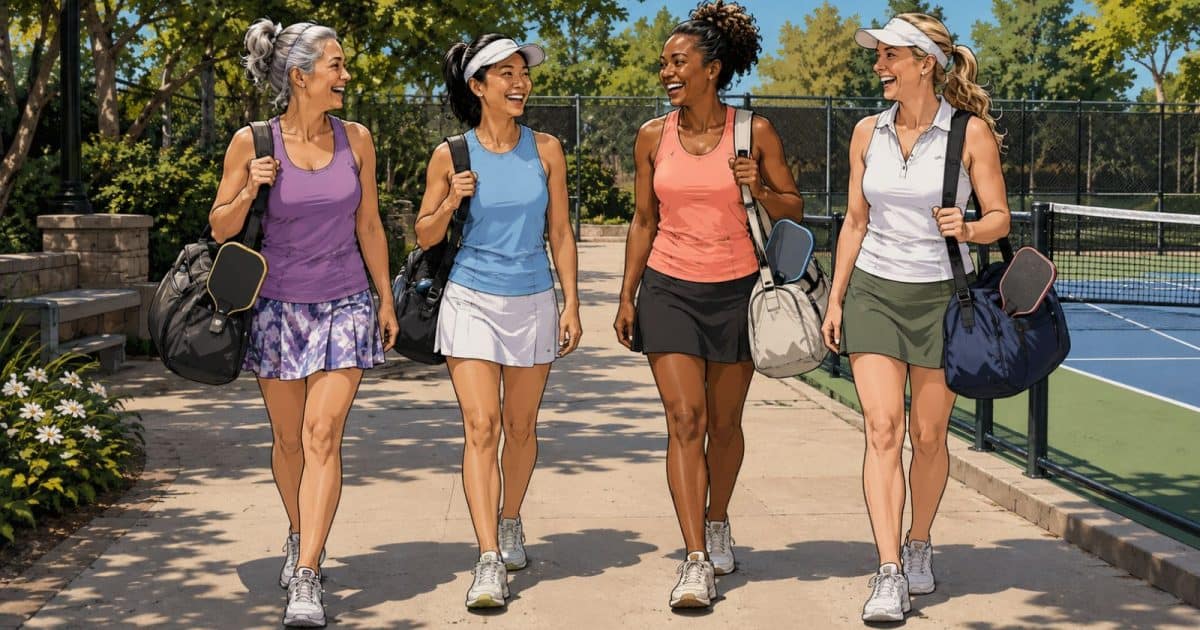
Adult sports usually put you with the same team every week and give you little room for conversation. Pickleball rotates you through three new people every 15 minutes or so, on a court where the other players stand close enough to talk between points.
A dozen or more short conversations in a single session is a lot of social contact by adult standards, and the sport hands it to you for free. According to the Sports & Fitness Industry Association, the number of U.S. pickleball players grew from 4.2 million in 2020 to 24.3 million in 2025, so most courts now have a steady stream of new people to meet.
The social upside runs deeper than casual contact. A 2023 systematic review in Frontiers in Psychology examined 13 studies on pickleball and mental health and found that players reported higher social integration and stronger social capital, an effect that was strongest among women. Meeting new people is not just pleasant. It appears to be part of why the sport keeps people coming back.
Rotation is also where most people stop, which is why the next part matters more.
What turns acquaintances into friends
Time off the court, and almost nothing else.
You can play with someone for a year and still know nothing about them. Ten minutes in the parking lot changes that. Real friendships in pickleball come from lingering after the last game, not from the game itself.
A few habits make the difference:
- Stay after. This is one of the more effective habits for turning a court acquaintance into a friend.
- Say yes to the invitation. The coffee, the meal afterward, the extra game. Accepting these invitations is most of the mechanism.
- Be the one who suggests it. Somebody has to, and groups where nobody does stay acquaintances forever.
- Learn something about people. Names first, then the rest.
- Show up consistently. Friendship needs repetition, and pickleball supplies it if you keep turning up.
None of this requires being outgoing. It requires being present for the ten minutes after the last point, when the actual relationship building happens.
Skill level does not have to get in the way
Less than it seems, and in a specific way.
Playing well makes you a desirable partner. Friendship comes from somewhere else. Some of the more socially connected players at a court are simply pleasant and reliable to play with, not necessarily the strongest players there.
What does get in the way is being difficult on court. Complaining about a partner’s errors, arguing calls, or visibly checking out during a game against weaker players costs more socially than any missed shot. See pickleball open play etiquette for the on-court side of this, and handling drama at the courts for the conflict side.
If you are shy
The sport is unusually forgiving here, which is worth knowing if the social part is the hard part for you.
You do not have to introduce yourself. The rotation does it for you. You do not have to start a conversation from nothing, either. There is always a shared subject right in front of you, and asking someone about their paddle or their backhand is a natural opener that does not feel forced.
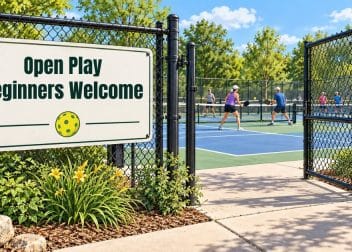
Round robins and beginner clinics are the easiest formats for this, because both move you through people without requiring you to insert yourself. Group clinics typically run one to two hours and cost $20 to $50 per person as of September 2026, and everyone in the room is there for the same reason you are.
Sticking around afterward for a few stretches is another low-pressure way to keep a conversation going without needing to find something to say.
Where this goes wrong
Two patterns show up often.
Playing only with the people you arrived with. A group of four who always play each other gets no new contact at all, which defeats the purpose of open play.
Treating every game like a tryout. Players who are visibly sizing up everyone’s skill level are not enjoyable partners, and it shows.
The guide to finding a pickleball community covers the finding-a-scene side of this, and how to find a pickleball partner covers the narrower question of landing one regular playing partner.
FAQ
How do I make friends playing pickleball?
Stay after you play, learn names, be reliable, and accept invitations. The sport creates the contact. The ten minutes afterward is what turns it into a friendship.
Do I need to be good at pickleball to make friends?
No. Being pleasant and reliable to play with matters more than your skill level.
What if I am shy?
The rotation introduces you without you having to do it yourself, and there is always a shared subject on hand to talk about, which removes the hardest part of meeting new people.
Where do the friendships actually form?
Off the court, in parking lots, over coffee afterward, or in a group chat. On-court time creates the acquaintance. Off-court time turns it into a friendship.
Should I join a club to make friends?
It helps once you want to see the same faces repeatedly. Public open play is often cheaper and usually has more new people moving through it, with municipal drop-in fees typically running $2 to $6.
How long does it take to make friends this way?
Weeks rather than months if you attend the same session consistently, since repetition is most of the mechanism.
What kills the social side of pickleball?
Complaining about partners, arguing calls, and visibly checking out during games against weaker players. All three cost more socially than any missed shot.
Where can I find pickleball games and courts to meet people?
Pickleheads is the official court and game finder of USA Pickleball, and it lists more than 25,000 places to play in the United States, which makes it a practical starting point for finding a session with an active social scene.
If you are still looking for a regular group or a club with an active social scene, the Pickler Junction pickleball club directory lists clubs and open play sessions by location.
Written by the Pickler Junction Team.