What Is a Nasty Nelson in Pickleball?
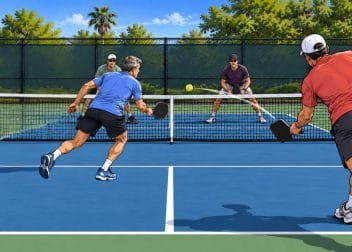
Quick Answer: A Nasty Nelson is a serve aimed at the receiver’s partner instead of the receiver. Under Rule 10.C.3 of the 2026 USA Pickleball rulebook, contact between the ball and a player, after the serve, is a fault against that player. So a serve that hits the partner in the air before it bounces wins the point for the serving team.
The shot borrows its name from pickleball slang that has circulated in the sport for years. The exact origin story varies by who is telling it, so treat it as folklore rather than settled history. What is settled is the rule that decides the point.
Is the Nasty Nelson legal?
Yes. The shot is legal, and it can win the point outright.
Rule 10.C.3 states that once a ball has been served, contact between that ball and a player is a fault against that player, with narrow exceptions for the paddle and the hand gripping it. When a served ball strikes the receiver’s partner in the air, before it bounces, that counts as a fault against the receiving side, so the serving team scores the point. Intent does not enter into it. A serve that drifts sideways and clips a shoulder by accident scores exactly the same as one aimed there on purpose.
That surprises players who expect contact with an opponent to draw a penalty against the person who hit the ball. Under this rule, the responsibility sits with the player standing in the ball’s path, not the player who sent it there.
Why does the rule work that way?
Because the receiver’s partner has no role in returning serve, and the rule expects them to stay clear of it.
Only the designated receiver may play a served ball. Rule 10.C.3 puts the burden on everyone else standing on the court. If the ball touches you after the serve, the fault belongs to you, not to the player who hit it. Standing near the centerline at the kitchen accepts the risk that a serve running down that line finds you first.
The same logic governs the rest of a rally. A ball still in play that touches a player counts against that player, whether the contact happens on the serve or three shots into a rally.
Position decides the outcome far more than intent does. Under Section 11, the non-volley zone rule puts the kitchen line 7 feet back from the net, and the receiver’s partner normally waits there. The players who take a serve off the shoulder are almost always the ones crowding the centerline instead of holding their own side of the court.
What happens if the ball bounces first?
The outcome changes depending on where the ball is when it makes contact.
- Serve hits the receiver’s partner in the air. Fault against the receiving side under Rule 7.E.5, since the ball never landed. Point for the serving team.
- Serve lands in the correct service court, then hits them. Still a fault against the receiving side, because the serve was good and Rule 10.C.3 covers any contact with a player once the ball is in play.
- Serve lands out, then hits them. Fault against the server instead. The serve was already dead the moment it landed outside the correct box, so the later contact does not matter.
- Serve hits the receiver before bouncing. Treated the same as hitting the partner. Fault against the receiving side under Rule 7.E.5.
The detail that matters is whether the ball has bounced, and if so, in bounds or out. A serve that already landed out cannot be rescued by hitting somebody on the way through.
Does it actually work?
Rarely, and missing costs the server the point.
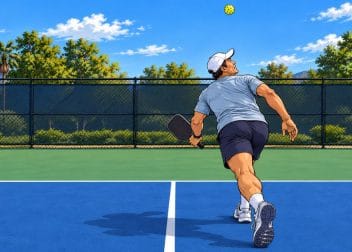
Hitting a Nasty Nelson means aiming at a small, moving target standing well off the server’s natural line, instead of the deep corner where a strong serve usually goes. Miss the target and the serve typically lands in the net, sails out, or drops into the middle of the court as an easy return. The odds of pulling it off cleanly are low.
Against an alert receiving side it works even less often, since the receiver’s partner can simply stand wider and watch the server’s paddle. It lands most often against players who are not paying attention, and those players tend to be least amused by getting hit.
Should you try it?
In recreational play, no. That is a social judgment call, not a rule, and it is what keeps open play pleasant.
The shot is legal, and no one on the court can overrule that. But open play depends on players wanting to rotate in with each other again. Deliberately serving at a stranger’s ribs is a fast way to become the player nobody picks for the next game. The open play etiquette guide covers the wider set of unwritten expectations that keep casual sessions running smoothly.
The shot rarely appears in casual games for exactly that reason. When it does land, an apology usually follows, the point stands as scored, and the server does not try it again that session.
What should you do if you are the target?
Move, and take away the option before the serve is even struck.
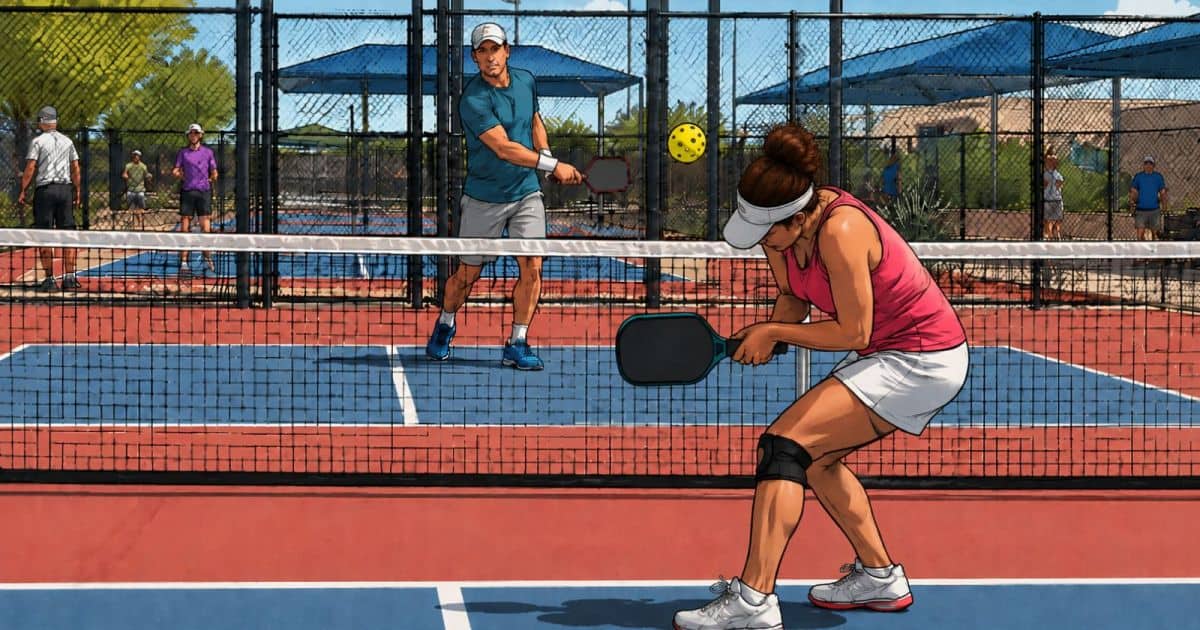
If you are the receiver’s partner, stand at the kitchen line but favor your own sideline rather than crowding the centerline. Watch the server’s paddle rather than your partner or the net. If a serve does come at you, turn a shoulder and let it pass rather than reaching for it. Dodging out of the way is legal. Standing still and getting hit is not.
How does the point get scored?
Like any other fault charged to the receiving team.
Under traditional side-out scoring, a fault against the receiving side hands the serving team a point, and the same server continues serving from the opposite side of the court. Under rally scoring formats, the point counts the same way regardless of who was serving before the rally started. The guides on how pickleball scoring works and what a side out is cover both systems in more depth.
Frequently asked questions
What is a Nasty Nelson in pickleball? It is a serve aimed at the receiver’s partner rather than the receiver. If it hits them before the ball bounces, Rule 7.E.5 makes it a fault against the receiving side and the serving team wins the point.
Is the Nasty Nelson against the rules? No. It is legal, and it produces a fault against the receiving side whether the contact was intentional or accidental.
What if the serve was already going out? If the ball bounces out first and then hits a player, the fault belongs to the server. If it hits the player in the air before bouncing, Rule 7.E.5 still charges the fault to the receiving side.
Can you dodge the serve? Yes. Moving out of the way is completely legal, and it is the correct response if a serve is heading your way.
What rule actually decides the point? Rule 10.C.3 says that once the ball has been served, contact between the ball and a player is a fault against that player, which is why standing in the wrong spot is risky.
Does it work at higher levels of play? Rarely. Advanced receiving partners position wider and track the server’s paddle, so the target the shot depends on usually is not there.
Will opponents be annoyed if you try it? Often, especially in recreational play. The shot is fully legal, but legal and welcome are not the same thing in casual games.
Where is this rule written in the rulebook? The core fault is in Rule 10.C.3, and the specific serve-contact provisions sit in Rule 7.E.5, both inside the sections covering serving and rally play.
Knowing the rule means not being confused when it happens on your own court, whether you are serving or standing at the kitchen line. Serving deep and consistent still wins more points than a trick serve does, and a coach can help build that serve. Browse the Pickler Junction pickleball coaches directory to find one near you.
Written by the Pickler Junction Team.