What Is a Carry in Pickleball?
Quick Answer: A carry is when the ball does not rebound cleanly off the paddle but instead rides or is slung along the face. It is a fault, and the rally ends. The current rulebook dropped the language about intent, so an accidental carry is treated the same as a deliberate one.
Carries are the quiet fault of recreational pickleball: common on scoop shots off the shoelaces, rarely called, and genuinely disliked once players understand what they are watching.
What does a carry look like?
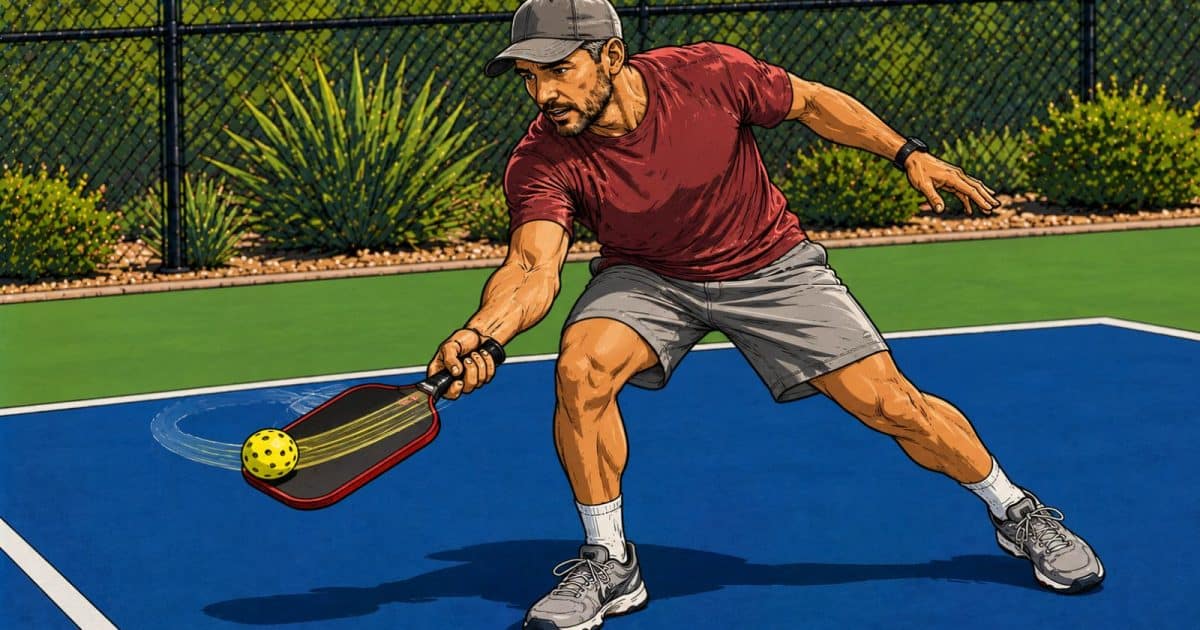
One prolonged contact instead of a clean strike. The paddle face stays with the ball through part of its travel, effectively escorting it over the net rather than hitting it.
The situations that produce carries are predictable:
- Low scoops off the feet, where the paddle face opens sharply and slides under the ball.
- Desperate defensive digs, where a player reaches and the paddle travels in roughly the same direction as the ball.
- Soft resets attempted with an over-relaxed grip, so the face gives on contact.
- Awkward body positions where the wrist rolls during the stroke.
The common thread is a paddle moving with the ball rather than through it. Speed is what separates a hit from a carry: a struck ball leaves the face immediately, while a carried ball stays in touch.
Is a carry always a fault?
Yes, under the current rules, and this is the part that has changed. Older rulebook language distinguished deliberate carries from accidental ones, which forced referees to judge intent. That distinction was removed, and a carry is now simply a fault regardless of what the player meant to do.
The change made the rule easier to officiate and slightly harsher on scramblers, and it is why the older understanding still circulates. Accidental carries were once tolerated. They are not now.
Faults across the rulebook share the same structure, and our guide to what counts as a fault in pickleball shows where the carry sits among them.
How is a carry different from a double hit?
The number of contacts is the whole distinction, and their outcomes differ because of it.
A double hit is two or more separate contacts. It can be perfectly legal, provided it is unintentional, continuous, in one direction, and off one player’s paddle, as covered in our guide to hitting the ball twice. A carry is a single extended contact, and it has no legal version.
On court the two sound different. A double hit produces audible taps in quick succession. A carry produces one soft, extended contact with no crisp pop, which is why a carry is often heard before it is seen.
Who calls a carry, and how do you avoid one?
The player who hit it, in recreational play, for the same reason as the double hit: the sensation is obvious from inside the shot and nearly invisible from the other side of the net. Referees make the call in officiated matches.
Avoiding carries is mostly a technique question, and three habits do the work. Keep a firm enough grip that the face does not give on contact. Swing through the ball rather than lifting with it, even on soft shots. And get low with the legs rather than opening the paddle face to dig a low ball out, which is the single most productive change for players who carry regularly.
That last habit is why chronic carrying is better treated as a footwork symptom than a hands problem. Players who bend at the knees to reach low balls stop carrying almost entirely, while players who reach with the paddle keep doing it. The soft-hands shots that most often produce carries are covered in our guide to the reset in pickleball, and a clean reset and a carry start from very similar positions.
Does the carry rule change anything about how you should play?
Not much, and that is worth saying plainly. Carries are a technique fault, not a strategic consideration. No competent player is deciding whether to carry the ball.
What it does change is how you handle the awkward low ball. The instinct to scoop is what produces carries, and the alternative is either a clean low block with the paddle face steady, or letting a ball go that was headed out anyway. Neither requires new skill, only the decision to stop rescuing every ball at any cost.
Once players know the rule, the honesty tends to sort itself out. Carries are self-called almost universally at open play, which says something good about the sport’s culture.
FAQ
What is a carry in pickleball? A shot where the ball rides along the paddle face instead of rebounding cleanly off it. It is a fault and ends the rally.
Is an accidental carry legal? No. The current rulebook removed the intent language, so accidental and deliberate carries are treated identically.
What is the difference between a carry and a double hit? A carry is one prolonged contact and is always a fault. A double hit is two or more contacts and can be legal under specific conditions.
Who calls a carry in recreational play? The player who hit it. The feel is obvious to the striker and usually invisible across the net.
When do carries usually happen? On low scoops off the feet, desperate digs, and soft resets attempted with a loose grip or an open face.
How do I stop carrying the ball? Firm up the grip slightly, swing through the ball rather than lifting with it, and bend the knees to reach low balls instead of opening the paddle face.
Can you carry the ball on a serve? The same rule applies. A served ball that rides the face rather than rebounding is a fault.
Is a carry called often in rec play? Not as often as it occurs, mostly because players do not recognize it. It is self-called when they do.
Want the finer rules taught rather than argued about? The coaches in our directory cover them alongside technique, and the pickleball associations in our listings publish the official rulebook text.
Written by the Pickler Junction Team.