Do Men Wear Shorts or Pants for Pickleball?
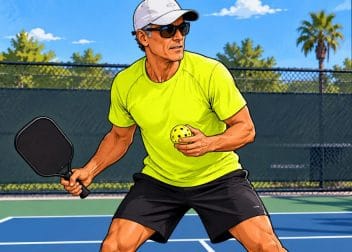
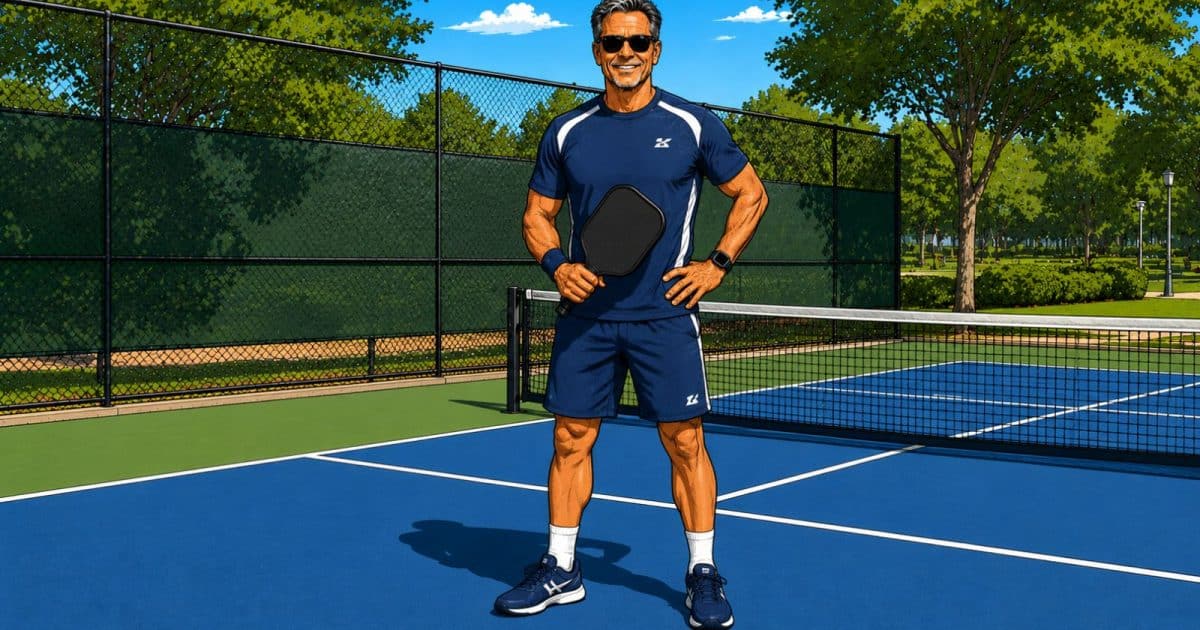
Quick Answer: Most men wear athletic shorts for pickleball, usually a 7 to 9 inch inseam with at least one pocket deep enough to hold a spare ball. A moisture wicking shirt and court shoes round out the basics. Pants show up mainly in cold weather and on poorly heated indoor courts in winter, and disappear again once players warm up.
Pickleball has no dress code at the recreational level. What works comes down to three things: how the fabric moves, how it handles sweat, and where a spare ball goes. For a look at what women wear on the same courts, the choices overlap more than they differ.
Shorts or pants?
Shorts, in almost all conditions, for almost all players.
The sport involves constant lateral movement, lunging, and quick changes of direction, and anything that binds at the knee or thigh gets noticed fast. A 7 to 9 inch inseam is the common range. Shorter than that and pocket depth suffers. Longer, and the hem starts catching on a low split step.
Pants earn a place in two situations. The first is cold outdoor play, where a separate guide to winter pickleball clothing covers layering in detail. The second is an indoor gym that runs cold in winter, where joggers over the first game or two are common before players shed them.
Look for a four way stretch woven fabric rather than heavy cotton. Cotton holds sweat, gets heavy, and chafes at the inner thigh during long rallies.
What about pockets?
This is the detail that separates pickleball shorts from generic running shorts, and it matters more than it sounds.
A player needs somewhere to carry a spare ball. In most recreational games, the server holds a second ball while playing out a point, and a shallow running short pocket will not keep one in place during a lunge. Deep side pockets are the practical requirement, not a nice extra.
Zip pockets add somewhere to stash a key. A phone in a pocket during play is a different story. It is an annoyance when it shifts mid swing, and a risk to the phone itself if a player dives for a ball.
What shirt works best?
A moisture wicking synthetic or a technical blend does the job. Performance polos and crew tees both work, and the choice between them is mostly aesthetic.
- Polos. More common at clubs and in tournament play. The collar adds a little neck sun coverage outdoors.
- Crew or v-neck tees. Cooler and less restrictive across the shoulders, and the shirt of choice in casual open play.
- Long sleeve sun shirts. Increasingly common outdoors for UV coverage rather than warmth. A separate article on why players wear long sleeves covers the reasoning.
- Sleeveless. Allowed on most public courts, though some clubs and tournaments restrict it. Check event rules before a sanctioned tournament.
- Cotton anything. The one fabric to skip. It soaks up sweat, sags, and stays wet for the rest of a session.
Do shoes really matter?
More than everything above combined. This is the one piece of clothing where the wrong choice changes how the body moves, not just how it feels.
Court shoes are built with lateral support and a flat, grippy outsole designed for side to side steps. Running shoes are built to move forward, with softer cushioning and a narrower base that was never designed for a hard side step. A detailed comparison of pickleball shoes and tennis shoes covers the construction differences, and a separate guide on what shoes to wear walks through the buying decision.
What else is worth having?
A hat or visor helps outdoors. Athletic socks matter more than it seems, since blisters usually come from cotton crew socks rather than from the shoes themselves. A second shirt in the bag is useful for anyone playing more than an hour.
Compression gear is optional. Some players wear compression shorts or sleeves for the supportive feel during long sessions, and a separate look at whether compression clothing helps pickleball breaks down what the gear actually does and does not change.
Is there a dress code anywhere?
Private clubs sometimes require collared shirts and prohibit tank tops. Sanctioned tournaments generally require athletic attire and may restrict visible logos or graphics deemed offensive, with specifics set by each event.
Public courts and open play have effectively no rules. Whatever works for a gym session works on a public court.
What does a starting kit cost?
Most men already own workable shorts and a technical shirt from another sport, which cuts the real startup list down to one item: court shoes. Buying shoes and using existing athletic wear for the first few sessions is a reasonable way to start before spending more.
Shoes are also the item that wears out first and the one worth the most attention when shopping, since the outsole and lateral support break down with regular play well before a shirt or a pair of shorts does. Clothing spending is a small part of getting started compared to court time. A separate guide on how many lessons or clinics it takes to improve is a better place to look if the budget question is really about how much the sport costs overall.
Frequently asked questions
Can you wear basketball shorts for pickleball? Yes, though longer inseams can catch during quick footwork and the pockets are often too shallow to hold a spare ball securely.
Do men wear compression shorts underneath? Many do, mainly to reduce chafing during long sessions. It is common and entirely optional.
Are jeans or cargo shorts acceptable? They will not get anyone removed from a public court, but neither moves well and both trap heat during a long rally.
What should I wear for a tournament? Athletic attire, a spare shirt, and shoes suited to the court surface. Event rules should be checked in advance for any collar or logo requirements.
Do I need different clothes for indoor and outdoor? The clothing stays the same. The shoes may differ, since indoor courts favor non-marking gum outsoles and outdoor courts favor harder, more durable ones.
How many pockets do I actually need? One deep enough for a ball is the minimum. Two is more convenient.
Is there pickleball-specific clothing for men? Yes, several brands make apparel built for the sport, mostly differentiated by pocket placement and depth. Tennis clothing works nearly as well as a starting option.
What about cold weather? Layers that can come off after the first game are the practical choice, and gloves are worth considering below a certain temperature.
The short version is shorts with real pockets, a shirt that is not cotton, and shoes built for the court rather than the road. Retailers carrying men’s court apparel and footwear are listed in the Pickler Junction gear and accessories directory.
Written by the Pickler Junction Team.