
What Is a Pickleball Ranch?
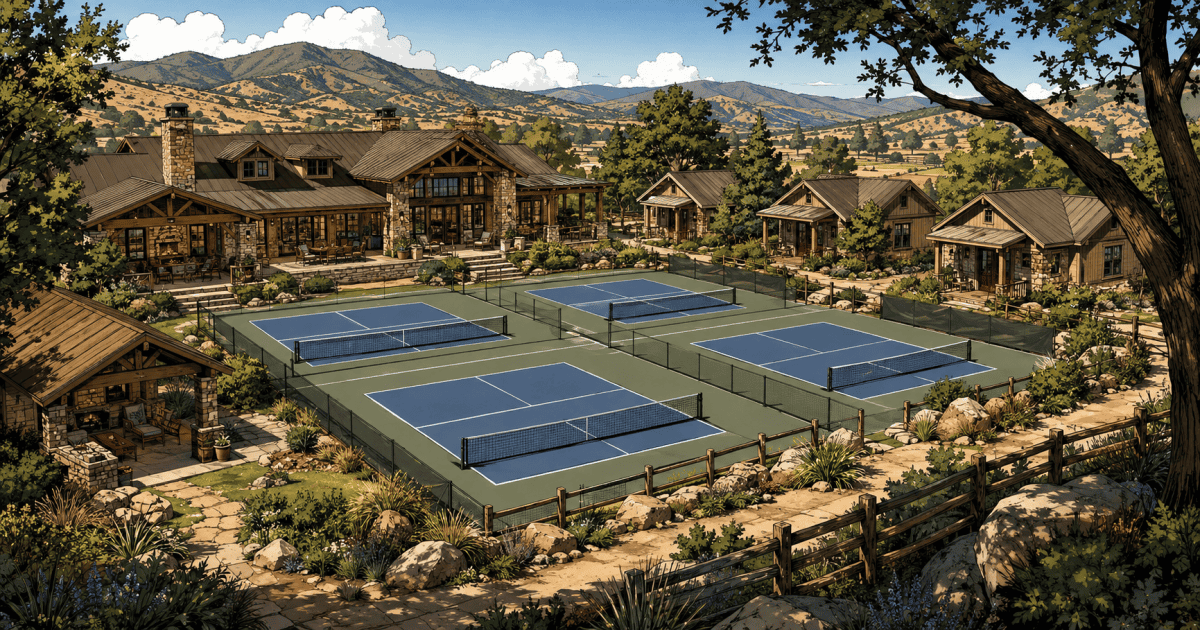
Quick Answer: A pickleball ranch is a rural lodging property centered on a large court complex rather than a beach, pool, or golf course. Guests get organized play, coaching, and shared meals in one spot. Some sit on working ranches with horses and trail rides. Most simply use the name to signal space and seclusion.
A pickleball ranch is a lodging property whose main amenity is a court complex instead of a beach or a ski lift. The word ranch signals space and seclusion more than livestock, so it helps to set aside the horse picture before booking one.
What makes a ranch different from a pickleball resort?
Land, and what the land makes possible. Ranches sit on acreage, which means room for more courts, more space between them, and a property that does not have to share ground with anything else.
That changes the experience in a specific way. At a resort, pickleball competes with the pool, the spa, the golf course, and guests who came for something other than the courts. At a ranch, nearly everyone on the property showed up to play, so games form fast and the courts stay busy through the day.
The other difference is isolation. Ranches sit a drive from town more often than not, which is either the appeal or the drawback depending on the trip a traveler wants. There is often no walkable downtown and no backup dinner plan if the on-site kitchen is closed.
What should you expect on a pickleball ranch stay?
A schedule and a shared table. Ranch-style properties tend to run some version of the same day.
Typical elements include:
- Organized morning play, often grouped by skill level, sometimes with a pro running rotations.
- Open court time through the afternoon, when the stronger players keep going.
- Some instruction, ranging from a daily clinic to a structured coaching program. As of September 2026, a typical group clinic costs $20 to $50 per person, while private coaching runs $50 to $100 or more per hour.
- Communal meals, a defining feature of the format and a reason guests leave with new playing partners.
- Evening social play or an organized round robin.
- Little else to do, by design.
Court counts are worth reading carefully. A regulation court measures 20 by 44 feet, with the net set at 36 inches at the sidelines and 34 inches at center, and each side carries a 7-foot non-volley zone. Add run-off space on every side and a property advertising a dozen or more courts has committed real acreage to the sport, which is the clearest signal of how seriously it takes the format.
Are pickleball ranches actually ranches?
Sometimes. The term covers a real range, so it is worth asking directly.
Some properties are working or former ranches that added courts, and they carry the rest of the experience with them: trail rides, wide-open views, ranch-style meals. Others are purpose-built court complexes with rural addresses and no agricultural history at all. Both can deliver a strong pickleball trip. They are not the same trip.
If the ranch part matters, ask what non-pickleball activities actually exist on site and whether they cost extra. If it does not matter, set the branding aside and evaluate the property on courts, coaching, and organized play, the same way a traveler would judge any property on a list of the best pickleball resorts in the US.
Who is a pickleball ranch good for?
Groups, couples where both people play, and solo travelers who want games handed to them.
The format has more demand behind it than it did a few years ago. The Sports & Fitness Industry Association counted 24.3 million pickleball players in the United States in 2025, up from 4.2 million in 2020, and that growth has pulled more travelers toward trips built entirely around court time rather than a mix of activities.
Groups do well because the format runs on shared meals and organized play, and because a remote property removes the daily debate about what everyone should do next. Solo travelers do well for the same reason: it is hard to feel left out at a property where a round robin starts at nine.
It is a harder sell when only one person in a couple plays. The isolation that makes the format work for players leaves a non-player with little to do, since there is usually no town nearby and few alternatives. A luxury pickleball resort with more on-site amenities is the better call in that case.
What should you ask before booking one?
Ask how play is organized, not just how many courts there are.
Court count signals capacity. Organization signals whether a guest will actually get on the court. A property that runs organized, level-grouped rotations will give a 3.0 player better games than a bigger property where guests sort themselves out and the strongest players stick together.
Then work through the practical list: distance from the nearest airport, whether transfers are included, whether meals are included, what happens if it rains, and whether any courts are indoor or covered. Rural properties sit more exposed to weather than resorts, and a rained-out day with nothing else on the grounds makes for a long one.
Ranches sit inside the wider set of trips covered in this guide to pickleball tourism, which is worth a read for anyone still choosing between formats rather than between specific properties.
FAQ
What is a pickleball ranch? A rural lodging property built around a large pickleball court complex, usually with organized play, on-site meals, and little competing programming.
Is a pickleball ranch the same as a pickleball resort? No. A ranch is typically remote, court-focused, and communal. A resort offers more amenities, more guests who do not play, and pickleball as one option among several.
Do pickleball ranches have horses? Some do. Many do not. The name often signals rural acreage rather than a working ranch, so it helps to ask directly if the ranch part of the trip matters.
Are pickleball ranches good for beginners? They can be, when the property runs level-grouped play or beginner clinics. It helps to ask before booking, since a remote property with only advanced open play makes for a difficult week for a new player.
Do you need a car? Usually, unless transfers are included. These properties typically sit well outside a city, often with no nearby alternative for food or activities.
Are meals included? Frequently, and communal dining is part of what defines the format. It is worth confirming at booking, since it affects both the price comparison and the social experience.
When is the best time to book? Early for peak season, and peak season depends on climate. Desert properties tend to peak in cooler months, while northern properties peak in summer, so the calendar flips depending on the region.
Ready to find a place to play regularly, not just on a single trip? Browse the pickleball clubs directory for clubs near home to keep the games going between trips.
Written by the Pickler Junction Team.