Pickleball in Canada: What US Travelers Should Know
Quick Answer: Pickleball in Canada is well established and heavily indoor for much of the year. Community centres and converted rinks carry the winter, outdoor courts fill the short summer, and a national governing body organizes ratings and events. US visitors will find the game and the etiquette familiar.
Pickleball in Canada is a mature, club and community centre driven scene rather than an emerging one. If you are picturing something small, adjust. The sport took hold early here and never let go.
Why did pickleball catch on so strongly in Canada?
Geography helped. The game was invented in 1965 on Bainbridge Island in Washington State, a short distance from the British Columbia border, and it spread north early rather than waiting for the national boom that came decades later.
The demographics helped too. Canada has a large and active retirement population, strong municipal recreation infrastructure, and a long tradition of community centre programming. That combination is close to ideal for a sport that needs indoor space and organized sessions.
The result is a country where a mid sized town is likely to have organized play, which is not something you can assume in most of the world.
Where do people play in Canada?
Indoors, for most of the year, in facilities that do several jobs.
Common venues:
- Community and recreation centres, which run scheduled drop in sessions and are the backbone of the sport here.
- Converted arenas and curling rinks, particularly in the off season for those sports.
- Church halls and school gyms, booked by local clubs.
- Dedicated indoor facilities, increasingly common in larger cities.
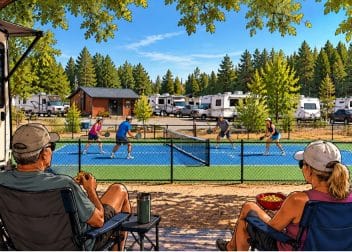
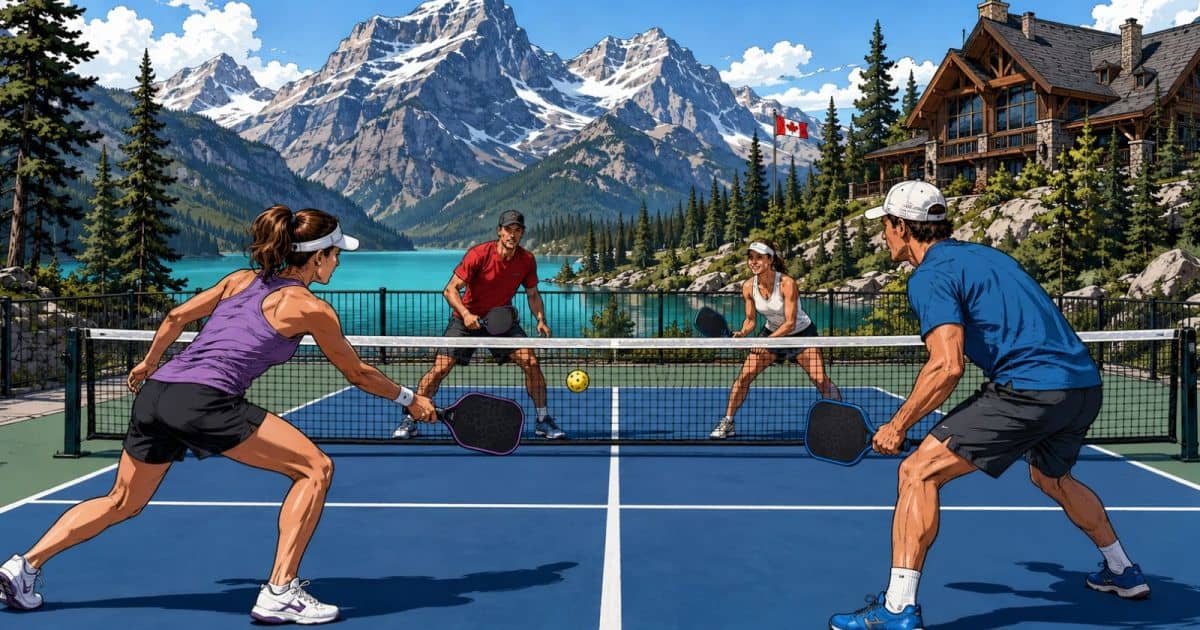
- Outdoor courts, busy from roughly May through September and often converted from tennis.
The seasonal split is sharper than in most of the United States. Outdoor courts in much of the country are genuinely unusable for months, so the indoor calendar is the real calendar and the summer is a short, intense outdoor season everyone takes advantage of.
What is drop in play like for a visitor?
Organized, friendly, and usually paid. This is the biggest practical difference from casual US park play.
Most Canadian drop in runs through a municipal recreation centre or a club, on a posted schedule, with a small per session fee. You often register in advance online, sometimes the same morning. Turning up unannounced at a facility and expecting to walk on is less likely to work than it is at an American public park.
The etiquette itself will be entirely familiar. Paddle stacking, rotation, games to 11 win by 2, and the same conventions around calling the score. A regulation court is 20 feet by 44 feet there as everywhere, so nothing about the play itself requires adjustment.
I have dropped in at three Canadian centres over the years and been folded into games within about four minutes each time. The registration step is the only friction, and it takes two minutes online.
What should US travelers know before crossing?
Bring your paddle, expect indoor shoes to be required, and plan around the schedule rather than the weather.
Practical notes:
- Paddles cross the border without issue as ordinary sporting goods. Our guide to taking a paddle on a plane covers the screening side if you are flying.
- Non marking indoor shoes are commonly required on gym and centre floors, and this is enforced more consistently than in many US facilities.
- Drop in fees are normal and modest. Bring a card, since many centres have moved away from cash.
- Register ahead where the facility offers it, because popular sessions fill.
- Check the season, since outdoor courts are a summer proposition in most of the country.
Ratings and sanctioned events run through the national governing body, which is the fastest route to a current list of clubs and tournaments if you want to plan around competition.
Is Canada worth a pickleball trip?
As part of a trip, yes, and the summer version is genuinely good.
The short outdoor season is the appeal. Coastal British Columbia, southern Ontario, and the mountain towns all offer outdoor play in pleasant summer weather, which pairs naturally with the kind of trip people already take there. Winter is a different proposition: the play is excellent and it is all indoors, so build the trip around something else and add sessions.
If you are comparing it against a domestic option, our roundup of the best places to play in the United States is the direct comparison, and our overview of pickleball tourism covers the formats worth considering once you have a region in mind.
FAQ
Is pickleball popular in Canada? Yes, and it has been for longer than in most of the world. It is well organized through community recreation centres and clubs, with a national governing body running ratings and events.
Where is pickleball biggest in Canada? Activity is strong across the country, with particularly established scenes in British Columbia, Ontario, and Alberta.
Can I drop in as a visitor? Usually yes, for a small fee. Many centres let you register online in advance, which is worth doing since popular sessions fill.
Do I need special shoes? Non marking indoor soles are commonly required at community centres and gyms, and the rule tends to be enforced. Bring a pair.
Are the rules the same as in the US? Yes. Court dimensions, net height, and scoring are identical, and drop in etiquette will feel familiar to any American player.
Can I bring my paddle across the border? Yes. Paddles are ordinary sporting goods and present no customs issue driving or flying.
When is outdoor season in Canada? Roughly May through September in most of the country, shorter in colder regions. Indoor play runs year round and dominates the rest of the calendar.
Is there a Canadian rating system? Ratings and sanctioned play are organized through the national governing body, and self rating conventions are broadly similar to those used in the United States.
Do I need to book ahead? For indoor sessions, often yes. For summer outdoor courts, usually not, though busy urban courts have their own wait systems.
Planning a crossing? Browse the travel and lodging listings for somewhere to base yourself, use the clubs directory to find a group to contact before you go, and check the associations listings for the governing bodies that publish current schedules.
Written by the Pickler Junction Team.