What Is a Pickleball Franchise?
Quick Answer: A pickleball franchise licenses an established brand, court design, and operating playbook to an independent owner, who funds the build, signs the lease, and runs daily operations. Franchisor websites describe the model and the territory, but exact investment and royalty figures generally appear only in the Franchise Disclosure Document each brand must hand a buyer before any money changes hands.
A franchise is a business model, not a building. You buy the system and the name. You still sign the lease, hire the staff, and carry the risk. The sport has grown fast enough to draw that kind of investment. According to the Sports & Fitness Industry Association, the number of U.S. pickleball players grew from 4.2 million in 2020 to 24.3 million in 2025, and that growth is what pulls both franchise brands and independent operators into the market.
What the franchise fee buys
Four things, in most agreements.
- The brand and a protected territory. You get the right to operate under an established name in a defined area, and the franchisor agrees not to open a second location down the road from you.
- A site selection and build playbook. Court counts, ceiling heights, flooring, lighting, and layout are solved problems. An independent operator has to work those out alone.
- Operating systems. Membership software, booking, programming templates, league structures, and pricing models come built in.
- Ongoing support and marketing. This varies a lot between brands and is the piece most worth checking before signing.
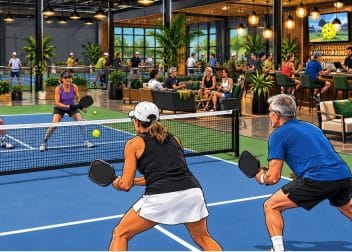
Pickleball Kingdom’s own franchise page describes its model as membership-first and labor-light, with revenue built from memberships, group events, coaching, equipment and apparel sales, drop-in play, and food and beverage, and lists franchise territory open in the United States, India, and Europe. That mix is the kind of tested playbook a franchise fee buys, not just a logo on the door.
What it costs
Franchisors are required to give prospective buyers a Franchise Disclosure Document, a federal filing that lists exact costs in Item 7, the initial investment table. That number is not always on the public website.
Pickleball Kingdom’s franchise pages describe the business model and the markets it is expanding into, but do not publish a specific investment range, franchise fee, or royalty percentage on the site itself. That is common. A marketing page sells the opportunity. The disclosure document, which a franchisor must hand over well before signing, carries the actual numbers, and they can change from one filing year to the next.
What tends to be consistent across the industry is the structure, not the amount. An initial franchise fee is paid up front. A royalty, usually a percentage of monthly gross sales rather than profit, is paid on an ongoing basis. Many brands add a separate marketing fee on top of that. Because royalties run on gross sales, they are owed whether a location is profitable that month or not, which matters in the early years.
The size of the total investment mostly comes down to real estate and build cost rather than the brand name. A conversion of an existing warehouse in a low cost market runs far less than new construction in an expensive metro, regardless of whose sign is on the door.
Franchise or independent
This is the actual decision, and it turns on what you already know.
The franchise case is strongest for someone with capital and business experience but no pickleball operating background. You are buying a shortcut past expensive mistakes, particularly around court count, acoustics, and membership pricing.
The independent case is strongest for someone who already runs facilities or has deep local knowledge. You keep the full revenue instead of sending a royalty to a franchisor, you set your own pricing, and you are not bound to a brand’s programming decisions. The guide to planning a multi-court pickleball complex covers what that build involves.
Cost is not the differentiator people assume going in. Building an independent facility of the same size costs broadly similar money, as the indoor pickleball court cost analysis works through. The franchise fee and the ongoing royalty are the real delta, and what they buy is speed and a tested playbook, not a cheaper build.
What to ask before signing
Read the Franchise Disclosure Document in full, and pay close attention to Item 19, the section covering financial performance representations. Some franchisors publish unit level revenue figures there. Others decline to. The absence of numbers is itself information.
Then talk to existing franchisees, not just the ones the franchisor introduces. Ask how long it took from signing to opening, whether the build came in on budget, and how long it took to reach positive cash flow.
Ask what happens if you want out. Transfer terms, territory rights on a sale, and post-termination non-competes vary by brand, and they matter more once a location is a few years old.
What drives whether a location works
Court utilization drives the numbers. An indoor facility makes money when courts are booked through the day, not only when leagues fill it in the evening.
Daytime programming for retirees, corporate events, junior programs, and leagues is what fills the slow hours. Insurance and liability structure matter too, and the piece on pickleball liability insurance explains what a facility needs to carry.
Frequently asked questions
How much does a pickleball franchise cost? Exact figures vary by brand and are not always posted on a franchisor’s public website. Each franchisor must disclose its actual initial investment range in Item 7 of its Franchise Disclosure Document, and real estate and court count push that range higher or lower.
What royalty do pickleball franchises charge? The rate varies by brand and is disclosed in that brand’s Franchise Disclosure Document. The near universal structure across franchising generally is a percentage of monthly gross sales rather than net profit, often with a separate marketing fee layered on top.
Do you need pickleball experience to franchise a club? Franchisors generally look for business and management experience rather than playing ability. Knowing the sport helps with programming decisions, but it is not usually a requirement to apply.
How many courts does an indoor franchise location have? Court count depends on the building the franchisor selects and the format it licenses for that site. It is one of the specifications covered in a franchise’s site selection playbook rather than a single fixed number across brands.
Is the pickleball facility market saturated? It varies sharply by metro area. Territory analysis is a critical piece of diligence, and it is the reason franchisors sell protected territories in the first place.
How long does it take to open a location after signing? Timelines depend on permitting, financing, and the local building department, and they differ by market. Existing franchisees, whose contact information a franchisor must provide, are the source for how long it actually took at a comparable site.
Are there smaller format pickleball franchises? Some brands combine courts with food and beverage at a different scale, and entertainment led concepts run on different economics than a straightforward club. See what a pickleball entertainment center is for how that model differs.
Can you franchise outdoor pickleball courts? Franchise models in this space are overwhelmingly indoor, since an indoor court can sell bookings in every season while an outdoor court sits idle in bad weather.
This is a real estate and operations business that happens to involve paddles, and territory is the variable that decides most of it. Before signing anything, map what already exists near the target site. The pickleball entertainment centers directory lists operating facilities by area, so it is possible to see how many courts a market already has, what they charge, and whether the gap a franchisor describes is actually there. That is an afternoon of work, and it is inexpensive diligence ahead of a seven figure decision.
Written by the Pickler Junction Team.