What Does It Cost to Rent a Pickleball Court?
Quick Answer: As of September 2026, municipal drop-in fees run about $2 to $6 per session, and private indoor court time runs about $10 to $20. Many outdoor public courts are free. Indoor facilities, membership status, and location drive most of the price difference, and weekday daytime hours often cost less than evening and weekend peak times.
Court rental pricing looks chaotic until you see what actually drives it: who owns the court, whether it is indoors, and when you play. Here is the real range, using current figures.
What do public courts cost?
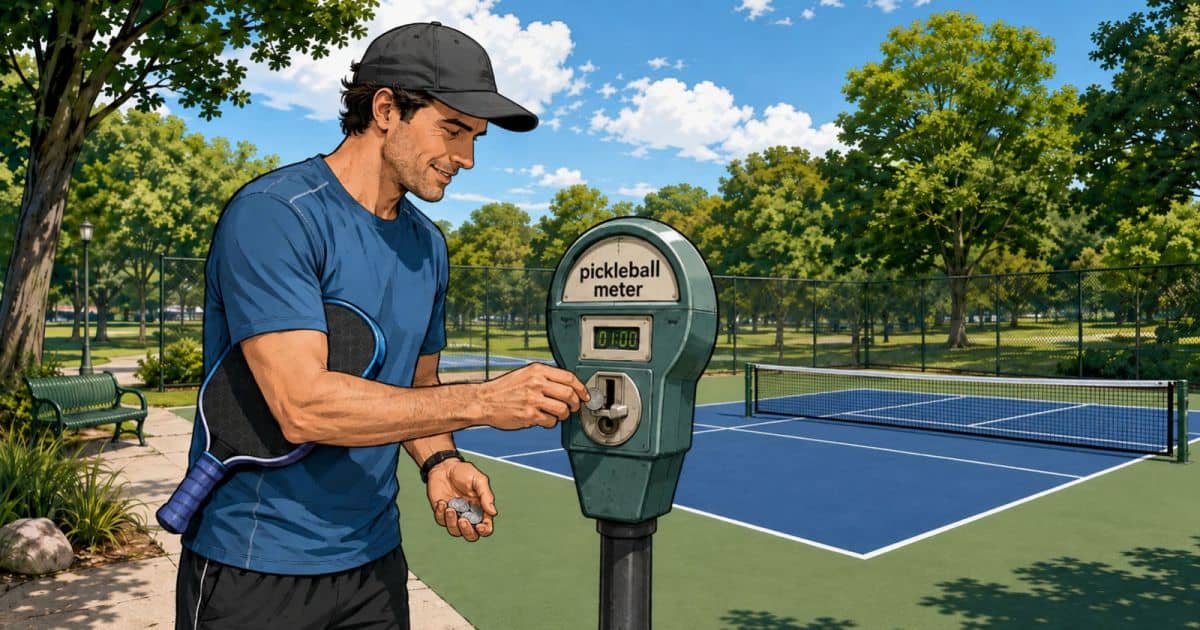
Many municipal outdoor courts are free for drop-in play, which is a big part of why public parks fill up fast on weekend mornings. Where a public facility does charge a fee, plan on about $2 to $6 per session. That range covers most parks and recreation department pricing across the country, whether the fee is charged per person or per court.
Availability, not money, is the real cost at a free court. Free courts run first come, first served, so a busy location can mean a wait rather than a payment. Pickleheads is USA Pickleball’s official court and game finder, according to USA Pickleball, and lists more than 25,000 places to play, tagging many of them as free or public. The guide on how to find public pickleball courts covers how to use a finder like that to locate open courts nearby, and the guide on free pickleball courts breaks down the free option in more detail.
What do private clubs and indoor facilities charge?
Private and indoor facilities cost more, mainly because someone has to pay for the building itself. Private indoor court time runs about $10 to $20 per session. That figure covers the typical drop-in or guest rate at an indoor club, before any add-ons.
Some private facilities sell access through membership instead of a per-visit fee. A membership can make sense for a player who plans to show up every week, since it replaces a string of per-visit charges with one recurring cost. A player who only plays occasionally is usually better off paying the per-visit rate instead of committing to dues.
Indoor climate control is the biggest reason indoor time costs more than most outdoor public courts. Heating, cooling, and lighting run every day the building is open, whether or not a court is booked, and that overhead is built into the price. Anyone comparing the ongoing cost of renting time against the cost of building an indoor space can see the fuller picture in the indoor pickleball court cost analysis.
When should you book to pay less?
Timing changes the price more than almost anything else a player controls. Evenings after work and weekend mornings are the busiest windows at almost any facility, public or private, because that is when the most people are free to play. Weekday mornings and early afternoons are the quiet windows, and a facility that offers any kind of discount usually applies it there.
A standing weekday-morning slot is the practical way to use that pattern. Booking the same low-demand time every week avoids competing for the popular slots, and it tends to cost less than chasing whatever happens to be open on a given evening.
Booking through an app or a club account also matters, since cancellation windows and how far ahead a slot opens can affect whether a cheaper time is even available by the time a player looks. The guide on how pickleball court reservation systems work covers those booking rules, which is usually where the real frustration with court time comes from.
What else affects the price?
A handful of other factors shift the price up or down beyond the basic public-versus-private split.
- Indoor versus outdoor. Indoor courts almost always cost more, because the building has to be paid for regardless of the weather outside.
- Region. A market with expensive real estate and high facility overhead prices court time higher than a smaller or less expensive market.
- Membership versus pay-per-visit. At clubs that offer both, membership usually pays off only for someone playing on a regular schedule.
- Session length. Some facilities book in 90-minute blocks instead of a flat hour, which changes what an hourly figure actually buys.
- Extras. Loaner paddles, ball machines, and evening lighting are sometimes billed as separate line items rather than folded into the base fee.
Anyone weighing whether it makes more sense to keep renting or to build a court instead can compare the numbers directly. The true cost to build a pickleball court in 2026 and the guide on backyard pickleball court cost both lay out what ownership costs against the ongoing price of renting time.
Frequently asked questions
How much does it cost to rent a pickleball court? Municipal drop-in fees run about $2 to $6 per session, and private indoor court time runs about $10 to $20. Many outdoor public courts are free, and the biggest jump in price comes from moving to an indoor or private facility.
Are public pickleball courts free? Many are. Outdoor courts at city and county parks are commonly free for drop-in play. Where a public facility does charge, plan on about $2 to $6 per session.
Why do indoor courts cost more than outdoor courts? An indoor facility has to cover the cost of the building itself, including heating, cooling, and lighting, every day it is open. That overhead is priced into the roughly $10 to $20 indoor rate, in a way an open-air public court never carries.
When is the cheapest time to book a court? Weekday mornings and early afternoons, generally. Evenings and weekends are the busiest windows at most facilities, public or private, simply because more people are free to play then.
Is a private club membership worth the cost? Usually only for someone playing on a regular weekly schedule. A membership replaces a series of per-visit fees with one recurring cost, so it pays off fastest for frequent players and least for occasional ones.
Does it cost more to rent a court alone than with a group? Renting is typically priced per court or per session rather than per player, so splitting the cost among a group of four lowers what each person pays. Comparing a per-person public drop-in fee against a group rate is the fairest way to weigh the two options.
Is it cheaper to rent court time or build a court? Renting avoids any upfront cost, while building means paying once for a court that is available anytime afterward. The true cost to build a pickleball court in 2026 lays out that upfront number for anyone comparing it against years of rental fees.
Court rental cost mostly comes down to two questions: indoor or outdoor, and public or private. Compare current listings in the public pickleball courts directory to see what is available to book near a specific address.
Written by the Pickler Junction Team.