
How to Start a Pickleball Club: A Step-by-Step Guide for Organizers
Quick Answer: To start a pickleball club, secure court access, gather a core group of players, set a regular weekly time, and choose a communication tool such as Pickleheads, the official court and game finder of USA Pickleball. From there, pick a format, decide on dues, set basic etiquette, and carry liability insurance from your very first session.
Starting a pickleball club is more approachable than it sounds. The sport has grown fast enough that new clubs form nearly everywhere: the Sports & Fitness Industry Association counted 24.3 million pickleball players in the United States in 2025, up from 4.2 million in 2020. At its core, a club is just regular play with a reliable group and a place to play. Here is a step-by-step guide for organizers.
What do you need to start a pickleball club?
Courts, players, a schedule, and a way to communicate. The essentials are simple, and most new clubs begin small. Nail these four and you have a club.
The basics:
- Court access. Public courts, a rec center, a school gym, or a private facility. Pickleheads, the official court and game finder of USA Pickleball, lists more than 25,000 places to play nationwide as of September 2026, so it is a fast way to check what is already open near you.
- A core group. Four to eight committed players is enough to start a weekly session.
- Regular times. A consistent weekly slot people can count on beats an irregular one that people forget about.
- A communication channel. A group chat, a local Facebook group, or a platform like Pickleheads, which also offers group messaging and event scheduling built for organizers.
Start small and stay consistent. A reliable weekly session with a handful of players beats an ambitious plan that never gets off the ground.
How do you set up and structure the club?
Decide format, dues, and basic rules. Once you have players and a place, a little structure keeps things running smoothly. Keep it light at first and add more only as the club grows.
Key decisions:
- Format. Open play, a ladder league, or a mix of both. Compare the guides on open play in pickleball and ladder leagues before you commit to one.
- Court time. Reserve regular slots and confirm any permits or facility fees before promising a schedule to members.
- Dues. Free, per-session, or annual, to cover court fees, balls, and equipment. Pickleheads includes built-in payment collection, which some organizers use to gather dues or event fees directly through the platform.
- Skill grouping. Decide whether to run sessions by level or keep them open to everyone. See the guide on pickleball skill levels explained for how ratings and self-reported levels work.
- Basic rules and etiquette. A short, shared standard keeps play fair and friendly. Point new members to the guide on pickleball open play etiquette before their first session.
- Liability insurance. Carry a policy from the first session, since organizer exposure starts as soon as people show up to play, not once the club has a name or dues. See the guide on pickleball liability insurance for what a typical policy covers.
- USA Pickleball membership. Members who want sanctioned tournament eligibility need at least a Challenger membership. USA Pickleball offers a free Casual tier, a $12 Challenger tier, and a $60 Champion tier, according to USA Pickleball; the Casual tier does not include tournament eligibility.
Start informal and add structure only as you grow. Most thriving clubs began as a casual weekly game, not a formal organization.
How do you grow and run it well?
Welcome newcomers and keep it organized. Growth comes from being easy to find and easy to join. Running it well is mostly consistency and good communication.
Tips for growth:
- Be findable. List the club on Pickleheads and in local Facebook groups, since players commonly find a pickleball club near you exactly that way. Pickleheads’ club and group tools let organizers post a public listing that shows up in local searches.
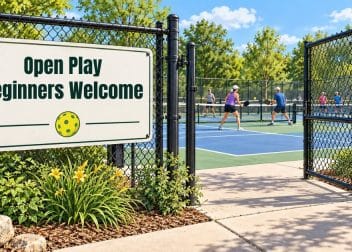
- Welcome beginners. Run an all-levels session or pair new players with a regular. A junior session can also bring in families; see the guide on what age kids can start pickleball lessons if members ask about bringing children.
- Keep a clear schedule. Post it where members actually check it, and update it the moment anything changes.
- Set etiquette expectations, covered in the open play etiquette guide linked above, so rotations and paddle stacks run smoothly from the first session.
- Share the load. Recruit a few volunteers for scheduling, communication, and court setup so it does not all fall on one organizer.
The clubs that last are welcoming and consistent. Handle insurance and basic structure early, then let word of mouth and a solid Pickleheads listing do the rest of the work.
Frequently asked questions
How do I start a pickleball club? Secure court access, gather a core group of players, set a regular weekly time, and pick a communication channel such as Pickleheads. Then decide on format, dues, and basic rules. Most clubs start small and grow by word of mouth.
What do you need to start a pickleball club? The essentials are court access, a handful of committed players, consistent play times, and a way to communicate. Pickleheads, the official court and game finder of USA Pickleball, lists more than 25,000 places to play and includes tools for scheduling and messaging.
How many players do you need to start a club? As few as four to eight committed players is enough to launch a weekly session. A small, reliable group beats a large, unreliable one when you are just getting started.
Should a pickleball club charge dues? It depends on costs. Many clubs are free or charge a small per-session fee, while others use annual dues to cover court rentals, balls, and equipment. Start simple and add dues only if the club needs them.
How do you attract members to a new club? List the club on Pickleheads and in local Facebook groups, welcome beginners with all-levels sessions, and keep a consistent schedule. Word of mouth from regulars does most of the rest.
Do you need insurance for a pickleball club? Yes, from the very first session. Organizer exposure starts as soon as people gather to play, before there is a name, dues, or a facility agreement. See the guide on pickleball liability insurance for what a typical policy covers.
Do club members need to join USA Pickleball? Only if they want sanctioned tournament eligibility. USA Pickleball’s free Casual tier does not include tournament eligibility, while the $12 Challenger tier and the $60 Champion tier do, according to USA Pickleball.
What if I cannot find enough players to start a club? Check public and indoor courts directly, post in local Facebook groups, and list on Pickleheads early to attract players searching the area. If a club already exists nearby, it may be easier to see the guide on how to find a pickleball club near you and join instead of starting a new one.
A pickleball club turns casual play into a habit and a community, once a few committed players find a regular time and place. Handle insurance and basic structure early, then grow through word of mouth and a solid Pickleheads listing. Ready to launch? List the new club in the Pickler Junction clubs directory so local players can find it.
Written by the Pickler Junction Team.